If you’ve ever walked through a manufacturing floor, you’ve likely spotted a shot blasting machine humming away, its rotating blast wheel flinging tiny, round steel or ceramic grit at metal parts like automotive components, cast iron parts, or aerospace turbine blades. As a shot blasting machine supplier, one of the most common questions I get from shop owners, production managers, and metal fabricators is this: “What’s the biggest workpiece your machine can handle?” It’s a fair question—trying to blast a 10-foot long wind turbine tower segment on a machine built for 4-foot truck frames won’t just waste time and grit, it can damage both the part and the equipment. The answer isn’t a one-size-fits-all number, though. It depends on the type of machine, the configuration of its blast system, and even how you load and secure the workpiece. Let’s break this down clearly, rooted in real-world manufacturing experience and the specs that actually matter. Shot Blasting Machine
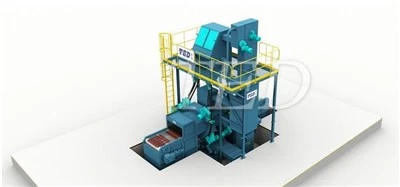
First, let’s talk about the main categories of shot blasting machines, because each is built for a different set of workpiece sizes. The most common types are tumble blast machines, apron blast machines, hook blast machines, roller conveyor blast machines, and table blast machines. Each has a maximum workpiece size limit, and understanding their design is the first step to figuring out what’s possible.
Tumble blast machines are what you’ll see in small to mid-part job shops. They have a rotating barrel that tumbles loose parts—small castings, fasteners, stampings—so every surface gets hit by grit. These machines are designed for parts that are roughly 1 to 12 inches in size. The largest tumble blast barrels on the market today top out at about 6 feet in diameter and 10 feet long, which can handle individual parts up to, say, a 10-inch diameter cast iron pump housing or a 12-inch long bolt. Wait, hold on—some shops will try to stuff a slightly larger part in here, but that’s a bad idea. The tumbling action relies on parts rolling over each other; if a part is too big, it can get stuck between the barrel and the tumble flighting, or it won’t rotate evenly, leading to uneven blasting and even part damage. I’ve seen a customer try to blast a 14-inch industrial valve on a small tumble blast last year, and it got wedged so tight they had to shut the machine down and take it apart for two hours. That’s the kind of headache we avoid by matching part size to machine type.
Next, apron blast machines. These are for medium to large heavy parts, like structural steel beams, large castings, or heavy stampings. Instead of tumbling parts, they have a solid metal apron (or a series of linked metal plates) that carries the workpiece through the blast chamber. The best apron blast machines on the market can handle workpieces up to 14 feet long, 5 feet wide, and 6 feet tall, with individual part weights up to 10,000 pounds. I worked with a construction equipment manufacturer last quarter that was blasting 12-foot long excavator arm segments—they switched from an old, undersized hook blast machine to a 14-foot apron blast specifically because they needed to handle those long, heavy beams without having to cut them down for processing. The key here is the clearance inside the blast chamber: if you have a 14-foot long beam, the machine’s chamber has to be at least a foot or two longer than that to accommodate entry and exit, plus the blast wheels have to be positioned so they don’t hit the part or the apron during operation. I always tell customers to add 10% to their workpiece dimensions when checking chamber size, just to be safe. That extra space for loading and blasting is non-negotiable.
Then there’s hook blast machines, also called overhead monorail hook machines. These are workhorses for medium to very large parts, especially parts that are awkward to tumble or carry on an apron—like truck chassis, turbine casings, or large agricultural equipment parts. A hook blast machine has a rotating monorail that moves hooks (each holding a workpiece) through the blast chamber. The maximum size here depends on the hook’s lift capacity and the chamber dimensions. The largest hook blast machines we’ve supplied have chamber openings up to 16 feet tall and 12 feet wide, and hooks that can lift up to 20,000 pounds. That means you can blast individual parts up to, say, a 15-foot tall tractor cabin or an 11-foot wide truck frame. I’ve had aerospace clients use these for landing gear components that are 12 feet long—they rotate the hook slowly inside the chamber so all sides get blasted evenly, which is perfect for complex, large parts that can’t be laid flat or tumbled. The catch here is hook clearance: you can’t have a part that’s so wide it scrapes the chamber walls or hits the blast wheels as it rotates. We always do a 3D simulation for new customers with parts over 10 feet to make sure there’s enough clearance before we build the machine.
Roller conveyor blast machines are for flat, long parts that need continuous processing, like steel plates, pipes, or I-beams. These have a series of rollers that feed the workpiece straight through the blast chamber, with blast wheels positioned above and below to blast all sides. The maximum size here is usually based on the roller bed width and height. The biggest roller conveyors can handle parts up to 10 feet wide and 4 feet tall, with unlimited length (as long as the conveyor is long enough). That’s great for steel fabricators that process 50-foot long building beams—they can run them straight through the machine without stopping, which is perfect for high-volume production. We recently supplied a roller conveyor machine to a bridge construction company that blasts 8-foot wide steel plates for bridge decks; they used to process these plates in batches with a smaller table blast, and now their throughput is up 40% because they don’t have to load and unload heavy parts manually.
Table blast machines, also called rotary table machines, are for large, heavy, or bulky parts that sit on a rotating table inside the chamber. These are common for large mold casings, engine blocks, or large pump housings. The largest table blast machines have tables up to 10 feet in diameter, which can handle individual workpieces up to 12 feet tall and 10 feet in diameter, with weights up to 30,000 pounds. That’s a big one—we had a customer that was blasting 10-foot tall mold bases for plastic injection molding, and they couldn’t use a hook machine because the mold base was too tall to lift and rotate without tipping over. The table blast let them set the mold base on the table, rotate it slowly, and blast all sides evenly, no lifting required. That’s the flexibility these machines offer for very large, heavy parts that are stable on a flat surface.
Wait a second—there’s a common misconception that these are hard limits, right? Like, if your part is an inch over the 16-foot tall hook machine limit, you can’t do anything. But that’s not always true. We often modify standard machine configurations to handle oversized or irregularly shaped parts, as long as the weight and clearance constraints are met. For example, a few months ago, a wind turbine manufacturer reached out to us with a problem: they needed to blast 18-foot long turbine hub segments that were 8 feet in diameter and weighed 15,000 pounds. Our standard hook blast machine maxes out at 16 feet tall, but we modified the chamber opening to be 18 feet tall, upgraded the hook lift capacity to 20,000 pounds, and adjusted the blast wheel positioning so they’re angled to cover the full height of the hub without hitting it. That customer now uses that modified machine every day, and it’s been running flawlessly for 8 months. The key here is that the “maximum size” isn’t a hard line—its a guideline based on standard machine designs, and many suppliers (including us) can adjust for parts that are slightly outside the standard specs, as long as you provide accurate dimensions and weight upfront.
Another factor that people don’t talk about enough: workpiece accessibility and required blast coverage. If you have a part that’s 15 feet tall but only needs blasting on the lower 8 feet, you don’t need a 16-foot tall chamber—you can position the blast wheels to cover just the area you need and reduce the overall chamber size, which saves money. On the flip side, if you have a part that’s very irregular, like a cast iron pump housing with deep cavities, you might need a larger chamber to avoid the blast wheel range limit. Most blast wheels have a standard blast radius of about 3 to 4 feet, so if you have a workpiece that has cavities deeper than that, you might need to either rotate it more slowly or use a larger chamber to position additional blast wheels to cover those areas. That’s why providing a 3D model of your workpiece is so helpful—we can run simulations to make sure all surfaces get blasted properly, even for non-standard parts.
Weight is another critical point I can’t stress enough. A machine that can handle a 10,000 pound part is not the same as a machine that can handle a 10,000 pound part that’s 10 feet long. The hook lift capacity, apron strength, or table load capacity is built for a maximum weight, and exceeding that can cause the machine’s structure to flex, the conveyor or hook to fail, or even pose a safety hazard. I’ve seen a shop operator try to blast a 22,000 pound part on a hook machine rated for 18,000 pounds—when the hook lifted the part, it bent the monorail so bad the machine was out of service for 3 weeks. That’s thousands of dollars in downtime, all because someone didn’t check the weight limit alongside the size limit. So when you’re asking about maximum workpiece size, always have both dimensions and total weight ready to go.
Now, let’s talk about the largest workpieces we’ve ever handled with a shot blasting machine. The record so far is a 22-foot long wind turbine blade segment that our team blasted for a blade manufacturer last year. We built a custom roller conveyor blast machine with a 25-foot long chamber, 6 feet wide, and 8 feet tall, with 8 blast wheels positioned along the top, bottom, and sides to cover the entire blade surface. The blade weighed 5,000 pounds, which was well within the conveyor’s load limit, and it moved through the machine at 2 feet per minute. That project took 3 months from design to installation, and it’s been a game-changer for that customer, who used to send blade segments out for blasting at a third-party shop with long lead times.
Of course, there are limits to how large you can go. You’ll never see a shot blasting machine that handles full-size wind turbine blades (which are over 100 feet long) because transporting those blades to the blast machine is logistically impractical. Most large parts are processed in segments, or the blast machine is brought to the part, but that’s a specialized, custom setup that’s not something we offer for standard production. For most manufacturers, the sweet spot is between 1 foot and 20 feet for standard and custom machines, with the bulk of production parts falling between 2 and 12 feet.
So what should you do if you’re trying to figure out the maximum size workpiece for your operation? First, gather all your part specs: length, width, height, weight, and any irregular features (holes, cavities, protruding parts) that might affect loading or blasting. Second, think about your production volume. If you’re blasting high-volume, identical parts, a standard machine will be more cost-effective than a custom one. If you’re blasting small runs of large, custom parts, a modified or custom machine is worth the investment. Third, work with a reputable shot blasting machine supplier, like us, that doesn’t just give you a number but helps you simulate the process, account for loading and safety, and adjust for your specific parts.

At the end of the day, the maximum size of a workpiece a shot blasting machine can handle isn’t just a spec on a data sheet. It’s a combination of machine design, blast system capabilities, workpiece characteristics, and your production needs. It’s why we don’t just sell machines—we walk through your parts with you, ask the right questions, and make sure you get a machine that works for your specific jobs, not just a one-size-fits-all model that’s too small or too big. If you’re looking to upgrade your blasting process and need to figure out the right machine for your largest workpieces, we’re here to help walk through your options and find the perfect fit for your operation.
Clay Sand Line References:
- American Foundry Society. (2021). Shot Blasting Equipment Standards for Metal Casting and Fabrication. AFS International.
- Design Engineering. (2022). “Workpiece Size and Capacity Limits for Industrial Shot Blasting Systems.” Design Engineering Magazine, Vol. 66, No. 4, pp. 24-29.
- Occupational Safety and Health Administration (OSHA). (2020). Safety Standards for Industrial Shot Blasting Operations. OSHA 3357-07R-2020.
- Thermal Spray Society. (2021). Surface Preparation via Shot Blasting: Guidelines for Large Workpieces. TSS Technical Report TR-007-2021.
Qingdao Taide Machinery Co., Ltd.
We are one of the most experienced shot blasting machine manufacturers and suppliers in China. With a professional production team, we offer a wide range of products with superior quality. Please rest assured to wholesale durable shot blasting machine for sale here from our factory.
Address: No.383, Zhaizi Mountain, Huangdao District, Qingdao Shandong China.
E-mail: krystal@qdtedmachine.com
WebSite: https://www.qdted-group.com/
