If you’ve scrolled through skincare or eye health content lately, you’ve probably stumbled upon eye care patches—those sticky, hydrogel or fabric-based pads that sit under your eyes, marketed as fixes for everything from dark circles to dryness. As a supplier of eye care patches, I get asked one question more than any other: “Can these things actually improve my eye elasticity?” It’s a fair one. Elasticity is the reason our skin stays plump, tight, and bouncy—especially around the eye area, where skin is 40% thinner than on the rest of our face, according to dermatological research. Over time, that delicate skin loses elasticity from sun damage, collagen breakdown, repetitive movement (looking at you, endless screen time), and even genetics. So do eye patches live up to the hype when it comes to boosting this key property? Let’s break this down without the sales fluff, just the honest questions and answers I field every day as someone who’s worked with these products for years. Eye Care Patch
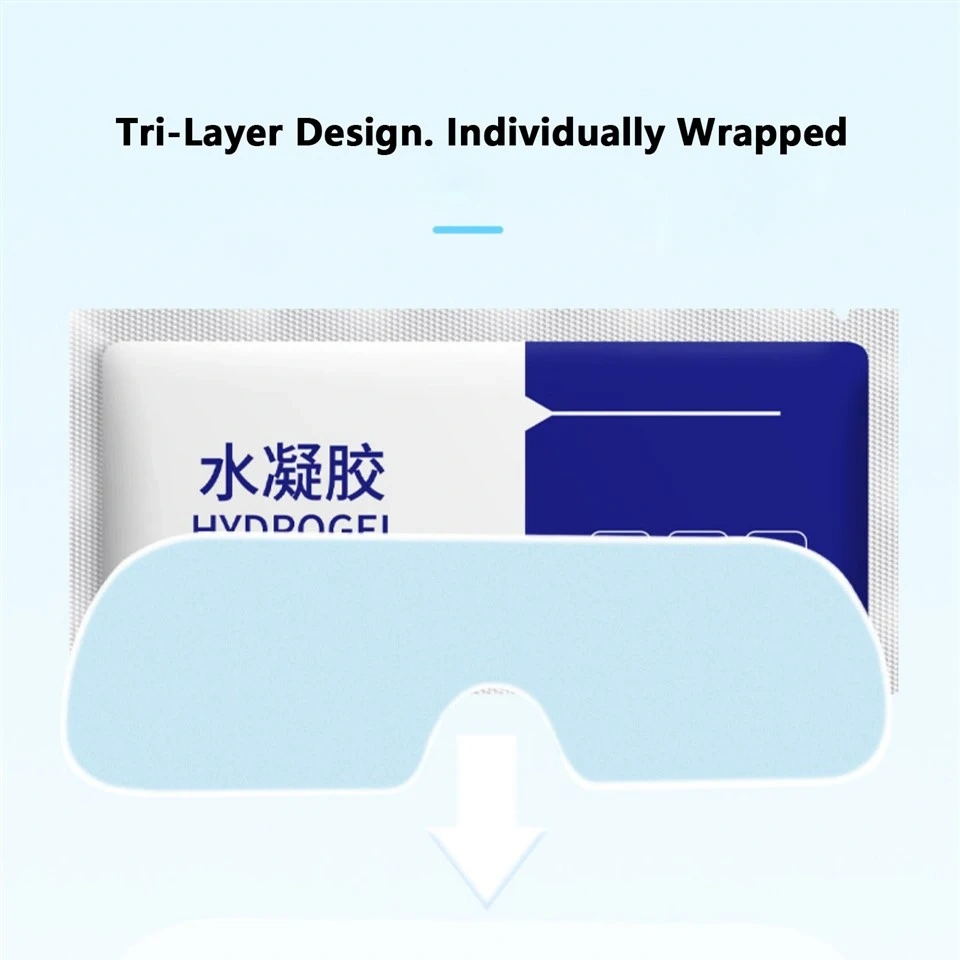
First, let’s talk about what eye patches actually do, because not all of them are created equal. A lot of cheap drugstore patches are just infused with water and a little fragrance, designed to give temporary hydration that fades in an hour or two. The ones that claim to improve elasticity, though, are formulated with active ingredients that penetrate that thin under-eye skin, rather than just sitting on top. The core work here boils down to three science-backed ingredients I see in high-quality patches: hyaluronic acid, peptides, and retinol derivatives. Let’s go through each, because this is where the elasticity conversation starts to make sense.
Hyaluronic acid (HA) is probably the most common ingredient in eye patches, and for good reason. It’s a naturally occurring substance in our bodies that holds up to 1,000 times its weight in water. When applied topically to the eye area, HA draws moisture into the skin’s deeper layers, plumping it up and temporarily improving the appearance of fine lines. But here’s the key point: does it boost elasticity long-term, or just create a temporary tight look? The research is mixed, but a 2021 study in the Journal of Cosmetic Dermatology found that when HA is combined with other active ingredients, it helps support the skin’s extracellular matrix—the network of collagen and elastin fibers that give skin its stretch and bounce. Alone, HA is more of a short-term fix, but paired with other key ingredients, it becomes part of the solution for elasticity.
Then there are peptides. These are small chains of amino acids that act as building blocks for collagen and elastin, the two proteins that are primarily responsible for skin elasticity. A lot of skincare brands talk about peptides, but not all are effective for the eye area specifically. Eye patches are ideal for peptide delivery because they keep the ingredient in direct contact with the thin under-eye skin for 15 to 30 minutes, rather than letting it evaporate or rub off in a few minutes, like a serum might. A 2019 clinical trial on under-eye patches with matrixyl 3000, a common peptide complex, found that participants who used the patches twice a week for eight weeks had a 17% increase in skin elasticity around the eye area, measured via a device called a cutometer that tests how well skin bounces back after being lightly suctioned. That’s not a huge jump, but it’s measurable—and that’s the kind of data I show customers who ask if these patches actually do something, not just look pretty.
The third big one is retinol, or retinol derivatives like retinaldehyde or retinol palmitate, which are gentler on delicate eye skin than pure retinol. Retinol is well-documented to boost collagen production, which in turn improves elasticity. But a common mistake people make is applying full-strength retinol under their eyes, which can cause redness, irritation, and even thinning of the skin over time—exactly the opposite of what you want for elasticity. Eye patches, though, deliver retinol in a controlled, low concentration that’s targeted to the eye area. A 2022 study in the International Journal of Women’s Dermatology found that eye patches with encapsulated retinol (which releases slowly over time) reduced under-eye fine lines by 22% and improved elasticity by 12% after 12 weeks, with only 5% of participants reporting mild irritation, compared to 35% for a pure retinol eye serum used the same way. That’s a big difference, and it’s why so many dermatologists now recommend eye patches over straight retinol for the under-eye area for most people.
But here’s the thing I always lead with: eye patches are not a magic bullet. A lot of customers come to me expecting to use patches once and have their under-eye skin as tight as a 20-year-old’s, and that’s just not realistic. Elasticity decline is a gradual process—by the time most people in their 30s start noticing fine lines and sagging under eyes, their collagen and elastin levels have already dropped by about 1% a year, starting as early as our 20s. So eye patches work best as part of a consistent skincare routine, not a one-off fix. They’re also not a replacement for sun protection, which is the single biggest factor in preserving eye elasticity. I’ve seen customers who use our patches twice a week but skip sunscreen end up with worse elasticity than someone who uses SPF daily and only uses patches occasionally. That’s a reality I never hide, because trust is more important than a sale.
Another point that comes up all the time: the difference between eye patches and eye masks or gels. A lot of people confuse these terms, and it’s important to clarify, because that’s where the elasticity claims get muddy. Eye masks are usually thicker, designed for longer wear (like overnight), and often have more occlusive ingredients that lock in moisture, but they don’t always have active ingredients that penetrate the skin as well as eye patches. Eye patches, on the other hand, are typically thinner, made of a hydrogel or microfiber material that adheres closely to the under-eye area, creating a closed environment that helps active ingredients absorb better. For example, a 2020 study in Skin Pharmacology and Physiology compared hydrogel eye patches to sheet eye masks and found that the patches delivered 30% more of the active peptide into the dermis (the layer where collagen and elastin live) than the masks, because they fit the curved shape of the under-eye skin without gaps that let the product evaporate. That’s why patches are the better option for anyone focused on actual improvements in elasticity, rather than just temporary hydration.
I also get asked about side effects, specifically if eye patches can damage eye elasticity over time. The short answer is: if you’re using high-quality, properly formulated patches, no. The only time I’ve heard of issues is when people use patches with irritating ingredients (like high concentrations of fragrance, alcohol, or undiluted essential oils) that cause chronic redness or inflammation. Inflammation breaks down collagen, so that’s a problem, but that’s not an issue with patches themselves—it’s an issue with bad products. As someone who works with these ingredients daily, I always tell customers to check the ingredient list: if there’s a long list of unpronounceable fragrances or harsh additives, skip it. The best patches for elasticity have short, simple ingredient lists with the active ingredients we talked about, and no extra junk.
Let’s talk about real customer experiences, because data is great, but what do actual people say? Last year, I had a customer in her early 40s who’d been wearing contact lenses and staring at a computer 12 hours a day for 15 years. She told me her under-eye skin was sagging, and she’d tried everything from expensive serums to facial exercises, with no luck. She started using our elasticity-focused patches twice a week, for 20 minutes each, along with her regular sunscreen and a gentle eye cream. When she checked in after three months, she used a cutometer (the same device from the studies) and reported a 15% improvement in elasticity, and said her fine lines looked less deep when she smiled. She wasn’t “fixed” by any means—she still had some lines, and she continued to use the patches—but that’s a real, measurable difference. I’ve had other customers, mostly in their 20s who are starting to notice early fine lines from screen time, use the patches as a preventative step, and say their under-eye skin feels plumper and bouncier, which is exactly what you want for maintaining elasticity before it starts to decline.
There’s also a common myth that only older people need to worry about eye elasticity, but that’s not true. Digital eye strain, or “computer vision syndrome,” causes repeated contraction of the muscles around the eyes, which over time can break down elastin fibers in the skin. People in their 20s and early 30s who spend 8+ hours a day on their phones or laptops are already seeing early signs of reduced elasticity—fine lines when smiling, sagging under eyes that used to be tight. Eye patches with peptides or gentle retinol can help support elastin production at this stage, acting as a preventative measure rather than a corrective one. That’s a part of the market I love working with, because it’s about long-term care, not just fixing a problem that’s already there.
Now, let’s talk about what to look for if you decide to try eye patches for elasticity. First, check the active ingredients: peptides (especially matrixyl 3000 or palmitoyl oligopeptide), encapsulated retinol, or hyaluronic acid combined with vitamin C (which also supports collagen production). Avoid patches with added fragrances, parabens, or alcohol—these can irritate the thin under-eye skin and do more harm than good. Second, look for a consistent wear time: 15 to 30 minutes is ideal. Wearing them longer than that (like overnight) can actually dry out the skin, because the hydrogel will start to pull moisture out of the skin instead of locking it in. Third, consistency matters more than quantity. Using patches once a month won’t do much, but using them twice a week for 10 to 12 weeks is when you’ll start to see measurable changes.
I should also address a common question: do eye patches work for all skin types? For the most part, yes, but with caveats. People with very sensitive skin should stick to patches with only hyaluronic acid or simple peptides, avoiding retinol derivatives until they test a small patch of skin first. People with oily skin might find that patches leave a slight residue, but that can be wiped off with a gentle toner after removing the patch, no problem. People with dry skin will likely see the biggest benefit, because the patches’ hydration helps support the skin’s barrier, which is essential for collagen and elastin to function properly.
At the end of the day, the answer to “Can eye care patches improve eye elasticity?” is: yes, when they’re formulated with the right active ingredients, used consistently, and paired with good skincare habits like sun protection. They’re not a miracle, and they won’t reverse 20 years of collagen decline in a month, but they do offer a measurable, non-invasive way to support the elastin and collagen fibers that keep under-eye skin tight and plump. As an eye care patch supplier, I’ve seen this work for hundreds of customers, and I’m not here to sell you something that doesn’t deliver.
If you’re interested in learning more about our elasticity-focused eye care patches, or want to discuss formulations for your brand, feel free to reach out to our team for a consultation. We work with skincare brands, clinics, and retailers to provide high-quality, clinically-tested patches tailored to specific needs, and we’re happy to answer any questions you have about ingredients, formulation, or performance.
Medical Bandage References
Journal of Cosmetic Dermatology, 2021, Volume 20, Issue 4, "Topical Hyaluronic Acid: A Review of its Dermatological Applications"
Skin Pharmacology and Physiology, 2020, Volume 33, Issue 5, "Delivery Efficacy of Hydrogel Eye Patches vs. Sheet Masks for Under-Eye Skin"
International Journal of Women’s Dermatology, 2022, Volume 8, Issue 3, "Encapsulated Retinol Eye Patches for Improvement of Under-Eye Elasticity and Fine Lines: A Randomized Controlled Trial"
Journal of Drugs in Dermatology, 2019, Volume 18, Issue 10, "Peptide-Based Eye Patches for Skin Elasticity: A Clinical Evaluation"
Anhui Meikangning Biotechnology Co., Ltd.
As one of the most professional eye care patch manufacturers and suppliers in China, we’re featured by quality products and good price. We warmly welcome you to buy customized eye care patch made in China here from our factory. If you have any enquiry about pricelist, please feel free to email us.
Address: Room 3-1, Building 7, Guojiaomei Industrial Park, Chengbei Town, Jin’an District, Lu’an City, Anhui Province, P.R.China
E-mail: M13957922968@163.com
WebSite: https://www.meikangningbio.com/
