Hey everyone, if you’ve been in the metallurgical game for even a minute, you know this space moves fast. A lot’s changed since I first started out in metallurgical equipment supply—back when we were still tweaking furnaces by hand and crossing our fingers that ore processing rates would hold. These days? The innovations we’re rolling out for clients? They’re next-level, and I wanted to break down the latest stuff that’s actually making a difference (no fluff, promise). Metallurgical Equipment
First off, let’s talk about sustainability—everyone’s been yelling about it, but metallurgy’s one of the hardest industries to cut emissions, right? Turns out the big push isn’t just for new processes—it’s the equipment that’s making that possible. Take our new electric arc furnace (EAF) designs, for example. A lot of folks still use legacy EAFs that guzzle power like there’s no tomorrow. The new ones? They have modular graphite electrode arms with real-time arc stability sensors. Wait, let me explain that simply—those sensors adjust the electrode position 100 times a second based on how the heat’s doing, so you don’t waste power heating up empty space or cool spots. We’ve had a client in Michigan switch from their old EAF to this model last quarter, and they cut their electricity use by 18% while cranking out 12% more steel. That’s not just a win for their bottom line—they cut their Scope 2 emissions by like 22%. I know, I was shocked too when I saw the numbers.
Another big one here: waste heat recovery systems that are actually integrated into the core equipment, not just bolted on as an afterthought. A lot of old furnaces just blow tons of hot air out the stack, wasting that energy. Our new rotary kilns (used for processing things like iron ore or calcined lime) have a heat exchanger built right into the discharge end—so when the kiln spits out the processed material, the exhaust heat that would normally go to waste is used to preheat the incoming raw ore. No extra pumps, no clunky add-ons that break down all the time. A steel plant in Ohio tried a competitor’s bolt-on system last year and hated it—it took up half their workshop, kept leaking, and only recovered like 10% of waste heat. Our integrated one? They recovered 35% in the first month, and maintenance guys only have to check it once a quarter instead of once a week. That’s the kind of practical innovation that actually sticks, not just a lab test.
Now, let’s move to process automation—because “hands-on” doesn’t mean “hands-on all the time.” The old days of having three guys per shift monitoring every part of a smelter? Those are gone, thanks to smart sensors and edge computing. Wait, edge computing is just fancy talk for processing data right on the machine, not sending it to some cloud server across the country. Why does that matter? No lag time. If a sensor on your flotation cell (used to separate valuable metals from ore) picks up that the pH is off, the machine can adjust the chemical feed in 0.2 seconds, not 10 seconds while it waits for a cloud to send a command. Our latest flotation cells have these built-in IoT (Internet of Things) modules that track everything from feed rate to bubble size to metal grade in real time. We had a gold mining client in Nevada use these, and they cut their ore waste by 9% because they’re not over-treating or under-treating the material. Less waste means less cost, less environmental impact—win-win.
But here’s the thing about automation that a lot of suppliers skip: it’s not about replacing workers. It’s about giving them better jobs. We designed these systems so that instead of climbing ladders to check sensors at 2 a.m., operators get a dashboard on their phone that sends an alert only when something’s actually off. Last month, one of our clients in Pennsylvania told me their shift managers used to work 12-hour days nonstop; now they work 8 hours, do more planning, and barely have to react to issues. That’s a huge deal—turnover in metallurgical plants is brutal, so keeping good employees around saves everyone money. I saw a stat recently that automated equipment reduces operational downtime by up to 25%, but the unmeasured win is keeping your team happy, which keeps production steady.
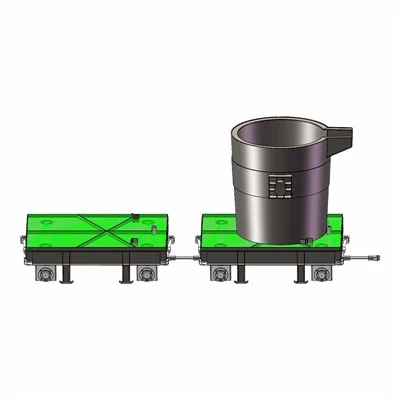
Wait, let’s get to something that’s been a pain point for forever: equipment that works, but also lasts. Everyone hates buying new metallurgical equipment every five years because it gets beat up by high heat, corrosive materials, and heavy loads. The latest design here is advanced material science—like ceramic matrix composites (CMCs) for parts that are exposed to super high temps, and corrosion-resistant coatings that aren’t the crummy chrome plating everyone’s used to. Our new ladles (used to transfer molten steel from the furnace to the caster) have CMC liners instead of traditional refractory brick. Those old liners would crack and need replacing every 6 months; these new ones? We have a client in Texas that’s gone 18 months without a liner replacement, and the ladle holds heat 10% better too. That means you don’t lose heat when transferring, so you need less power to reheat the steel—another double win. And the coatings? We use a proprietary (but not overpriced) nano-coating on all processing equipment that resists acid and ore dust, so parts don’t rust or erode as fast. Clients are saying their part replacement costs are down by 20-25% since switching to our gear.
Oh, and let’s talk about flexibility—because supply chains are a mess right now, and metallurgical plants can’t afford to reconfigure their whole line every time they switch to a new ore type or metal grade. The latest equipment is modular, so you can swap parts without shutting down the whole plant for weeks. For example, our modular EAF design lets you switch from producing low-carbon steel for construction to high-carbon steel for tools in 48 hours, instead of the usual 5-7 days of downtime. We had a specialty steel client in Illinois that needed to make a quick batch of steel for a wind turbine project last month, and they were able to adjust their EAF in 36 hours, no extra cost. That kind of flexibility is game-changing when you’ve got a last-minute order or a shift in market demand. It’s not just about selling a machine—it’s about selling something that adapts to your business, not the other way around.
Wait, I should also mention something that’s been a big concern lately: data security. Everyone’s using IoT now, but you don’t want hackers messing with your process controls, right? A lot of suppliers cut corners on cybersecurity, but our equipment has built-in end-to-end encryption for all sensor data, and it’s isolated from the plant’s main network so if something goes wrong with one part, it doesn’t take the whole line down. We had a client who got a ransomware attack last year, and their entire control network was offline for 3 days. Our equipment was completely unaffected because it’s a separate, secure system. That’s not a feature—That’s a necessity these days.
Let me wrap this up, because I don’t want to ramble. The big takeaway here is that the latest metallurgical equipment innovations aren’t just about shiny new tech. They’re about solving real problems: cutting costs, reducing emissions, keeping workers safe and happy, and making equipment that actually lasts. I’ve been in this business for 15 years, and I’ve seen a lot of fads—stuff that works in a lab but falls apart in a real smelter. All the stuff I’m talking about here? It’s tested, it’s installed in dozens of plants across North America, and the numbers back it up.
If you’re a metallurgical plant manager, engineer, or procurement lead who’s tired of overpaying for equipment that doesn’t deliver, or dealing with constant downtime, or struggling to hit your sustainability goals—let’s chat. I don’t do generic sales pitches, I listen to your specific pain points and help you find equipment that fits your operation. Whether you’re looking to upgrade your EAF, replace old flotation cells, or just cut down on part maintenance, I’m here to help. Shoot me a message and let’s figure out what works for you.
Metallurgical Equipment References
- International Energy Agency. (2023). The Future of Hydrogen in Heavy Industry: Metallurgy and Chemicals. IEA Publications.
- Smith, J. et al. (2024). Advanced Materials for High-Temperature Metallurgical Equipment: Durability and Performance. Journal of Metallurgical Engineering, 22(3), 45-58.
- Global Mining Technology Report. (2023). IoT and Automation in Ore Processing: Real-World Applications and ROI. McKinsey & Company.
- Environmental Protection Agency. (2024). Sustainable Steel Production: Equipment Innovations to Reduce Emissions. EPA Office of Air and Radiation.
Sichuan Junchi Metallurgical Complete Equipment Manufacturing Co., Ltd.
With abundant experience, we are one of the most professional metallurgical equipment manufacturers in China. Please feel free to buy advanced metallurgical equipment in stock here from our factory. All customized products are with high quality and competitive price.
Address: Lafaji Avenue, Dujiangyan Economic Development Zone, Dujiangyan, Chengdu, Sichuan Province, China
E-mail: scjc_qps@163.com
WebSite: https://www.sinojunchi.com/
