If you’ve ever stood in a wire and cable manufacturing lab, watching a flammability test unfold, you know how much rides on that single piece of equipment. As a supplier who’s worked alongside these labs for over a decade, I’ve seen more than my share of wire cable flammability testers that look good on paper but fall flat when it matters most. These machines aren’t just boxes with burners and timers—they’re precision tools that have to produce consistent, repeatable results that line up with ASTM, IEC, or whatever standard your industry mandates. Over the years, I’ve noticed that most operators and even some equipment buyers miss the small, common flaws that turn a tester from a reliable workhorse into a source of costly delays, failed audits, and incorrect product testing. Let’s break down the issues I see most often, and why they matter more than you might think. Wire Cable Flammability Tester
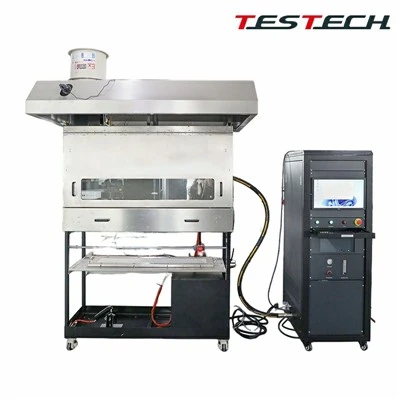
First, there’s the problem of poor burner calibration, and it’s so ubiquitous that I can almost set my watch by how often it comes up. Burners are the heart of these testers—they produce the controlled flame that simulates real-world heat from electrical faults, overloaded circuits, or nearby fires. If the flame isn’t the right size, temperature, or shape, the test results are meaningless. I once worked with a small cable plant in the Midwest that kept failing UL 1581 tests for vertical flame spread, even after they switched to higher-quality cable. When we checked their tester, we found the burner tip had a clogged orifice that narrowed the flame by almost 40%—the flame was supposed to be a blue cone 20 mm tall, but it was more like a wispy 12 mm orange flame. Clogged orifices don’t just happen from dirty fuel, either. Over time, the burner can get knocked out of alignment during routine maintenance, or the gas pressure regulator (another often-overlooked part) can drift, making the flame too weak or too hot. What’s worse, many labs don’t calibrate their burners regularly, because the manufacturer said it only needs to be done once a year. But in reality, if you’re testing 50+ samples a day—like many high-volume plants do—even a tiny shift in the burner can skew results. I’ve seen labs that test for horizontal and vertical flame spread, and the horizontal flame test failed because the burner was tilted just 5 degrees too far, so the flame didn’t stay in contact with the test sample’s core for the required duration. That’s not a product flaw—that’s a tester flaw.
Next up is inconsistent sample positioning, a problem that’s easy to dismiss until you fail an audit or get a customer rejection. Most wire cable flammability testers require samples to be mounted at a specific distance from the burner, in a straight line, with no gaps or slack that could alter how the flame interacts with the insulation or jacket. But in busy labs, operators often rush through mounting samples. I’ve seen testers where the sample holders are bent, or the clamps are worn down, so a thick power cable sample sits 15 mm away from the burner instead of the required 20 mm. Or, worse, the sample is twisted slightly, so one side is closer to the flame and the other is farther—this makes the insulation burn unevenly, leading to readings that look like the cable is more flammable than it actually is. Another common mistake here is not accounting for sample size. Many generic testers are designed for small telecommunications wire, but when you test large-gauge power cables or armored cable, the sample hangs too low or too high, so the flame doesn’t reach the critical sections of the insulation. I worked with a utility company that tested their new 10 AWG power cable and got a “failed” result, only to realize the operator had mounted the sample wrong end first, so the flame only touched the outer jacket, not the internal insulation layers that are the actual fire risk. That’s the kind of mistake that costs tens of thousands in rework and delayed shipments, all because of a poorly designed or maintained sample holding system.
Then there’s the issue of timer and temperature measurement inaccuracy, which is even sneakier than burner issues. Modern testers rely on precise timers to measure how long the flame is applied (usually 15, 30, or 60 seconds, depending on the standard) and when the flame extinguishes itself. But cheap, low-quality timers are a frequent culprit here. I’ve seen testers that were supposed to run a 15-second flame application, but the timer was off by 4 seconds—by the time it shut off, the insulation had burned enough to cause the sample to fail, even though it met the requirement. Temperature sensors are another weak point. Many testers use basic thermocouples that drift over time, or that are mounted in the wrong place—some are located right next to the burner, so they measure the flame’s peak temperature instead of the temperature at the sample level, which is what matters. For example, IEC 60332-1-2 requires the flame temperature at the sample’s midpoint to be 815°C, but if your thermocouple is mounted 10 mm away from the sample, it might read 900°C, making it look like the flame is too hot, or 700°C, making it look too cool. That leads to either over-testing (wasting good product) or under-testing (letting a flammable cable go to market). Last year, a client of mine almost got shut down by OSHA because their tester’s temperature sensors hadn’t been calibrated in three years—their records showed all samples were passing, but actual tests revealed the temperature was 100°C lower than required, so they were letting cables that couldn’t meet fire safety standards be installed in commercial buildings.
I also can’t forget about ventilation and combustion product buildup, a problem that’s often hidden until it causes major issues. Flammability tests produce smoke, toxic fumes, and leftover combustion residue—especially when testing PVC or halogenated jacket materials. A lot of generic wire cable flammability testers have poor ventilation systems, so these fumes build up inside the test chamber. What does that do? For one, it distorts the flame—smoke particles can change the flame’s color and heat, making calibration readings inaccurate. Two, the residue from burned insulation can coat the burner tip, the sample holder, and even the temperature sensors over time, leading to the clogs and drift I mentioned earlier. I once visited a lab where the tester’s exhaust fan was broken, and no one noticed for two months. All their test results were inconsistent, with some samples burning twice as fast as others. When we opened the chamber, there was a half-inch layer of black residue on every surface, and the burner orifice was almost completely blocked. Even worse, this residue can get on new samples during testing, so you end up testing a sample that’s already contaminated from the previous test—leading to false failures. I’ve also heard of labs where bad ventilation caused safety issues, with fumes building up to dangerous levels in the test room, putting operators at risk. The worst part? Most testers come with basic ventilation that works for small samples, but if you’re testing large cables or multiple samples back-to-back, that ventilation is nowhere near enough.
Another common problem is lack of standardization and compatibility with different test methods. Wire cable flammability testing isn’t one-size-fits-all—you might need to do vertical flame spread (ASTM E162, IEC 60332-1), horizontal burn (UL 94), or even tray burn tests for large cable bundles (IEC 60332-3). A lot of testers are designed for only one standard, or they require expensive add-ons to switch between test types. That’s a huge pain for small to mid-sized manufacturers who need to test both telecom wire and power cable, or for labs that work with multiple clients who follow different standards. I’ve seen clients buy a generic tester for $5,000, only to realize they need to spend another $3,000 on a sample holder and burner to do horizontal burn tests, making it almost as expensive as a purpose-built tester that can handle all standards. Even worse, some testers don’t follow the exact dimensional requirements of the standard—like the distance between the burner and the sample, or the size of the test chamber—so you can’t submit test results for third-party certification, which is a death sentence for cable manufacturers. Last year, a client tried to use a low-cost tester for their UL certification, and the inspector sent them away because the test chamber was 10 cm too small, so they couldn’t get valid results. They had to rush to buy a new tester at a premium, and missed a $200,000 order as a result.
On top of all that, there’s maintenance and support that’s often an afterthought. A tester is only as good as its upkeep, but many suppliers sell a machine and then vanish when you need help. I’ve had clients call me in a panic at 8 p.m., because their tester’s timer broke right before a shipment deadline, and their old supplier wouldn’t answer calls. Cheap testers use generic parts that are hard to find, so when a burner or a thermocouple breaks, you have to wait a week for a replacement, delaying production. Even routine maintenance—like cleaning the burner, calibrating the thermocouple, or checking gas lines—requires basic knowledge, but many operators don’t get trained properly. I once trained a group of operators at a large cable plant, and they told me their previous tester’s supplier never did a formal training session—they just got a manual that was written in broken English, and no one showed them how to calibrate the flame. That’s how a tester with all the right parts ends up producing bad data for years.
So, what can you do to avoid these issues? First, when you’re shopping for a wire cable flammability tester, don’t just look at the price. Ask about calibration requirements—how often does the burner, timer, and temperature sensor need to be calibrated? What’s the accuracy rating? Make sure the tester is designed to meet the specific standards you follow, whether that’s UL, ASTM, IEC, or CSA. If you test multiple types of cables, look for a tester that’s flexible enough to switch between test methods without major modifications. Also, check the ventilation system—does it have enough airflow to handle multiple samples, or large, heavy-gauge cables? Does it have a way to remove residue before it builds up? And most importantly, ask about support. Will the supplier help you with installation, training, and routine maintenance? Do they have local service technicians, or at least a team that can answer questions quickly, even after the sale?
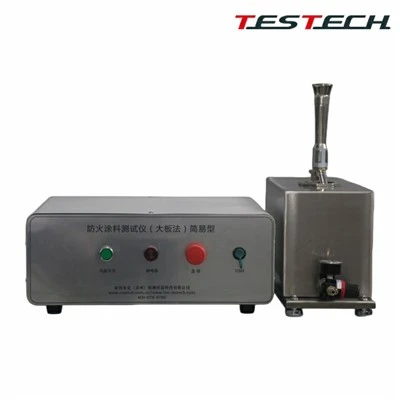
At the end of the day, a wire cable flammability tester is a critical investment. It’s not just a piece of lab equipment—it’s what ensures your products are safe, compliant, and ready to go to market. The last thing you want is to have a tester that gives you inconsistent results, delays shipments, or causes you to fail audits. If you’re dealing with any of the issues I mentioned—burner calibration problems, sample positioning errors, inaccurate timers, poor ventilation, or compatibility headaches—let’s talk. We work with wire and cable manufacturers of all sizes, from small startups to large utility providers, to customize testers that meet their exact needs, with regular calibration support, operator training, and 24/7 access to our service team. We don’t just sell machines—we partner with you to make sure your flammability testing is accurate, reliable, and stress-free. Reach out to our team today to learn more about how we can help you fix your tester problems and keep your operations running smoothly.
Fabric Flammability Tester References
ASTM International. (n.d.). Standard Test Method for Surface Flammability of Materials Using a Radiant Heat Energy Source (ASTM E162).
International Electrotechnical Commission. (n.d.). Tests on electric and optical fibre cables under fire conditions – Part 1-2: Test for vertical flame propagation for a single insulated wire or cable – Procedure for 1 kW premixed flame (IEC 60332-1-2).
Underwriters Laboratories Inc. (n.d.). Standard for Safety for Electrical Wires, Cables, and Flexible Cords (UL 1581).
National Fire Protection Association. (n.d.). Standard for Electrical Installations (NFPA 70).
TESTech Instrument (Suzhou) Technologies
TESTech Instrument (Suzhou) Technologies is one of the most reliable wire cable flammability tester manufacturers and suppliers in China. If you’re going to wholesale durable wire cable flammability tester, welcome to get quotation from our factory. For price consultation, contact us.
Address: 8/F, R&D and Production Workshop No. 5, Jiangsu Guoqian Technology Innovation Industrial Park, 168 Lüliangshan Road, Huqiu District, Suzhou, Jiangsu Province, China
E-mail: sales@testech.com.cn
WebSite: https://www.testechfiretest.com/
