Yo, what’s up everyone? I’m an IR illuminator supplier, and I get asked a ton about the difference between an IR illuminator and a regular light. So, I thought I’d break it down for y’all in this blog. IR Illuminator
Let’s start with the basics. What the heck is an IR illuminator? Well, "IR" stands for infrared. It’s a type of light that’s invisible to the human eye. It sits on the electromagnetic spectrum, just beyond the red end of the visible light spectrum. On the other hand, a regular light, like the ones in your home or office, emits visible light. This is the light that our eyes can detect, and it comes in all the colors of the rainbow – red, orange, yellow, green, blue, indigo, and violet.
One of the biggest differences between an IR illuminator and a regular light is their visibility. As I said, IR light is invisible to us. It’s like a secret light show that only certain devices can see. This is super useful in a bunch of applications. For instance, in security cameras. If you use a regular light at night to illuminate an area, it’s obvious to anyone around. It’s like putting up a big sign that says, "Hey, there’s a camera here!" But with an IR illuminator, the light is invisible to humans. So, the security camera can see clearly in the dark without alerting potential intruders.
Another difference is the way they interact with the environment. Regular light can be affected by things like fog, rain, and dust. When light hits these particles in the air, it scatters, and the visibility can be reduced. But IR light has a longer wavelength than visible light. This means it’s less affected by these environmental factors. It can penetrate through fog and dust better, giving a clearer view even in less – than – ideal conditions. This is why you’ll often see IR illuminators used in outdoor surveillance systems, especially in areas where the weather can be unpredictable.
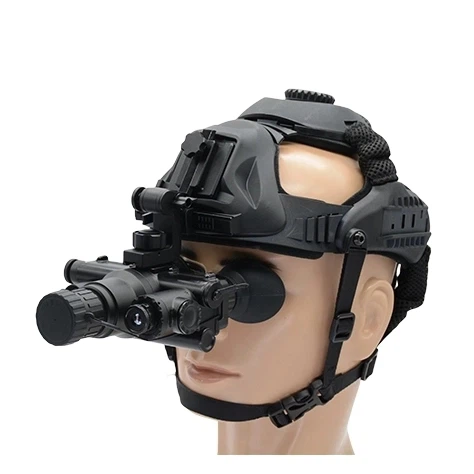
Now, let’s talk about the applications. Regular lights are used for everyday purposes. We use them to light up our homes, offices, streets, and public places. They’re all about making things visible to us humans. But IR illuminators have a more niche set of applications. Besides security cameras, they’re also used in night – vision goggles. Military and law enforcement officers use these goggles to see in the dark during operations. Hunters also use them to track game at night. And in the world of wildlife photography, IR illuminators allow photographers to take pictures of animals at night without disturbing them with visible light.
The technology behind them is also different. Regular lights, like incandescent bulbs, work by heating up a filament until it glows. Fluorescent lights use an electric current to excite mercury vapor, which then emits ultraviolet light. This ultraviolet light is then converted into visible light by a phosphor coating inside the bulb. LED lights, which are becoming more and more popular, use a semiconductor to emit light when an electric current passes through it.
IR illuminators, on the other hand, usually use infrared LEDs. These LEDs are designed to emit light in the infrared spectrum. The technology has come a long way in recent years. Nowadays, we can make IR illuminators that are more efficient, have a longer range, and are more durable.
One thing to consider is the power consumption. Regular lights can be pretty energy – hungry, especially the older incandescent bulbs. They waste a lot of energy as heat. Newer LED lights are much more energy – efficient, but they still consume more power compared to IR illuminators. Since IR illuminators don’t need to produce visible light, they can operate at lower power levels while still providing effective illumination for the devices that can detect IR light.
Color temperature is also a factor. Regular lights have different color temperatures, which affect the look of the light. For example, a warm – white light has a lower color temperature and gives a cozy, yellowish glow, while a cool – white light has a higher color temperature and looks more bluish. But since IR light is invisible, the concept of color temperature doesn’t really apply to IR illuminators.
When it comes to cost, it can vary. Regular lights are mass – produced for general use, so they’re usually quite affordable. But the cost of an IR illuminator depends on its quality, range, and features. High – end IR illuminators with a long range and advanced technology can be pretty expensive. However, for many applications, the benefits they offer make the cost worthwhile.
Now, let’s talk about the market demand. The demand for regular lights is always there. As long as people need to see in the dark, they’ll need regular lights. But the market for IR illuminators is growing. With the increasing need for security, the use of night – vision technology in various fields, and the development of new applications, more and more people are looking for reliable IR illuminators.
If you’re in the market for an IR illuminator, you want to make sure you’re getting a good one. Look for an illuminator that has a good range. The range determines how far the light can reach and still provide enough illumination. Also, consider the beam angle. A wider beam angle will cover a larger area, while a narrower beam angle is better for long – distance illumination.
Another important factor is the durability. Since many IR illuminators are used outdoors, they need to be able to withstand different weather conditions. Look for ones that are weather – resistant and have a good build quality.
So, to sum it all up, the main differences between an IR illuminator and a regular light are visibility, environmental interaction, applications, technology, power consumption, color temperature, cost, and market demand. If you’re looking for a way to illuminate an area without being seen or to enhance night – vision capabilities, an IR illuminator is the way to go.

If you’re interested in purchasing IR illuminators for your security system, night – vision project, or any other application, I’m here to help. I’ve got a wide range of high – quality IR illuminators that can meet your needs. Just reach out, and we can have a chat about what would work best for you.
Night Vision References
- "Infrared Technology: Fundamentals and Applications" by some science dudes
- "Lighting Basics: Understanding Visible and Invisible Light" from a lighting magazine
- "Night – Vision Technology: Advancements and Uses" in a tech research paper
Shenzhen Detyl Optoelectronics Co., Ltd.
With abundant experience, we are one of the most professional ir illuminator manufacturers and suppliers in China. Please rest assured to buy customized ir illuminator at competitive price from our factory. For pricelist and quotation, contact us now.
Address: 4th Floor, Building 3, Factory, No. 20, Second Industrial Avenue, Tangxiayong Community, Yanluo Street, Bao’an District, Shenzhen
E-mail: sales@detyl.com
WebSite: https://www.detyl.net/
