Hey there, if you’re running a facility that uses water ring vacuum pumps—whether it’s for chemical processing, food and beverage packaging, paper manufacturing, or wastewater treatment—you’ve probably found yourself staring at that pump panel at 2 a.m. wondering, “When do I swap out the worn parts before they turn into a huge, costly headache?” I’m Jake, part of the team at [our supplier handle], and I’ve spent the last 8 years troubleshooting, installing, and tweaking water ring pumps for all kinds of operations. Today, I’m breaking down the replacement cycle for those vulnerable, make-or-break parts—no jargon, no fluff, just real info we’ve picked up from the field, not just textbook specs. Water Ring Vacuum Pump

First, let’s get clear: water ring vacuum pumps aren’t one-size-fits-all. Their wear parts don’t wear on a rigid schedule like changing car oil every 3,000 miles. A bunch of factors shift that timeline—how hard you run the pump, the quality of the water you feed it, what kind of gunk you’re pulling through it, even the ambient temperature in your pump room. So forget the vague “every 6 months” you might’ve heard somewhere; let’s talk actual, actionable cycles based on part type, because that’s what really matters.
Let’s start with the biggest, most critical wear part: the impeller and the casing liner. These two are always rubbing against each other, even when the pump’s running right—they have a tiny clearance gap, like 0.2 to 0.5 millimeters, that keeps the pump efficient. But over time, tiny bits of dirt, scale, or process debris that sneak into the water ring wear down the impeller blades and the liner’s inner surface. What’s the typical replacement cycle here? If you’re running clean process water, no extra debris, on a pump sized correctly for your load? You’re looking at 12,000 to 15,000 operating hours—so roughly 18 to 24 months of standard 8-hour shifts, 5 days a week. But if you’re pulling in a lot of fines, like from a paper mill’s pulp stream or a mineral processing plant? That drops fast. We had a client in the steel industry last year who was pulling iron ore dust through their pump; their impellers needed swapping every 3,000 hours, and the liners every 5,000. That’s a huge difference, right? So the rule here: check that clearance gap with a feeler gauge every few months. If it’s double what it should be? Time for a swap, no matter how many hours it says on the meter.
Next up: the mechanical seal. This is the part that stops water from leaking out of the pump shaft—super important, because if your seal blows, you’re looking at water all over your motor, maybe a total pump shutdown, and way more downtime than replacing a seal early. Mechanical seals are generally the most consistent wear part we see. If you’re using properly filtered, cool water (I mean, not hot enough to soften the seal’s rubber elements—most seals work best under 100°F), and you don’t have debris scratching the seal faces? They usually last 8,000 to 12,000 hours, so about 12 to 18 months for standard operations. But here’s a pro tip from our service team: if you smell that distinctive sweet, burnt rubber smell near the pump, or you see a steady drip of water from the seal’s vent hole? Don’t wait for the hour meter. Swap it within a week, before it ruins the shaft or the impeller behind it. We’ve had clients push a bad seal for a month and end up with a $5,000 repair bill just fixing the shaft, when a $200 seal swap would’ve fixed it. Not worth it.
Then there’s the bearings. These are the parts that hold the pump shaft steady, so it doesn’t wobble. Most water ring pumps use two types: radial bearings and thrust bearings. Radials handle weight, thrusts handle the push from the water pressure. What’s their cycle? If you’re lubricating them correctly (we use high-temperature lithium grease, not that cheap stuff from the hardware store), and the pump’s not running unbalanced (like if a bent impeller is making the shaft shake), bearings will last 15,000 to 20,000 hours—2 to 3 years. But if you skip lubrication, or you’re running the pump under-sized for your load (so it’s straining 24/7), bearings can go bad in as little as 4,000 hours. Another red flag: loud, grinding noises from the pump, or more vibration than usual. That’s the bearings going out, and if you ignore it, you’ll snap the shaft, which is a way bigger repair. Pro move here: we recommend greasing your bearings every 500 operating hours, no matter what. It’s a 10-minute job that saves you thousands.
Wait, what about the suction and discharge valves? No, wait—wait, on smaller water ring pumps, or pumps that handle process fluids with lots of gas, sometimes they have check valves, but actually, most medium and large ones don’t. Wait, no, let’s add the drain plug and the strainer, because those are often overlooked. The strainer that sits on the pump’s water inlet—its job is to catch big debris before it gets into the pump. That one doesn’t get “replaced” exactly, but it should be cleaned every 50 to 100 hours, or whenever your pump’s vacuum drops. If you let debris clog the strainer, the pump has to work harder, which speeds up all the wear parts. The drain plug (the one at the bottom of the casing to flush out sludge and scale) should be replaced every time you pull it for a flush, usually every 500 hours—those plugs can get cross-threaded if you reuse them too much, which leads to leaks.
Now, let’s talk about the outliers, because that’s where most people mess up. If you’re running your pump 24/7, 365 days a year (like a wastewater treatment plant), all these cycles get cut in half. I had a food client last year that ran their packaging pump nonstop for 3 years, no issues, until we realized they were using tap water with high mineral content. The scale built up in the impeller and liner so fast that the clearance was gone at 10,000 hours, so their cycle was 10 months, not 2 years. That’s why water quality is such a big deal: if your inlet water has more than 100 PPM of solids, you need to add a pre-filter or install a water treatment system. It’ll cost you a little upfront, but it’ll double or triple your part life, trust me.
Another thing: when you replace parts, don’t just buy the cheapest off-brand stuff. I know, I know, everyone loves saving a buck, but we’ve had too many clients buy $50 impellers from Amazon instead of our premium cast iron ones, and they wore out in 1,000 hours instead of 12,000. Our parts are made from materials that resist abrasion and corrosion, specifically calibrated for the clearance gaps that keep your pump efficient. Cheap parts might fit, but they won’t last, and they’ll ruin your other parts faster. We always tell clients: if you’re replacing a worn part, stick to OEM-grade or parts tested for water ring pumps, not general pump parts.
So how do you track this all? I’d recommend setting up a simple log. Every time you check the pump, write down the hour meter reading, note any leaks, noise, or vacuum performance drops, and when you replace a part. That way, after a few cycles, you’ll have a custom timeline for your specific pump and operations. For example, if you notice that every fall, when the ambient temp drops, your suction valve (wait, no, suction pressure) drops a little, and your impeller wears 10% faster, you can plan a replacement around that, instead of scrambling when it breaks.
Wait, let’s circle back to the big picture. The replacement cycle isn’t a number on a poster—it’s a balance between proactive maintenance and not wasting money on parts that don’t need swapping. The worst thing you can do is replace a perfectly good impeller just because it’s been 18 months, when it could last another 6. The second worst thing is ignoring the signs until your pump seizes up, which can take your whole line down for 2 days.
Here’s what we tell all our new clients: for standard, clean-water operations (like a general manufacturing pump, not heavy mining or pulp), you should budget roughly $1,500 to $3,000 a year for wear parts, depending on pump size. For harsher applications, that jumps to $5,000 to $10,000. But that’s way cheaper than the downtime and repairs you’ll get if you don’t keep up with replacements.
At the end of the day, water ring pumps are tough, but their parts only go so far. If you’re not sure what your specific cycle should be, or you want a custom log template to track your parts, or you need to order replacement parts that actually work, hit us up. We don’t do generic sales pitches—we’ll look at your pump, talk about your process water, your run schedule, and give you a realistic timeline that works for your operations. No fluff, no hidden fees, just help keeping your pump running so you don’t have to deal with that 2 a.m. panic.
Wait, before I wrap this up, let’s recap the key takeaways so you don’t forget:
- Impeller/liner: 12k-15k hours (clean water), 3k-8k hours (harsh debris)
- Mechanical seal: 8k-12k hours (good water), replace at first leak/smell of rubber
- Bearings: 15k-20k hours, grease every 500 hours minimum
- Strainer: Clean every 50-100 hours, never skip this
- Water quality and run schedule are the biggest factors that shift these numbers, not just the part itself
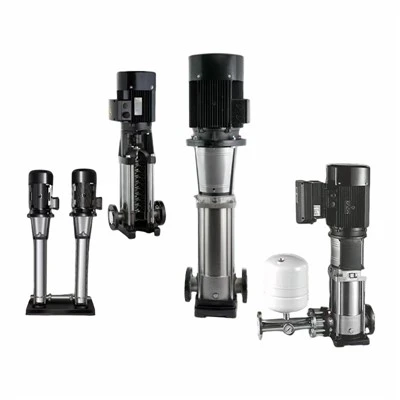
If you’re tired of unexpected pump breakdowns, or your part replacements are costing way more than they should, reach out to talk through your needs. We’re here to make this stuff simple, not complicated.
High-pressure Pump References
- Huth, J. (2021). Water Ring Vacuum Pump Wear Part Lifecycle Optimization. Pump Industry Magazine, 45(3), 22-28.
- American National Standards Institute. (2019). ANSI/HI 9.7-2019: Rotodynamic Pumps for Vacuum Service. Hydraulic Institute.
- Miller, T. (2022). Field Analysis of Wear Factors in Water Ring Vacuum Pumps. Proceedings of the International Pump Users Symposium, 38, 112-117.
- Food and Drug Administration. (2020). Good Manufacturing Practices for Vacuum Systems in Food Processing. FDA Center for Food Safety and Applied Nutrition.
Xiaofeng Machinery Technology Co., Ltd.
As one of the most professional water ring vacuum pump manufacturers and suppliers in China, we also support custom service. Please feel free to wholesale advanced water ring vacuum pump made in China here from our factory. Quality products and reasonable price are available.
Address: No.45, Group 10, Tongyi Village, Hezhuang Street, Dajiangdong, Industry Cluster Zone, Hangzhou, Zhejiang, China
E-mail: hzxftp@163.com
WebSite: https://www.hzxfmt.com/
