If you’ve ever stopped to research metal materials for construction, automotive parts, or heavy manufacturing, you’ve likely come across the term “low-carbon steel.” As a carbon steel supplier with over a decade of working directly with fabricators, machinists, and small business owners, I can’t tell you how many times I’ve gotten a call from someone asking a very straightforward question: “What’s the carbon content in low-carbon steel?” It sounds simple enough, but the answer isn’t just a single number, and misunderstanding it can lead to huge headaches—from parts that don’t hold up to corrosion to projects that go over budget. Carbon Steel
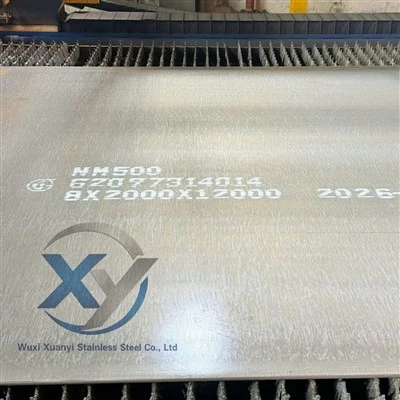
Let’s start with the basics. Steel, at its core, is an alloy made of iron and carbon, with tiny amounts of other elements like manganese, silicon, or phosphorus that show up from the manufacturing process. The thing that makes different types of steel unique is how much carbon they have. Carbon is the key here: it’s the element that changes steel’s strength, hardness, ductility (how easily it bends or stretches), and weldability. Too little carbon, and the steel is too soft for most jobs; too much, and it becomes brittle, prone to cracking.
Low-carbon steel—sometimes called mild steel, a name that’s stuck around for decades—sits at the lower end of that carbon range. For decades, the standard definition we’ve used in the industry has been steel with a carbon content between 0.05% and 0.25% by weight. But if you dig into the latest standards from organizations like the American Society for Testing and Materials (ASTM) or the International Organization for Standardization (ISO), you’ll see that this number isn’t set in stone. It can shift a little based on what grade you’re talking about, and that’s a detail that trips up a lot of first-time buyers.
Let me break down the common low-carbon steel grades most suppliers work with, because not all mild steel is the same. Take A36, for example—this is the workhorse of construction steel, the stuff you use for I-beams, angle iron, and general structural framing. Its carbon content lands right in the middle of the low-carbon range, usually between 0.21% and 0.25%. That’s high enough to give it good tensile strength (around 58,000 psi for A36) so it can hold up to heavy loads, but low enough that it’s extremely easy to weld. If you’ve ever seen a contractor out on a job site welding steel beams together, chances are they’re using A36, and they’re not burning through half the electrode trying to get a solid weld—thanks to that low carbon level.
Then there’s 1018, a grade of low-carbon steel that’s super popular for machining parts. 1018 has a carbon content of roughly 0.18%—hence the name. It’s a touch softer than A36, which makes it ideal for turning on a lathe, drilling, and cutting into precise shapes for things like bolts, gears, or small automotive components. Because it’s so easy to machine, it’s a go-to for small parts manufacturers who don’t want to deal with the extra wear on their tools that comes with harder steel.
Wait, but what about steel that’s below 0.05% carbon? Sometimes you’ll hear people talk about “ultra-low-carbon steel,” which can drop as low as 0.002% carbon. That’s still technically under the 0.25% threshold for low-carbon steel, but it’s a special grade used for things like automotive body panels or pipes that need extra formability—think of the curved fenders on a car, which need to stretch without cracking. For most general applications, though, that ultra-low-carbon stuff is overkill, and it’s more expensive, so you’d only reach for it if your project specifically calls for it.
Now, why does this carbon content matter for you, the person buying steel, not just for the metallurgists in a lab room? Let’s talk about the biggest practical differences: weldability, strength, and corrosion resistance. First, weldability. The lower the carbon, the less likely steel is to experience something called “cold cracking” when you heat it up during welding. That’s when the weld area cools too fast and splits, ruining the joint. So if you’re working on a project that requires lots of on-site welding—like building a custom metal fence, or fabricating a set of steel shelves—low-carbon steel is your best bet. High-carbon steel, with its higher carbon content, is way harder to weld and usually needs preheating before you even start, which adds time and cost to your project.
Strength is the other big one. A 0.25% carbon low-carbon steel is about twice as strong as pure iron, which is almost pure 0.0% carbon. But if you’re trying to lift extremely heavy loads, you might need a higher carbon steel, like medium-carbon steel (0.25% to 0.5% carbon) which is stronger but harder to weld. The tradeoff is always there: lower carbon = easier to work with, more ductile; higher carbon = stronger, more prone to cracking. As a supplier, I always advise people to match their steel to their job, not just grab the cheapest one. I’ve seen customers buy a higher grade of steel than they need, wasting money, and others buy too low a grade, ending up with parts that bend or break before they’re even installed.
Wait, but let’s clear up a common misconception: “mild steel is not very strong.” For a lot of everyday uses, that’s totally fine, and in many cases, mild steel is stronger than you need. A 1/4-inch thick A36 steel plate is strong enough to hold the weight of a small shed, a workbench, or even a light vehicle frame. It’s only when you’re talking about extreme loads—like a skyscraper’s support beams, or a truck’s axle—that you need a higher strength steel.
Another thing to mention: how is that carbon content measured? You don’t have to do this yourself, but it’s good to know that reputable steel suppliers test every batch. We use a quick, non-destructive test called a spark test, where you grind a sample of steel and look at the sparks that fly off. Low-carbon steel produces short, thin sparks, while higher carbon steel has longer, more branched sparks. We also send samples out for chemical testing to confirm the exact carbon percentage, so our customers know exactly what they’re getting. No cutting corners, no misleading labels.
Now, I know some of you might be thinking, “Why does this matter if I just need a few pieces of steel for a simple project?” Let me give you a real example from last year. A customer of mine ran a small metal fabrication shop, and he ordered a batch of what he thought was A36 steel to make metal frames for a set of outdoor deck railings. When he got the steel, he started welding, and the joints kept cracking. He called me frustrated, thinking he’d gotten bad steel. Turns out, the batch he ordered was actually a low-carbon steel with a carbon content right at 0.25%—which is technically A36— but because it was that edge of the range, it was a little harder than usual, so he didn’t adjust his welding technique (like using a slower cooling electrode) and the joints cracked. We worked through it, explained the carbon range, and adjusted his process, and he’s been a repeat customer ever since. That’s the kind of thing that happens when you don’t fully understand the carbon content you’re working with.
As a supplier, I also want to talk about where low-carbon steel fits into the big picture. It’s the most commonly used steel in the world, making up over 70% of all steel produced. That’s because it’s cheap, versatile, and easy to work with. Compare that to stainless steel, which has a lot more chromium and usually a higher carbon content, or tool steel, which is high in carbon for hardness. Low-carbon steel is everywhere: in car bodies, washing machines, refrigerators, nails, screws, bridges, and even the cans your soda comes in. It’s not flashy, but it’s the backbone of modern manufacturing.
So, to circle back to the original question: what is the carbon content in low-carbon steel? The short answer is, generally between 0.05% and 0.25% by weight, with specific grades falling in smaller ranges within that. The long answer is that it’s a flexible range that adapts to different uses, and understanding that range is the key to getting the right steel for your project.
If you’re currently working on a project and aren’t sure which low-carbon steel grade is right for you—whether it’s for construction, machining, automotive parts, or custom fabrication—I’m here to help. As a carbon steel supplier with years of hands-on experience, I can walk you through the pros and cons of each grade, share real-world examples of how they perform, and even help you order the exact size and quantity you need without wasting money on extra material. Don’t guess when it comes to steel; get the facts from someone who works with this stuff every day. Reach out to discuss your project requirements, and let’s find the perfect low-carbon steel solution for you.
Stainless Steel Welded Pipes and Tubes References
- ASTM International. (2021). Standard Specification for Carbon Structural Steel (Specification A36/A36M-21).
- International Organization for Standardization. (2019). Steel—Designation Systems (ISO 15781:2019).
- Metals and Materials International. (2020). “Carbon Content Effects on Weldability of Low-Carbon Steels.” Vol. 26, No. 4, pp. 512-520.
- The World Steel Association. (2022). Steel Products for Construction: Low-Carbon Steel Applications.
Wuxi Xuanyi Stainless Steel Co., Ltd.
Wuxi Xuanyi Stainless Steel Co., Ltd. is one of the most professional carbon steel manufacturers and suppliers in China. With abundant experience, we warmly welcome you to wholesale bulk durable carbon steel made in China here from our factory. If you have any enquiry about cooperation, please feel free to email us.
Address: Room 1207, Building 11, Shengang Metropolis Plaza, No. 299 Fangcheng Avenue, Xinwu District, Wuxi City,China.
E-mail: jscherryxy@163.com
WebSite: https://www.xuanyisteel.com/
