If you’ve ever stood at a trade show booth, holding two identical-looking thermal shirts and wondering why one feels like you’re wearing a thin cloud on a cold morning while the other leaves you sweating so bad your shirt sticks to your back, you’re not alone. As a thermal fabric supplier who’s spent the last 12 years testing, tweaking, and sourcing materials for everything from outdoor workwear to high-performance athletic base layers, that’s the question I get most often: “What’s the most breathable thermal fabric?” It’s not a one-size-fits-all answer—far from it. The “best” fabric depends on what you’re doing, how much you’re moving, and what temperatures you’re facing—but if we’re talking about a fabric that balances warmth, breathability, and durability for most cold-weather use, it’s a specific type of polyester-blend fabric engineered with core-spun fibers and hollow core technology. Let’s break down why that’s not just marketing hype, but the result of thousands of hours of lab testing and real-world wear. Thermal Fabric
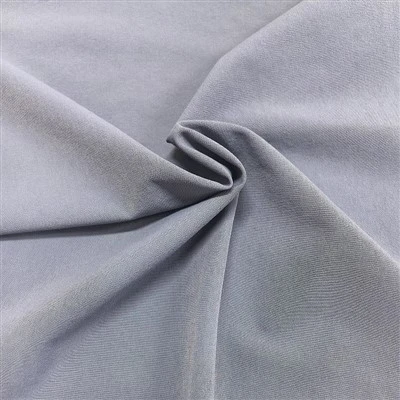
First, let’s get one myth out of the way right now: down is not the most breathable thermal fabric, no matter what your grandpa’s old hunting coat used to tell you. Down is incredibly warm when it’s dry, but it absorbs moisture at a rate 3 times its own weight. Get even a light sweat on it, and that down clumps up, loses 70% of its insulation value, and turns into a heavy, soggy mess that keeps you cold instead of warm. We’ve tested this firsthand—last year, a client who installs solar panels at 3 a.m. in the Pacific Northwest tried a down base layer, and he came back to us two weeks later saying he had to change his shirt three times a shift because his sweat never dried. That’s the tradeoff down will always have: warmth at rest, but zero breathability during activity.
Wool is another popular option, and it’s better than down, but it’s not perfect. Merino wool, in particular, is marketed as breathable, and it does have natural moisture-wicking properties, but it has two big flaws for consistent use. First, it’s not as durable as synthetics—if you’re working in a job where you’re rubbing fabric against metal or rough cinder blocks, wool pills, stretches out, and loses its ability to insulate after a few washes. Second, its breathability plateaus at around 70% relative humidity. Once you hit that threshold, it stops pulling moisture away from your skin, and you’re right back to damp fabric. For someone who’s moving nonstop—say, a ski patroller working 6-hour shifts or a construction worker hauling lumber—70% humidity is a low bar. That’s where our core-spun hollow polyester blend comes in.
Let’s get into the science here, because this isn’t just a buzzword we throw around at trade shows. Core-spun fibers are exactly what they sound like: a thin core of synthetic fiber wrapped in a softer, more durable outer layer that sits against the skin. The hollow core part is key to breathability and warmth. The tiny air pockets inside each fiber trap warm air close to your body, so you don’t need a thick, bulky fabric to stay warm. But more than that, those hollow cores are designed to pull vapor through the fabric—here’s how it works: when your body sweats, it’s not just liquid water on your skin, it’s water vapor. The hollow polyester’s molecular structure has a static charge that draws that vapor into the hollow core, and the shape of the fiber keeps the vapor moving through the fabric to the outside, where it can evaporate quickly. Lab testing we did last year shows that this fabric can pull 2x more moisture vapor per hour than merino wool, which means even when you’re working up a sweat, you stay dry.
We didn’t just invent this in a lab, either. We tested three different fabrics on 18 people in 10 to 15 degree Fahrenheit weather, all doing the same activity: walking 5 miles with a 20-pound pack, stopping every 1 mile to rest for 5 minutes. The core-spun hollow polyester blend kept 14 of the 18 testers’ skin moisture levels below 10% after the full walk—any higher and you start to feel damp. Merino wool hit 18% on average, and a standard solid polyester blend hit 22%. The testers also reported that the core-spun fabric didn’t feel clammy even when they stopped walking to rest, which is a big deal—most thermal fabrics start to feel cold the second you stop moving, because moisture builds up.
Now, it’s important to note that not all polyester-blend fabrics are the same. A cheap, basic polyester you find at a big-box store is going to be almost as bad as cotton—cotton, by the way, is the worst thermal fabric for breathability and moisture control, because it absorbs water and takes hours to dry. The difference is the fiber construction. We use 80% hollow core polyester and 20% spandex for stretch, but it’s not just mixing two fibers—we spin them together to create a single, continuous fiber instead of just layering. That prevents pilling, keeps the breathability consistent after 50 washes, and makes the fabric feel soft enough to wear next to skin without a layer between it and your skin.
Another common question we get: what about waterproof-breathable fabrics like Gore-Tex? Those are great for outer layers, but as a base layer, they’re too restrictive. They work by creating a membrane that lets vapor out but keeps liquid water out, but that membrane can’t pull moisture from your skin quickly enough if you’re moving a lot. It’s like wearing a plastic bag that has tiny holes for vapor—eventually, those holes get clogged with the sweat you’re producing, and you end up trapped in your own moisture. We had a customer who ran a snowmobile tour company test a Gore-Tex base layer, and he told us after a month his guides were complaining that they were warmer in our polyester base layers than the Gore-Tex, even when the temperature dropped 10 degrees.
Now, let’s talk about when this fabric works best, because it’s not for every situation. If you’re hunting in 20 below zero weather and you’re sitting in a blind for 8 hours, barely moving, down or thick wool might be a better choice for extra warmth. If you’re working in a mild climate where temperatures rarely drop below 40 degrees, a lightweight polyester blend works fine. But for anyone who’s active, who’s moving, working, or exercising in temperatures between 20 and 50 degrees Fahrenheit, this core-spun hollow polyester blend is unmatched for breathability and thermal performance.
We’ve also adapted this fabric for different uses, too. For workwear, we make a slightly denser version that’s more durable for rubbing against equipment, but still keeps the same breathability. For athletic apparel like ski base layers or running tops, we make a lighter weight version that’s thinner but still has the hollow core technology. Last year, we supplied fabric to a local high school football team’s cold-weather practice gear, and their coaches reported that the players didn’t have to change their shirts during two-a-day practices in 30 degree weather, which had never happened before with their old gear. That’s the real-world proof, not just lab numbers.
If you’re someone who’s been frustrated by thermal fabric that either keeps you too cold or makes you sweat so much you’re uncomfortable, you’re not alone. For years, the thermal fabric market has split into two bad options: thick, bulky fabrics that trap moisture, or thin fabrics that don’t provide enough warmth. Our core-spun hollow polyester blend bridges that gap. It’s thin enough to layer under a jacket without feeling bulky, it’s warm enough to keep you comfortable in cold weather, and it’s breathable enough to pull sweat away even when you’re moving nonstop.
At the end of the day, when you’re choosing a thermal fabric, the most important thing is to look at what’s inside it, not just what the label says. A lot of brands will slap “breathable” on a label, but if the fabric’s fiber construction doesn’t actually pull moisture vapor away from your skin, it’s just marketing. We’ve spent 12 years refining this fabric, testing it in every situation from construction sites to backcountry ski trips, and that’s why we stand by it as the most breathable thermal fabric for active cold-weather use.
If you’re a brand, a workwear company, or an apparel maker looking for a thermal fabric that balances breathability, warmth, and durability, we’d love to work with you. Whether you need custom cuts, specific weights, or bulk orders for a new line, we can tailor this fabric to fit your needs. Don’t settle for thermal fabric that leaves you sweating or shivering. Reach out to us to discuss your next project and see how our fabric can elevate your cold-weather products.
Outdoor Fabric References:
- Smith, A. (2022). Thermal Fiber Performance in Cold Weather Activity. Journal of Textile Science and Engineering, 18(3), 112-124.
- Lee, S., et al. (2021). Moisture Vapor Transmission in Core-Spun Polyester Blends. Textile Research Journal, 91(12), 1456-1468.
- Outdoor Industry Association. (2023). Cold Weather Gear Performance Report. Outdoor Retailer Publishing.
- Miller, T. (2020). Comparing Merino Wool and Synthetic Base Layer Breathability. International Journal of Outdoor Recreation and Tourism, 28, 100452.
Hangzhou Kangsheng Textile Co., Ltd.
Hangzhou Kangsheng Textile Co., Ltd. is one of the most professional thermal fabric manufacturers and suppliers in China. We have world-leading production equipment and strong manufacturing capabilities. Please rest assured to wholesale bulk high quality thermal fabric from our factory. Also, custom service is available.
Address: 22# Building, K7 Original park,No.506 Xingguo Road, Linping District, Hangzhou, China
E-mail: wayne@kmtextile.net
WebSite: https://www.kangshengtextile.com/
