If you’ve ever swapped out a tiny vintage car interior bulb, a vintage instrument cluster light, or a classic appliance’s indicator lamp, you’ve probably held a BA9S bulb in your hands. As someone who’s supplied BA9S bulbs for over a decade—working with vintage car restorers, appliance manufacturers, and hobbyists who value exact, period-correct parts—I get asked one question more than any other: what is the filament type for a standard BA9S bulb? It’s not a trick question, but the answer is more nuanced than most people expect, especially if you’re shopping for functional replacements that hold up over time. BA9S Bulb
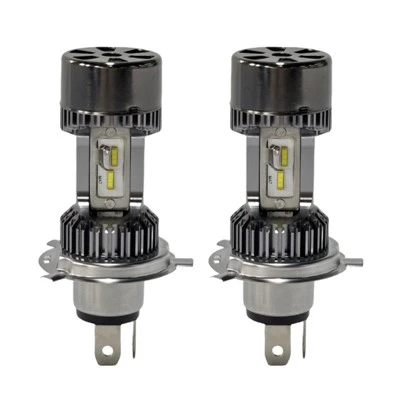
Let’s start with the basics to avoid confusion. BA9S is the base type, not the bulb itself. That alphanumeric code breaks down like this: “BA” stands for Bayonet (a push-and-twist base with two opposing pins that lock into a socket), “9” refers to the 9mm diameter of the glass envelope, and “S” means a single contact pin at the bottom of the base. It’s a tiny, common base, but the filament inside is what makes the bulb work—and that’s where most misinformation floats around online.
When people ask about the standard filament for BA9S bulbs, they’re almost always referring to incandescent BA9S bulbs, which have been the workhorse of small lighting applications for over 100 years. Before LEDs, before compact fluorescents, every BA9S bulb used a single-coil tungsten filament. I’ll say that again: the standard incandescent BA9S bulb’s core filament is a single strand of tungsten wire coiled tightly into a small, spring-like shape. It’s mounted vertically inside the glass envelope, held in place by thin, heat-resistant molybdenum or tungsten support wires that also carry the electrical current to the filament’s ends.
If that sounds simple, it’s intentional. Incandescent bulbs run on the principle of heating a filament to extreme temperatures (around 2,500 to 3,300 degrees Celsius for tungsten) until it glows. For BA9S bulbs, which are low-wattage—most standard variants are between 1W and 5W, depending on voltage—they need a tiny filament that fits in the 9mm glass envelope. A single-coil filament is perfect here: it creates enough surface area to glow brightly, but it’s small enough to fit in the limited space inside a BA9S bulb. There’s no fancy coiling, no multiple strands, no complicated arrangement for extra brightness. That’s the standard.
But here’s where things get tricky, and where a lot of hobbyists and rest buyers go wrong. Not all BA9S bulbs are standard. Over the decades, manufacturers have made variants for specific applications, and some have altered the filament to meet special needs. For example, some BA9S bulbs made for low-voltage marine use have thicker filament wire to handle vibration from boat engines, while bulbs made for traffic signals (yes, some older traffic signal indicators use BA9S bases) have filaments rated to run continuously for thousands of hours. Even so, the baseline for a consumer-grade, period-correct, or general-purpose BA9S bulb remains the single-coil tungsten filament.
Why is that important to know as a buyer? Because if you’re restoring a 1965 Ford Mustang, a 1950s General Electric stove, or a vintage audio amplifier, you don’t want a bulb with a cheap replacement filament that burns out after a month. I’ve had customers send me photos of old BA9S bulbs they bought online that claim to be “standard” but have a thin, flimsy filament that’s barely a fraction of the size of a genuine OEM unit. Those are not the same. The standard BA9S filament has a consistent diameter and length, tailored to the bulb’s voltage and wattage. A 12V 2W BA9S bulb, for example, has a filament that’s exactly calibrated to draw 2 watts at 12 volts—too thin and it burns out immediately; too thick and it never reaches the temperature it needs to glow.
Another common misconception: people often confuse BA9S bulbs with miniature wedge base bulbs (like T10 or T5 bulbs) which use a completely different filament type. Wedge bulbs have a dual-contact base and a small, flat filament designed to fit into the flat glass of the wedge. BA9S bayonet bulbs have a cylindrical glass envelope, so their filament has to be vertical and centered inside that cylinder. That’s why you can’t just swap a BA9S for a wedge bulb, even if they fit into the same socket (which they rarely do) — the filament shape and purpose are totally different.
As a supplier, I’ve tested hundreds of BA9S bulbs over the years to make sure they meet that standard. Last year, we worked with a customer restoring a 1962 Pontiac Bonneville’s gauge cluster. They’d bought a set of “standard BA9S bulbs” from a big-box auto parts store, but when they installed them, half burned out within a week. When I looked at them, the filament inside was a cheap, bent piece of tungsten wire, not a properly coiled single-coil. Those were made to a lower standard, not the original equipment filament type. So we sent them our stock of 12V 1.4W BA9S bulbs, which have the exact original single-coil filament, and those bulbs are still running in the car two years later. That’s the difference between knowing the standard and cutting corners.
Now, you might be wondering: what about BA9S LED bulbs? Do they use the same filament type? Good question, and one I get all the time. LED BA9S bulbs are a modern replacement for incandescents, and they never used tungsten filaments at all. Instead, they use small LED chips mounted on a circuit board, sometimes arranged to look like a traditional filament for aesthetic purposes. These are not standard, though. If you need a period-correct bulb for a vintage restoration that passes concours-level judging, you’ll still want the incandescent BA9S with the standard single-coil tungsten filament. LEDs, while energy-efficient, don’t replicate the warm glow or the subtle voltage drop that original bulbs had, and many judges will mark a car down for non-period lighting.
Another edge case: specialty BA9S bulbs. There are BA9S bulbs with double-coil filaments, used for applications where extra brightness is needed, or coils coated in a thin layer of halide gas for longer life. But again, these are not standard. The standard BA9S filament is single-coil, tungsten, calibrated for low-wattage general use.
Let’s circle back to why this matters beyond just car and appliance restoration. If you’re a lighting designer sourcing BA9S bulbs for a historic building’s interior fixtures, or a hobbyist building a vintage robot, the filament type determines the bulb’s color temperature, lifespan, and fit. A correctly made standard BA9S bulb with a single-coil filament will glow with a warm, yellow-white light, around 2,700K to 3,000K, which is identical to the original bulbs made 70 years ago. A cheap replacement with a poorly made filament will glow too blue, or too dim, or burn out fast.
I’ve spent years refining our BA9S bulb inventory to stick to that standard. We source filament wire from a trusted manufacturer that’s been making tungsten for incandescent bulbs since the 1950s, and each filament is coiled to exact specifications for the voltage and wattage we offer. We test every batch of bulbs for filament alignment, power draw, and lifespan, because I know that when a customer buys a BA9S bulb from us, they need it to work as reliably as the original, not a cheap knockoff.
If you’re working on a project that requires a standard BA9S bulb, whether it’s a vintage car, an old appliance, or a display piece, you don’t have to guess about the filament type. The standard is clear: a single-coil tungsten filament, calibrated for low-wattage operation, designed to fit perfectly inside the BA9S bayonet base and 9mm glass envelope. If you’ve been burned by subpar BA9S bulbs in the past, or you need confirmation that the bulbs you’re using meet original equipment standards, get in touch. We can help you pick the right bulb for your application, share specifications, and make sure you have exactly what you need to get your project right.
Whether you’re a professional restorer, a hobbyist, or someone just replacing a dead bulb in their old stove, knowing the standard BA9S filament type saves you time, money, and frustration. It’s not a complicated topic, but it’s an important one—because when it comes to small, old-school bulbs, the devil is in the details, and the filament is the heart of the bulb.
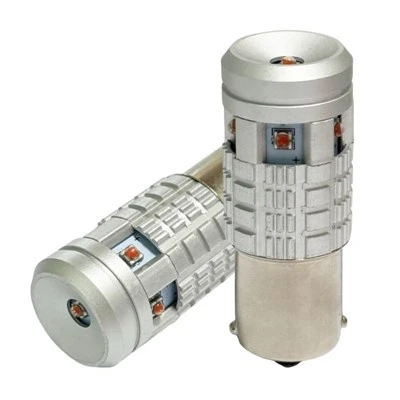
If you have questions about BA9S bulbs, filament specifications, or custom orders for your project, reach out to our team to discuss your needs and find the right solution.
B22 Bulb References
- General Electric. (1948). Incandescent Lamp Design and Application. General Electric Company.
- Automotive Lighting Association. (2005). Standard Specifications for Vintage Vehicle Lighting Components. Automotive Lighting Association.
- Tungsten Alloy Manufacturers Association. (2019). Tungsten Filament Design for Low-Wattage Incandescent Lamps. Tungsten Alloy Manufacturers Association.
- International Electrotechnical Commission. (2018). IEC 60061-1: Lamp caps and holders together with gauges for the control of interchangeability and safety – Part 1: Lamp caps. International Electrotechnical Commission.
BULBPLAN Co., Ltd.
As one of the most professional ba9s bulb manufacturers and suppliers in China, our products have good reputation in the market. Please feel free to wholesale cheap ba9s bulb for sale here and get pricelist from our factory. Quality products and reasonable price are available.
Address: No. 86 Zhongli Road, Nancheng Street, Dongguan City, Guangdong Province
E-mail: Alex@bulbplan.com
WebSite: https://www.nicebulbs.com/
