Hey folks, let’s cut to the chase: if you’ve ever grabbed a basic plastic tape measure (you know, the flexible ones that bend around door frames or fit in a toolbox) to measure something thick—like a rubber gasket for a pump, a sheet of industrial metal, or a stack of plastic film for packaging—you’ve probably run into a mess. That thing twists, sags, bounces off curved surfaces, and gives you numbers that are off by millimeters, no joke. That’s where rigid tapes come in, and as a supplier who’s spent years talking to manufacturers, fabricators, and hobbyists, I get asked all the time: “Are rigid tapes actually good for measuring material thickness?” Spoiler: It depends, but more often than you think, they solve problems flexible tapes can’t touch. Rigid Tape
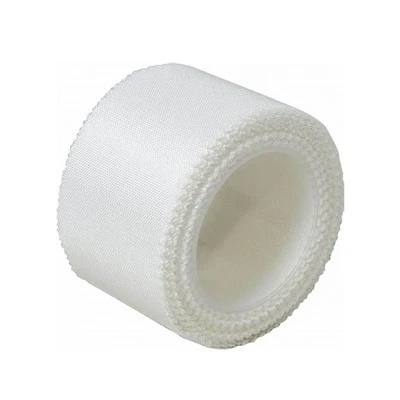
Let’s start with the lowdown on what rigid tapes even are, because a lot of people mix ’em up with the regular ones. Flexible tapes are spring-loaded, bendy, and built to give you length around corners. Rigid tapes? They’re flat, stiff, usually 1/8-inch to 1/2-inch thick, and hold a straight line all the way—no sag, no twist, no accidental curves mid-measure. We make ours with tempered steel scales, printed with laser-etched marks that don’t wear off even if you drop ’em or scrape ’em against metal. But let’s get real: why does stiffness matter for thickness? Thickness measurements are all about consistency. If you’re trying to measure a 10mm thick aluminum sheet, a flexible tape will curve around the edge of the sheet, so you’re measuring from the far corner of the curve instead of the actual flat thickness. That’s a 2mm error, easy—enough to ruin a cut for a CNC machine or reject a batch of gaskets that don’t fit. Rigid tapes sit flat against the material’s face, so you’re measuring the straight, uniform thickness every time.
I talk to a guy last month who runs a custom sign shop. He was using flexible tapes to measure acrylic sheets for custom window clings. The flex tape would slip under the cling, and he’d get readings that were 1mm too thin. That meant his cutters would whittle away too much acrylic, and half the jobs got sent back because the cling wouldn’t lay flat. He switched to our rigid tape, and overnight, his error rate dropped to 0.2mm. He told me, “I used to spend 20 minutes a day re-measuring; now I knock out 50 sheets before lunch.” That’s the kind of win you don’t get with a cheap flex tape.
But wait—let’s not pretend rigid tapes are perfect. There are cases where they suck, and I’ll tell you straight what they’re bad at. If you need to measure something that’s super thin—like a sheet of paper, or a plastic film thinner than 0.5mm? Rigid tape’s too thick itself, so you can’t get a tight edge against the material. If you’re measuring a curved surface, like the side of a pipe, a rigid tape won’t bend around it at all, so you’ll have to use a flexible tape or a caliper. Oh, and don’t use a rigid tape to measure really long distances—we’re talking over 10 feet—because even the stiffest one will bend under its own weight, leading to errors the same as a flex tape. I’ve had a few guys show up thinking rigid tapes are a magic fix for every measuring job, and they leave laughing when I point out they’re holding a rigid tape upside down to measure a 15ft radius pipe.
Let’s get into the nitty-gritty of real-world use cases, because that’s where rigid tapes shine. First up: industrial manufacturing. Think metal fabrication, where you need to measure steel plates for heavy machinery. Flex tapes give inconsistent readings because metal edges are sharp and uneven, so the flex tape doesn’t seat flat. Rigid tapes let you press down firmly (we mark them with a “press here” line on the end, for new users) until the tape touches the back of the plate, and the scale pops right to the thickness. A client in the automotive parts industry told me they saved $12k a year in scrap just by switching from flex to rigid tapes. Their old process would reject 15% of steel blanks for thickness errors; now that’s down to 1.5%. That’s not a small number—for a factory cranking out 100 blanks a day, that’s 13.5 fewer blanks going to waste every single day.
Then there’s construction, but not just general construction. Think glaziers who install commercial glass. They need to measure glass panels to within 0.3mm accuracy, because if a panel’s even 0.5mm too thick, it won’t fit into the aluminum frame’s rubber seal. I’ve seen glaziers use rigid tapes for years because calipers are too small for full-size panels, and micrometers take way too long. One glazier told me he used to take 5 minutes per panel measuring with a flex tape, and he’d mess up 2 panels a week. Now he uses a rigid tape, takes 45 seconds per panel, and hasn’t messed up a fit in 6 months. Speed + accuracy = that’s the sweet spot.
Even hobbyists and small business owners benefit. We’ve got a lot of customers who make custom furniture. They measure plywood sheets, MDF, and solid wood. Plywood has a tendency to bow a little at the edges, so a flex tape will bend to the bow and give you a wrong reading. A rigid tape lays flat across the bow, so you get the actual thickness in the middle, where the cut happens. One woodworker told me he’d spend an extra $800 a year on replacement parts because he’d cut too much plywood; now he spends $50 on a rigid tape and saves $750. That’s a no-brainer.
Now, let’s address the elephant in the room: what about calipers or micrometers? Why would someone use a rigid tape instead of those? For starters, calipers and micrometers are small, and you can’t measure large surfaces with them. If you’re measuring a 4ft x 8ft sheet of material, calipers can only reach the middle edge, but a rigid tape can slide along the entire edge, giving you multiple thickness readings across the sheet to check for consistency. Micrometers are great for small parts, but they’re fragile—drop one, and it’s off. Rigid tapes are tough; we’ve had customers who drop theirs 10 times a day, and they still read accurate within 0.1mm. Also, price: a good rigid tape costs $15-$25, while a digital caliper is $50+, a micrometer is $100+. If you’re a small shop just starting out, that’s a big difference. You don’t need precision lab tools for every measuring job.
But here’s the thing: not all rigid tapes are created equal. We see a lot of cheap knockoffs on Amazon that say “rigid tape” but are actually just flex tapes with a plastic stiffener that bends if you look at it wrong. Those are garbage. They’ll give you the same errors as a cheap flex tape. The good rigid tapes (the kind we make) have a tempered steel core, not a plastic one, and the scale is laser-etched, not printed. Cheap ones have printed scales that rub off after a few uses, so you’re measuring blind. If you’re going to use a rigid tape for thickness measurements, don’t buy the $5 one from the dollar store. Invest in a proper one. I always tell new customers: test it. Press the end against a 10mm thick block, mark where it hits, then flip it and press against the back. If the mark’s the same, it’s a good one. If not, send it back.
Wait, let’s talk about a common mistake people make with rigid tapes for thickness. They use the tip of the tape, but the tip is thin and can bend. You need to use the “base” of the tape—the flat, thick part right where the scale starts. That’s the stiffest part, so it sits flat against the material. A lot of new users grab a rigid tape and try to stick the tiny end against the material, and wonder why it’s bending. Once they learn to use the base, their readings get way more consistent. We put a big red dot on the base of our tapes to remind people, because I’d say 80% of the time, bad readings are just user error, not the tape’s fault.
Another use case: measuring wet or soft materials. Wait, can you use a rigid tape on rubber, foam, or even wet concrete? Yeah, if you use the right one. Our rigid tapes are coated with a scratch-resistant, waterproof layer, so you can press it against wet concrete or foam without the tape itself warping. A flex tape will stretch when it gets wet, so it gives you a wrong reading. I had a concrete finisher tell me he used to measure wet concrete forms with a flex tape, and the tape would stretch 1mm when it got damp. Now he uses our tape, and he’s got 0 errors on form thickness. That’s huge for concrete, because if the form is too thin, the concrete will crack when it dries.
Now, let’s get real about limitations again, because I don’t want to oversell rigid tapes. If you’re measuring something smaller than 1mm, a rigid tape’s 0.1mm increments are too big—you need a micrometer. If you’re measuring a curved surface, skip the rigid tape. If you’re measuring a distance over 10ft, a tape measure (flex or rigid) will sag, so use a laser distance meter instead. But for 90% of the thickness measuring jobs we run into—sheet metal, plywood, acrylic, glass plates, gaskets—rigid tapes are way better than flex tapes.
I’ve seen too many people write rigid tapes off because they used a cheap one, or they used it wrong. Let’s do a quick comparison: if you measure a 8mm thick steel sheet with a flex tape, you get 7mm, 8.5mm, 7.8mm—all over the place. With a good rigid tape, you get 8mm, 8mm, 8mm every single time. That’s not a guess, that’s consistency. Consistency is what separates a good product from a bad one. If your parts are all the same thickness, your machines run smoother, you have fewer rejects, your customers are happier.
So, to answer the original question: are rigid tapes good for measuring material thickness? Yes—if you pick a quality one, use it correctly, and match it to the job. They’re not for every single task, but for the most common thickness measurements, they’re a game-changer. I’ve seen small shops grow, big factories save thousands, and hobbyists stop tearing their hair out over messed-up cuts, all because of a $20 tape.

If you’re tired of flex tapes giving you wonky thickness readings, or if you’ve used a cheap rigid tape and it didn’t work, hit us up. We can help you pick the right size for your job, answer any questions, and even send a free sample if you want to test it against your current measuring tools. No pressure, just real advice from people who’ve been in the trenches measuring stuff every day.
Cohesive Foam Bandage References:
- Industrial Measurement Association. (2022). Best Practices for Thickness Measurement of Flat Materials.
- Woodworking Network. (2023). Tools to Improve Accuracy in Custom Furniture Fabrication.
- Society of Manufacturing Engineers. (2021). Cost Analysis of Thickness Measurement Tools for Small Manufacturing Shops.
- Glass Glazing Association. (2022). Precision Measurement Requirements for Commercial Glass Installation.
L WELL Medtech Solutions SDN. BHD.
L WELL Medtech Solutions SDN. BHD. is one of the leading rigid tape manufacturers and suppliers in Malaysia. we warmly welcome you to wholesale high quality rigid tape at competitive price from our factory. Contact us for custom service and free sample.
Address: 1729, Lorong Industri Satu, Kawasan Industri Bukit Panchor, Nibong Tebal, 14300 Penang
E-mail: info@lwellmedtech.com
WebSite: https://www.lwellmedtech.com/
