If you’ve ever stood on a production floor and watched a pallet of metal parts roll into a heated chamber, or a conveyor belt carry electronic components through a series of temperature zones, you’ve probably wondered: what’s the actual difference between a batch industrial oven and a continuous industrial oven? As an industrial oven supplier who’s been helping manufacturers pick the right heating system for 18 years, I don’t just talk about specs—I’ve seen first-hand how the wrong oven choice can add thousands in waste, delay orders, or even compromise product quality. Let’s break this down like I’d explain it to a regular customer on a site visit, no confusing jargon included. Industrial Oven
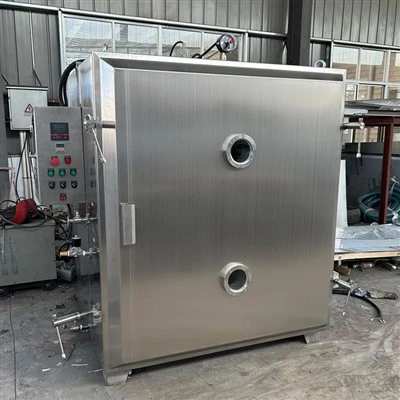
First, let’s start with the basics: the core difference between batch and continuous ovens boils down to how you load, process, and unload parts. A batch oven is, at its simplest, a single, enclosed chamber that you fill completely with parts, run the entire process (heating, holding, cooling) before opening the door, emptying, and starting again. A continuous oven, on the other hand, is a long, linked series of chambers or zones that parts move through non-stop, one after another, without ever stopping the line. That might sound straightforward, but the nuances of when to use each are where most people get tripped up—especially when I meet customers who try to force a one-size-fits-all approach for their line.
Let’s dive deeper into batch ovens first, since they’re the workhorse for small to mid-scale runs, or parts that can’t be mixed on a conveyor. When I work with a customer making custom aerospace fasteners, for example, their job isn’t repetitive enough to justify a $500,000 continuous line—they might have a run of 200 bolts one month, then 500 aircraft brackets the next, and a small repair order of 30 custom spacers the week after. A batch oven lets them adjust load size on the fly, no downtime to reconfigure a production line. How does that work in practice? My team installs heavy-duty, insulated batch chambers, often with rolling carts or heavy-duty racks that slide right in. You close the door, set your temperature (say, 350°F for 45 minutes of curing epoxy), and the oven maintains consistent heat across the entire load—no cold spots, because we design the airflow to circulate evenly around every part, even oddly shaped ones. The best part? For parts that require strict process documentation (think medical implants, which need traceable temperature logs), batch ovens let you lock in a specific load: every part in that run has the exact same time-temperature profile, so you don’t have to account for a part sitting half-way through a conveyor line.
But batch ovens have their limits, which is why they’re not the right choice for high-volume, repetitive runs. Let’s take a automotive parts manufacturer I worked with last year: they needed to cure 10,000 wheel covers a day, all identical, same size, same coating. If they used a batch oven, they’d have to load every cart, run the cycle, unload, reload— that’s at least an hour of downtime between batches, not to mention the time to ramp the oven back up after cooling. Multiply that over a 12-hour shift, and they’d only get through 6,000 parts, half their target. Batch ovens also tend to have higher per-part energy costs, because each time you open the door to reload, you lose heat, and you have to reheat the entire chamber each run. For small runs, that’s negligible, but for 10,000 parts, that adds up to thousands in unnecessary utility bills a year.
Now, continuous ovens are built for exactly that high-volume, repetitive work. Unlike batch ovens, which process one full load at a time, continuous ovens keep parts moving through a series of temperature-controlled zones 24/7—no stopping, no downtime. Let’s walk through how that works: a typical continuous oven might have four zones: preheat, cure, cool, and final cool. Parts load onto a conveyor (often mesh, for air flow through the entire part) at the infeed, move through each zone at a set speed (calibrated to hit exactly the time-temperature you need), and unload at the end, ready for packaging. For that automotive wheel cover manufacturer, a continuous oven meant they never had to stop the line: every minute, 15 wheel covers rolled through, and after 20 minutes in the cure zone, they were done. The energy cost is way lower too, because the oven stays at constant heat, no door opens mid-process, so you only heat the air that’s needed, not the entire chamber over and over.
But here’s the catch I always emphasize: continuous ovens aren’t flexible. A conveyor line is designed for a specific size, weight, and shape of part. If that automotive manufacturer decides to switch to a new, larger wheel cover, they can’t just toss it into the same continuous line—they have to reconfigure the conveyor, adjust zone temperatures, and maybe even modify the entire oven, which can cost more than a small batch oven. For low-volume runs, continuous ovens are a money pit too: if you only need 500 parts a month, the setup time to get a continuous line running, plus the fact that you’re wasting energy heating a line that’s only used a few times a week, makes it way less cost-effective than a batch oven.
I also get asked all the time about edge cases: what if you need a mix of small runs and high-volume work? That’s a question I love, because I’ve helped customers design hybrid solutions. For example, a electronics manufacturer I work with makes two types of printed circuit boards (PCBs): 1,000 small consumer PCBs a day (perfect for a continuous oven, same size, same process) and 100 custom prototype PCBs a week, which are too small to justify tying up the continuous line. We installed a primary continuous line for high-volume runs, and a small, modular batch oven right next to it for prototypes. That way, they don’t waste time or money when they need to test a new design, and they keep their high-volume line running at full capacity.
Another big factor to consider, that a lot of first-time buyers overlook, is process consistency. Batch ovens can deliver very consistent results if they’re sized right: if you don’t overload the chamber, airflow is uniform, and your temperature controls are calibrated, every part in that load is identical. But if you overload a batch oven, or have parts stacked in a way that blocks airflow, you can get cold spots—something that’s a huge risk for parts like aerospace components, where a single off-spec part can lead to a safety failure. Continuous ovens, when designed correctly, have uniform heat across the entire conveyor, so every part goes through exactly the same profile—no guesswork, no variability, which is why they’re the standard for mass-produced goods.
But wait, there are exceptions to that too. I recently worked with a medical device maker that needed to cure silicone implants. Those implants are large, irregularly shaped, and every run is a different size. A continuous line couldn’t accommodate the odd shapes, and they only need 50 implants a month, so a continuous oven would have cost 10 times more. We sized a custom batch oven, with adjustable racks that let them space implants properly, and temperature mapping to confirm no cold spots across the entire chamber. That’s the sweet spot for batch ovens: low volume, irregular parts, or frequent changeovers.
So how do you pick which one is right for you? As someone who’s sold both, I always start with three questions for customers:
-
What’s your production volume and run size? If you’re doing 10,000+ identical parts a day, continuous is almost always the right call. If you’re doing less than 2,000 parts, or your runs vary in size, batch is better.
-
How often do you change your part design or process? If you’re a custom manufacturer, prototyping, or adjust parts quarterly, a batch oven will save you from costly reconfigurations. If you’re making the same part 90% of the time, continuous is built for that repetition.
-
Do you need traceability and strict quality control? Batch ovens let you document every single load’s time-temperature profile, which is non-negotiable for industries like medical or aerospace. Continuous ovens can do it, but it’s more complex to track every individual part through the line, so it’s extra work you don’t need if you don’t have to.
I’ve seen too many customers make the mistake of buying a continuous oven because they think it’s “faster” or “better” without looking at their actual needs. Last year, a small metal stamping company came to me after buying a $40,000 continuous oven for 500 parts a week. They were paying $1,200 a month in energy just to keep the line hot, and they had to pay a technician to run it every time, since it was too big for their small production space. We swapped them for a batch oven that cost half as much, uses 70% less energy, and lets them adjust runs as needed. They saved $10,000 in the first year, and their production times didn’t change at all.

At the end of the day, there’s no “best” oven—it’s the one that fits your specific operation. Whether you’re a custom job shop that runs small, varied batches, or a mass producer that needs non-stop, consistent processing, choosing the right oven will cut your costs, reduce waste, and improve product quality. If you’re not sure which one is right for your application, I’m always here to walk through your needs, ask the right questions, and help you pick a solution that works for you. Don’t hesitate to reach out to discuss your requirements for industrial ovens.
Industrial Furnace References
- Industrial Heating Equipment Association. (2022). Batch vs. Continuous Furnaces: Application Guidelines.
- ASM International. (2021). Heat Treatment Processes for Mass Production.
- Manufacturing Extension Partnership. (2023). Energy Efficiency in Industrial Oven Systems.
- International Organization for Standardization. (2022). Quality Control Standards for Industrial Heat Processing Equipment.
Nanjing Ranran Tiancheng Drying Equipment Co., Ltd.
As one of the most professional industrial oven manufacturers and suppliers in China, our products have good reputation in the market. Please feel free to buy advanced industrial oven for sale here from our factory. All customized products are with high quality and competitive price.
Address: No. 5 Xinhua Road, Shangba Village, Longtan Street, Qixia District, Nanjing City
E-mail: rrtc@rrtcoven.com
WebSite: https://www.rrtcoven.com/
