If you’ve ever stood in a grocery line, staring at a plastic bag emblazoned with a local bakery’s logo, a sports team’s mascot, or a environmental campaign’s bright graphics, you might have wondered: can the plastic bag making machines I supply actually produce these kinds of special pattern bags? As someone who’s been working as a plastic bag making machine supplier for nearly 12 years, I get this question all the time—and for good reason. For many small business owners, grocery stores, and community groups, a plain, unbranded plastic bag just doesn’t cut it. The good news is that modern plastic bag making machines don’t just churn out plain, generic bags; they can be customized to produce bags with intricate, high-quality special patterns, as long as you understand how the process works and what your machine is capable of. Plastic Bag Making Machine
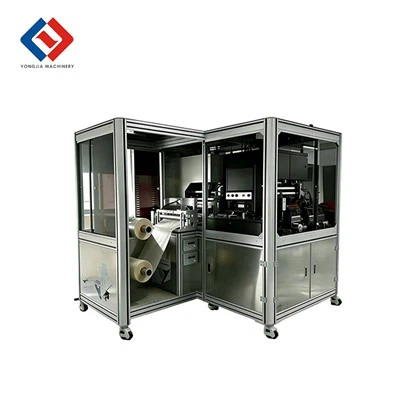
Let me start by breaking down the basics. A standard plastic bag making machine works by extruding molten plastic resin (usually polyethylene, low-density or linear low-density) into a thin film tube, then flattening that tube, cutting it into individual bags, and adding handles or seals. The step where patterns come in is during the printing phase, which most modern bag making machines integrate directly into their workflow. That’s a key point: you don’t need a separate printing press to add patterns, as some people mistakenly think. Our machines, for example, have built-in flexographic printing units that mount right onto the main production line, so printing happens at the same time the film is being formed. That integration cuts down on production time, reduces waste, and ensures the pattern aligns perfectly with the bag’s size and shape.
Now, what kinds of special patterns can you actually produce? The short answer is: almost anything, as long as you can turn it into a design that works with flexographic printing. Common patterns include custom logos, text, full-color graphics, barcodes, QR codes, seasonal designs (like holiday stripes for retail bags), or even subtle texture patterns that add a matte or glossy finish in specific areas. I’ve seen our machines make grocery bags with a store’s family name and small illustrations of the store’s history, produce trash bags with bold hazard warnings for waste management companies, and even create boutique shopping bags with metallic foil patterns that catch the light. The only limits are the design’s complexity and the number of colors you want to use. Most standard bag making machines support up to 8 printing colors, which is enough for most custom projects—even full-color logos with gradients, though you might need to adjust the design slightly to avoid blurring during high-speed production.
Wait, you might be thinking—what about older machines? If someone has a basic, entry-level plastic bag making machine bought 15 or 20 years ago, can they add patterns to it? The answer here is a bit more nuanced. Older machines often don’t have integrated printing units, so you’d need to add a separate external printing machine, which can work but requires more setup, has higher waste rates, and risks misalignment between the pattern and the bag. For anyone looking to produce patterned bags regularly, upgrading to a machine with built-in printing is a far better investment. We’ve helped hundreds of small business owners make that switch over the years, and the return on investment usually comes within 6 to 12 months, depending on how many custom bags they produce.
Now, let’s talk about the science behind it, because a lot of people don’t realize that the pattern quality depends on the machine’s printing unit and how it interacts with the plastic film. Flexographic printing works by transferring ink from a rubber or photopolymer plate to the film surface. The plate is custom-made for your pattern—for example, if you need a logo, we create a plate with that logo raised on the surface, then ink is rolled onto that raised area, and pressed against the film. For plastic bags, which are thin and flexible, the key is that the printing unit’s pressure is adjustable. Too much pressure, and the ink smudges or bleeds; too little, and the pattern looks faded. Our machines have automatic pressure calibration for each printing plate, which is a big upgrade from older models that required manual adjustments. That calibration is what lets us produce consistent, sharp patterns even when running production at 100 or 150 meters per minute—speeds that most businesses need to meet demand.
Another common question we get: can you produce raised or embossed patterns on the bags? Unlike flat printed patterns, embossing uses heat and pressure to create a raised design on the bag’s surface, which adds a premium feel without adding ink. For example, a luxury retail brand might want a subtle embossed logo on their shopping bags to make them feel more high-end. Some specialized plastic bag making machines include embossing rollers right in the printing section, separate from the ink plates, so you can add embossed patterns either instead of printed ones or in addition, for a two-effect design. We’ve installed embossing capabilities for clients in the gift industry, and they’ve told us that the embossed bags sell for 15 to 20% more than plain ones, just from that small design detail.
What about the challenges? It’s not all straightforward. The biggest challenge with special patterns is alignment—you don’t want a logo printed crookedly on a bag, or a barcode that’s misaligned enough to not scan. Modern machines have register control systems that automatically adjust the position of the printing plates in real time, so even if the film stretches slightly during production (which it will, a little bit), the pattern stays perfectly aligned. That’s a feature we prioritize in all the machines we sell, because misaligned patterns are one of the top causes of customer complaints about custom plastic bags.
Another challenge is ink compatibility. Not all inks work the same on polyethylene, the most common plastic used for bags. Some inks will peel off over time, especially if the bag gets wet. Our machines are set up to work with specialty water-based or solvent-based inks that are formulated to bond well with plastic, and we provide free guidance to clients on choosing the right ink for their pattern and intended use. For example, if a client is making bags that will be used for fresh produce and exposed to moisture, we recommend a water-resistant ink that won’t smudge. For cosmetic bags that need to look glossy, we suggest a high-gloss solvent ink that gives a vibrant finish.
Let me share a real example to make this concrete. Last year, a local chain of coffee shops reached out to us, saying they wanted custom takeaway plastic bags with each shop’s logo, a small illustration of the shop’s city, and a QR code that links to their loyalty program. Their old machine was a basic model that only made plain bags, and they’d tried a local printer to add the designs, but the alignment was off, and the QR codes often didn’t scan. We recommended upgrading to one of our mid-range bag making machines with 4-color printing and automatic register control. We worked with their design team to create custom printing plates for each shop’s pattern, installed the machine at their facility, and trained their staff to operate the printing unit. Now, they produce 10,000 custom bags a month, and they told us that sales of coffee via takeaway are up 25% because customers recognize the branded bags. That’s the power of a machine that can produce special patterns—It’s not just about making a bag, it’s about creating a marketing tool that stands out.
What about small-scale producers? If someone only needs a few hundred or a few thousand patterned bags a month, do they need a big, expensive machine? Not necessarily. We have entry-level bag making machines that come with 2-color printing, which is perfect for smaller runs. For example, a local bakery that needs bags with their logo and a small “fresh daily” text can use an entry-level machine, which costs a fraction of a large industrial model, and still get high-quality patterns. The key here is that even small machines have the capability for custom patterns, as long as you communicate your needs clearly when you’re purchasing. We always ask new clients how many bags they’ll produce, what kind of patterns they need, and what their budget is, so we can recommend the right machine for them.
Another point to consider: sustainability. A lot of our clients ask if adding special patterns affects the recyclability of plastic bags. The short answer is no, as long as the inks you use are certified for recycling. Most modern inks for plastic bag printing are designed to be removable during the recycling process, so the pattern doesn’t contaminate the recycled plastic resin. In fact, some of our clients use patterns that highlight their commitment to sustainability—like a green leaf logo, or text that says “100% recyclable” printed right on the bag. That’s a great way to communicate with customers, and the machine makes that easy.
So, to circle back to the original question: Can a plastic bag making machine produce bags with special patterns? Absolutely—when the machine is equipped with the right printing capabilities, designed for alignment and quality, and paired with the right inks and plates. It’s not a trick or a specialty process; it’s a standard feature on most modern plastic bag making machines, and one that can add real value to your business. Whether you’re a small local shop wanting branded bags, a retail chain wanting promotional designs, or a waste management company needing safety patterns, there’s a machine that can meet your needs.

If you’re considering investing in a plastic bag making machine to produce patterned bags, or you want to upgrade your current machine to add that capability, I’m here to help. We’ve worked with businesses of all sizes, from start-ups to large corporations, to find the right equipment, customize printing solutions, and train teams to operate them efficiently. Don’t settle for generic plain bags when you can create custom, branded patterns that help your business stand out. Reach out to discuss your specific needs, and we can walk you through options that fit your budget and production goals.
Blister Packaging Machine References
- “Flexographic Printing for Flexible Packaging,” Association of Plastic Manufacturers, 2022
- “Polyethylene Resin Properties for Bag Manufacturing,” American Society for Testing and Materials, 2021
- “Customization in Plastic Bag Production: Trends and Capabilities,” Packaging Digest, 2023
- “Sustainable Inks for Recyclable Plastic Packaging,” Sustainable Packaging Coalition, 2022
Dongguan Yongjia Machinery Equipment Co., Ltd.
We are one of the most reliable plastic bag making machine manufacturers and suppliers in China, specialized in providing high quality customized service. Please feel free to wholesale advanced plastic bag making machine at low price from our factory. For quotation, contact us now.
Address: No. 240, Chashan South Road, Chashan Town, Dongguan City, Guangdong Province, China
E-mail: info@yjwelding.com
WebSite: https://www.yjhighfrequencymachine.com/
