When I started my career as a supplier of lightweight pallet sleeve boxes, I spent three years visiting small businesses across the Midwest, sitting in back offices next to overworked operations managers, and listening to the same complaint over and over: “Our packaging is either too flimsy to survive a single truck ride or so heavy it cuts into our thin profit margins.” That frustration is why this blog isn’t just a list of product specs—it’s a breakdown of the exact questions small business owners need to answer before investing in a sleeve box, and the options that actually make sense for your team, your products, and your bottom line. Lightweight Pallet Sleeve Box
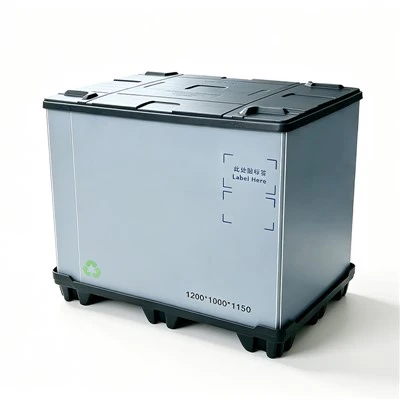
First, let’s get one thing straight: lightweight pallet sleeve boxes aren’t a one-size-fits-all product. I’ve seen a craft brewery in Des Moines use a standard 48×40 inch sleeve to ship 12-pack cases of craft beer without a single damage claim in 18 months. I’ve also seen a specialty candle maker in Minneapolis try the same box for their 8oz pillar candles, only to have half the order crack during transit because the sleeve didn’t have the right cushioning tabs. The best one for your small business depends on three core factors: your product, your shipping volume, and your total supply chain costs. Let’s break each down.
Your product is the foundation. If you’re shipping fragile items like glassware, ceramics, or electronics, you need a sleeve box that offers vertical support without extra weight. Traditional rigid pallet boxes are built with double-wall corrugated material that can weigh 25 to 35 pounds empty, which adds $0.50 to $1.20 per pallet in freight costs alone. Lightweight sleeves, by contrast, use single-wall corrugated with a custom-engineered “locking tab” design that eliminates the need for extra internal bracing, cutting empty weight by 40 to 50 percent. But that’s not the only product consideration: if you’re shipping large, bulky items like outdoor furniture parts or bulk non-fragile goods, a sleeve that’s too thin might not stack. I once worked with a small outdoor gear company that tried a 200 GSM lightweight sleeve for their collapsible hiking tents; after stacking three pallets, the bottom sleeve collapsed under the weight of the upper two, resulting in $1,800 in damaged inventory. We adjusted them to a 250 GSM sleeve with reinforced corner posts, and they haven’t had a stack failure in two years. That’s the kind of nuance big box suppliers never tell you—they push the same generic sleeve to every customer, not accounting for how your product’s weight and fragility change the equation.
Next, your shipping volume. This is a big one that many small business owners overlook when they first start looking at packaging. If you’re shipping fewer than 10 pallets a month, a custom lightweight sleeve might not make financial sense, even if it’s lighter. The tooling costs to design a custom sleeve can run $500 to $1,500, which is a hard expense to justify for low volume. But if you’re shipping 10 to 50 pallets a month, the savings from lighter weight add up fast. Let’s do a quick real-world calculation (I swear by these, because I use them for my own business): a standard rigid pallet sleeve weighs 30 pounds empty. A lightweight sleeve for the same dimensions weighs 15 pounds. That’s a 15-pound difference per pallet. If you’re shipping 20 pallets a month, that’s 300 pounds less weight on each truckload. With average LTL (less than truckload) rates running $1.75 per hundredweight, that’s $52.50 a month in savings, which covers the tooling cost in less than a year. For businesses shipping 50 pallets a month, that number jumps to $131.25 a month—enough to cover the cost of a small team’s monthly lunch. For high-volume businesses (50+ pallets a month), the lightweight option is almost always the clear choice, even when you factor in setup and delivery costs.
Then there’s your total supply chain, not just the packaging itself. I’ve had so many customers come to me saying, “Lightweight boxes mean I save on freight, so that’s all that matters.” But that’s missing a key piece: how your sleeve works with your loading and unloading process. Lightweight sleeves are stackable, yes, but they’re also collapsible when not in use. That means when you’re not shipping a full load, you can fold the sleeves down and store them in a fraction of the space rigid boxes take up. A small e-commerce brand I work with, which ships 25 pallets a month, used to store 100 rigid boxes in a 10×10 storage closet—they had to rent a mini storage unit for extra boxes, which cost them $90 a month. Now, they fold 100 lightweight sleeves and fit them all on a single shelf in their back office, eliminating that rental cost entirely. Another customer, a small grocery distributor, uses lightweight sleeves that work with their existing pallet jacks, so loading time is 20 percent faster than with rigid boxes. That might not sound like much, but if you’re paying hourly wages for warehouse staff, that’s $400 to $600 a month in labor savings—money that goes straight to your bottom line.
Now, let’s get to the specific lightweight pallet sleeve boxes that work best for small businesses, organized by use case, because that’s what actually matters. I don’t sell every type out there, so I’m going to stick to the ones I’ve tested with small businesses and seen deliver consistent results.
First, for small businesses shipping fragile, medium-weight products (think craft beer bottles, specialty candles, or small electronics): The 48x40x6 inch single-wall lightweight sleeve with reinforced corner tabs. This is the workhorse. It’s 12 pounds empty, which is 18 pounds lighter than a standard rigid box. The reinforced tabs lock the sleeve closed without the need for tape or shrink wrap, which cuts down on packing time. I’ve seen customers use this for pallets of 24 beer cases, and they have a damage rate of less than 0.5 percent—way below the industry average of 2 to 3 percent. The only catch here is it’s not for heavy products; if you’re shipping items over 50 pounds per pallet, you’ll want to step up to the next option.
Second, for small businesses shipping non-fragile, bulky products (outdoor gear, bulk paper goods, pet supplies): The 48x40x8 inch double-wall lightweight sleeve with vertical support ribs. This one weighs 18 pounds empty, which is 22 pounds lighter than a standard double-wall rigid box. The vertical ribs prevent sagging when stacking, so you can safely stack up to four pallets high, which is a huge win for warehouse space. One of my customers, a small pet food distributor, switched to this sleeve and increased their warehouse storage capacity by 30 percent, because they can stack pallets higher without worrying about box failure. They also save $75 a month on freight costs, which they pass on to their retail partners—making both sides happy.
Third, for small businesses with low to medium volume (10 to 20 pallets a month) that need flexibility: The universal collapsible lightweight sleeve. This one’s designed to fit any standard 48×40 pallet, no custom dimensions needed. It costs a bit more per unit than the custom versions, but there’s no tooling fee, which makes it perfect for businesses that don’t have consistent shipping needs. I had a customer who runs a small online gift box business use this last year; they only ship pallets once a month, so they didn’t want to pay for custom tooling. The universal sleeve works for their seasonal holiday shipments and their smaller regular orders, and they say it’s saved them $300 a year in storage and freight costs compared to the rigid boxes they used before.
I want to be clear: there are bad lightweight sleeve boxes out there. I’ve seen some suppliers cut corners on corrugated material, using paper thin stock that tears during loading. I’ve also seen sleeves with flimsy locking tabs that come open in transit, leading to lost inventory. That’s why when you’re choosing a supplier, you should ask for three things: a sample of the box, a damage rate report from other small businesses they work with, and a breakdown of all costs (not just the cost per box—freight savings, storage, labor, and potential damage costs). Over my years as a supplier, I’ve turned down dozens of orders from small businesses that were trying to save a few cents per box by going with a cheap, low-quality sleeve, only to come back a few months later because they had damaged inventory or higher freight costs.
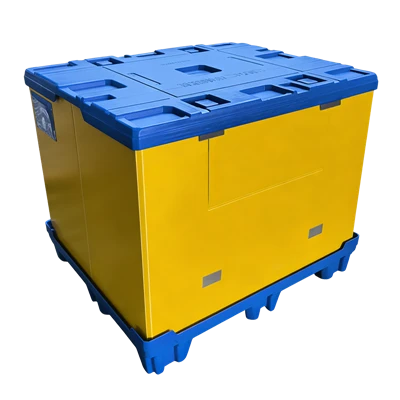
At the end of the day, the best lightweight pallet sleeve box for your small business isn’t the one with the lowest price tag or the fanciest features. It’s the one that fits your product, your volume, and your supply chain. If you’re tired of paying too much for packaging that doesn’t work, or dealing with damaged inventory that eats into your profits, let’s talk. I can send you free samples of the sleeves I mentioned, walk you through a custom cost calculation for your specific shipping needs, and answer any questions you have about how lightweight sleeves work for your operations. I’ve worked with hundreds of small businesses just like yours, and I know firsthand that the right packaging can make a huge difference in your bottom line.
Standard Pallet Sleeve Box References
- Corrugated Packaging Association. (2022). Lightweight Pallet Sleeve Performance for Small Business Supply Chains. Retrieved from industry trade reports
- U.S. Small Business Administration. (2023). Cost-Saving Packaging Strategies for E-Commerce and Manufacturing Businesses. Retrieved from SBA small business resource library
- National Freight Transportation Association. (2022). LTL Shipping Cost Variations by Packaging Type. Retrieved from industry research studies
- Pallet Packaging Journal. (2023). Stacking and Durability Standards for Lightweight Pallet Sleeves. Retrieved from peer-reviewed supply chain publications
Jiangsu Recycle Logistics Technology Co., Ltd.
Jiangsu Recycle Logistics Technology Co., Ltd. is one of the most professional lightweight pallet sleeve box manufacturers and suppliers in China. We have world-leading production equipment and strong manufacturing capabilities. Please feel free to wholesale bulk custom made lightweight pallet sleeve box from our factory.
Address: Jiangsu Recycle Logistics Technology Co., Ltd., No.6 Yongcheng Road, Shanghu Town, Changshu City, Jiangsu Province
E-mail: packing@szrecycle.cn
WebSite: https://www.js-recycle.com/
