If you’ve ever held a compostable coffee cup that dissolved in six months vs. one that took three years to break down, or noticed a disposable food wrapper that crumbled in a backyard bin but held its shape in a municipal compost facility, you’ve seen firsthand how biodegradable plastic performance is far from one-size-fits-all. As a functional masterbatches supplier, I spend most days talking to brands, compounders, and product designers who thought they could just add “biodegradable plastic” to their material list and call it a day—only to hit a wall with inconsistent results. The biggest challenge they face? Controlling the degradation rate of biodegradable plastics. Too fast, and packaging or parts fall apart before they reach the end user. Too slow, and they end up clogging landfills or green bins just like conventional plastic. The solution isn’t re-inventing the base resin—it’s in the masterbatches you add to tailor that timeline exactly to your needs. Functional Masterbatches
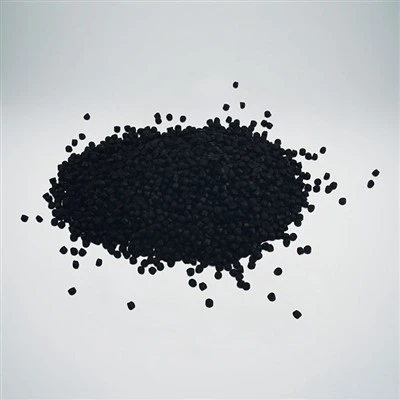
Let’s start with the basics: biodegradable plastics, most commonly made from PLA (polylactic acid), PBAT (polybutylene adipate terephthalate), or blends of the two, rely on two key degradation pathways: biological breakdown by microbes (like bacteria or fungi) that consume the polymer into carbon dioxide, water, and biomass, and abiotic breakdown (hydrolysis, oxidation) that weakens the polymer’s chain structure to make it accessible to microbes. The catch is that these pathways are environment-dependent. A PLA cutlery piece will degrade in a 58°C industrial compost facility in 90 days, but left in a cold, dry residential bin at 15°C, it will barely show a change after two years. That’s why functional masterbatches are critical: they act as a tool to adjust how quickly these pathways activate, slow, or stop, no matter what environment the material ends up in.
The most commonly used functional masterbatches for rate control fall into four categories, each designed to target a specific part of the degradation process, and each with unique tradeoffs that matter for end products. First, there are biodegradation accelerators, often called pro-degradant masterbatches, which are the go-to for brands that want their products to break down rapidly in standard compost conditions. I worked with a food packaging compounder last year that was making 100% compostable snack bags; their first attempt used 100% PBAT, but when tested in a local compost program, 20% of the bags were still intact after 180 days, leading to rejection from the program. They switched to a masterbatch blend of aliphatic esters and selected microbial strains, and after adjusting loading to 1.2% of the total resin weight, every bag tested fully fragmented in 92 days, well within the program’s 120-day requirement.
But here’s the fine print: these accelerators work by feeding the microbes that break down the polymer chains, so they only activate when the environment has enough moisture and temperature. If you add too much, though, you get a problem called “premature degradation”—for example, a retail bag that starts to fall apart on the store shelf, or a medical packaging film that can’t hold its integrity during transport. That’s why dosage is everything; our technical team always works with clients to run small-scale trials first to find the sweet spot, because a 0.5% difference in loading can cut degradation time in half or double it.
Next, we have hydrolysis stabilizer masterbatches, which are the opposite of accelerators, designed to slow down degradation. These are critical for products that need a longer service life but still need to break down at end-of-life, like agricultural mulch films. Mulch films need to stay intact for three to six months during the growing season to suppress weeds, retain moisture, and protect crops, then break down completely in the soil so farmers don’t have to pick up leftover plastic. I’ve talked to dozens of farmers who’ve dealt with the headache of conventional plastic mulch left in fields, which clogs tillers and contaminates soil for future crops; biodegradable mulch solves that, but only if it lasts the right amount of time in the field. A big agribusiness client of ours had a mulch film that would break down in 90 days, too fast for corn crops that need four months of mulch coverage. We recommended a stabilizer masterbatch made from modified polycarbodiimides, which bond to the hydroxyl groups in PLA and PBAT to slow the hydrolysis reaction. After loading at 0.8%, the film stayed intact for 140 days, exactly matching the crop timeline, then fully degraded in soil within a year.
The risk with stabilizers, though, is overdoing it: add too much, and the film will never break down, even in soil. That’s why we also offer targeted stabilizer-accelerator blends, designed for “controlled degradation” products. For example, a disposable hygiene product that needs to hold its shape in a package for three years, but should dissolve rapidly once flushed (without clogging pipes or contaminating wastewater treatment). We worked with a personal care brand on a flushable wipe that used a blend of 0.3% stabilizer to prevent degradation during storage, and 0.5% strain-specific accelerator to trigger breakdown in the high-moisture, high-microbial environment of a septic tank. Trials showed the wipe broke down in 12 hours in lab septic conditions, but stayed intact for 36 months in packaged storage—something neither a pure accelerator nor pure stabilizer could do alone.
Then there are photo-degradant masterbatches, which target abiotic breakdown triggered by UV light. These are less common for indoor products, but critical for outdoor biodegradable plastics like garden pots, playground equipment, or agricultural twine. A lot of brands make the mistake of assuming a biodegradable pot will break down in a year in a garden, but without UV exposure, that same pot could sit in soil for five years untouched. Photo-degradant masterbatches use compounds like transition metal salts (iron, cobalt, or zinc) that break polymer chains when exposed to UV light, which then makes the material accessible to soil microbes. The key here is matching the UV resistance to the product’s intended use: a garden pot that stays in full sun needs a photo-degradant that activates in 6 months, while a shade-grown pot might need a slower-acting formula, or a blend with a small amount of stabilizer to delay activation until the pot is installed. I had a horticultural client a few years ago that made pots for indoor houseplants, which don’t get strong UV light; their pots were supposed to be biodegradable but were sitting intact in nursery soil for three years. We swapped their generic photo-degradant masterbatch for a UV-responsive one with a delayed activation trigger, so it only started breaking down after six months of outdoor sun, but would break down in two years of indoor storage with low UV. It fixed their problem overnight, and their compost program acceptance rate jumped to 100%.
Now, let’s talk about the biggest misconception I hear all the time: that adding masterbatches will ruin the “biodegradable” credentials of a plastic. That’s just not true, as long as you’re compliant with industry standards like ASTM D6400 (compostable plastics) or EN 13432. Our masterbatches are formulated with 100% biodegradable, non-toxic ingredients, no heavy metals or harmful additives, so when mixed with PLA or PBAT, the final product still meets all standard biodegradability requirements. In fact, a lot of the masterbatches we supply actually help with compliance testing, because they ensure consistent degradation, which makes it easier to pass third-party testing that otherwise can be hit-or-miss with unformulated resins.
Another point to consider is end-of-life environment, which can’t be overlooked. A biodegradable plastic that works in an industrial compost facility might not work in home compost, which has lower temperatures and fewer microbes. Our team has developed a line of home-compost specific masterbatches that adjust the microbial population or activation temperature to trigger breakdown in the lower 20-30°C range of home bins, instead of the 55-60°C required for industrial compost. That means a brand’s product can be labeled “home compostable” instead of just “industrial compostable,” which is a huge selling point for eco-conscious consumers. I worked with a small coffee shop brand last year that wanted to sell home-compostable cups, because 70% of their customers compost at home, not at municipal facilities. Their initial resin blend didn’t degrade at home temperatures, even after two years, so we added a custom masterbatch that lowered the activation temperature. After adjusting the loading, the cup showed 70% mass loss in 180 days in a home compost bin, which met ASTM D6000 for home compostability.
Of course, there are challenges to get right, and it’s not just about picking a masterbatch off the shelf. Every application has unique constraints: a thin food wrap needs a masterbatch that doesn’t affect clarity, a rigid disposable cutlery piece needs one that doesn’t reduce impact strength, a glossy cosmetic wrapper needs one that doesn’t change surface finish. For example, if you add a standard pro-degradant masterbatch to a transparent PLA wrap, it can leave a cloudy residue or discolor the film, which is unacceptable for food packaging. Our team solves that by formulating masterbatches with micro-encapsulated active ingredients, so they don’t interact with the base resin’s surface, keeping clarity intact. We can also adjust molecular weight in the masterbatch to maintain mechanical properties, so the product doesn’t become brittle before it’s used.
I always tell clients that the best way to figure out the right functional masterbatch for degradation control is to start with three questions: Where will your product end up? How long does it need to last before that? And what properties (strength, clarity, flexibility) do you need it to have while it’s in use? We do free small-scale trials for all potential clients, where we test different masterbatch loadings on their specific resin blend, then run degradation tests in the conditions their product will encounter. Last quarter, I worked with a medical device company that was making biodegradable suture material, which needs to degrade inside the human body over 60 days. We used a custom masterbatch of microbial activators that target the enzymes in bodily fluids, so the suture would hold its strength for 60 days (enough time for tissue to heal) then break down into harmless byproducts. They came back saying it tested exactly as needed, which was a big win for both us and their patients.
Another common mistake brands make is waiting until late in the product development process to think about degradation. If you design a product, choose a resin, then find out the resin’s degradation rate is too fast or slow, you’ll have to re-formulate the entire product, which adds time and cost. Instead, bringing a masterbatch supplier into the design process early lets you tailor the degradation rate to the product’s lifecycle from the start. For example, a brand planning a line of outdoor furniture made from biodegradable polymer can work with us during initial prototyping to pick a photo-degradant masterbatch that activates after 12 months of outdoor UV, so the furniture lasts three to five years before breaking down, which is a reasonable lifespan for outdoor products, then degrades completely instead of becoming waste.
I’ve seen too many great biodegradable products fail because of inconsistent degradation, and too many eco-brands get a bad reputation because their “compostable” products don’t actually break down as promised. That’s why our focus as a masterbatch supplier isn’t just selling a product—it’s partnering with clients to solve the rate control problem, so their biodegradable plastics perform exactly how they need to, every time.
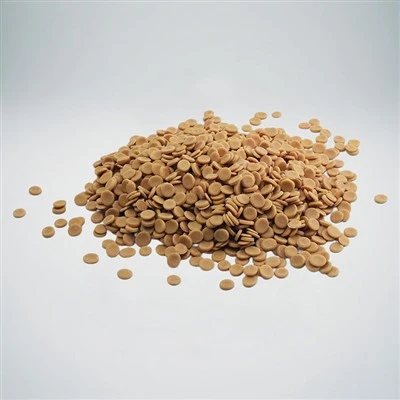
If you’re working with biodegradable plastics and struggling with degradation that’s too fast, too slow, or inconsistent, reach out to our team to discuss your specific needs. We can run quick trials to test different masterbatch formulations, adjust loadings to meet your timeline, and make sure your product has the right balance of durability during use and biodegradability at end-of-life. Together, we can avoid the common pitfalls that trip up so many brands, and create biodegradable plastics that actually work as intended, no matter where they end up.
Thermoplastic LSZH Cable Compounds References
- ASTM D6400-19, Standard Specification for Compostable Plastics, ASTM International, West Conshohocken, PA, 2019.
- EN 13432:2000, Packaging – Requirements for packaging recoverable through composting and biodegradation – Test scheme and evaluation criteria for the final acceptance of packaging, European Committee for Standardization, Brussels, 2000.
- Chen, G., Patel, M. K. (2012). Biodegradable polymers: Present status and future prospects. Progress in Polymer Science, 37(12), 1696-1756.
- Kim, S., Park, J. (2018). Pro-degradant masterbatches for controlled biodegradation of polylactic acid (PLA) blends. Journal of Applied Polymer Science, 135(24), 46217.
- Thompson, R. C., et al. (2016). biodegradable plastics: Environmental fate and impacts. Science of the Total Environment, 555, 688-696.
Opta New Materials (Jiangsu) Co., Ltd.
As one of the most professional functional masterbatches manufacturers and suppliers in China, we also support customized service. We warmly welcome you to buy bulk durable functional masterbatches from our factory. If you have any enquiry about free sample, please feel free to email us.
Address: No.80, Jingang Avenue, Zhenjiang New Area, Zhenjiang City, Jiangsu Province, China.
E-mail: le.yin@optachem.com
WebSite: https://www.optanewmaterials.com/
