Alright, let’s cut to the chase. If you’ve ever stood at the base of a rusty, towering metal structure off a highway and wondered, “What the hell is that?”—chances are, it’s a power tower. But if you’re working in energy, building a new housing development, or even just trying to keep the lights on through a heatwave, power towers aren’t just random metal poles. They’re the unsung backbone of every grid that powers our fridges, ACs, and even our laptop when we’re binging shows after work. Power Towers

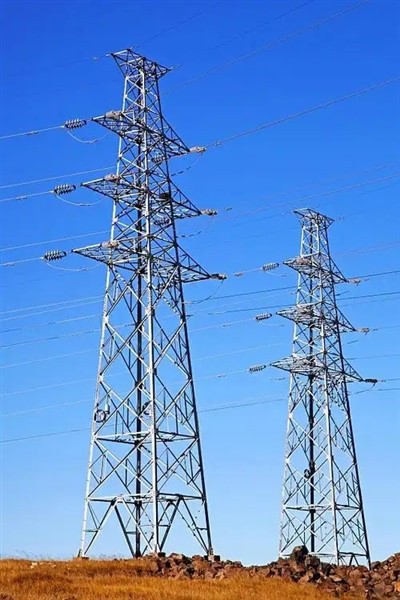
Let’s break this down like I would over a coffee with a new client—no stuffy engineering jargon, just real talk. First off, what’s a power tower, exactly? For anyone new to the game, it’s that tall, lattice-style (or sometimes solid steel) structure that holds high-voltage transmission lines hundreds of feet above the ground. Think of them as the giant delivery trucks of electricity: instead of hauling packages, they move massive amounts of power from power plants (solar farms, coal plants, whatever) to neighborhoods, businesses, and cities.
Wait, let’s get one thing straight right now: people mix up power towers with utility poles all the time. That’s a common mistake. Utility poles are the short, wooden or concrete things you see lining residential streets—they carry lower-voltage power to individual homes. Power towers? Way bigger, way sturdier, and for the heavy-lifting stuff. A typical power tower can be 100 to 200 feet tall, and some extra-tall ones for long spans? Up to 500 feet. Yeah, that’s almost as tall as the Washington Monument’s top point (shoutout to my US friends, that’s a quick visual).
Now, why do they look so… all lattice-y? Why not just a solid metal pole? Let’s be real—cost is a huge one. Solid steel would weigh a ton, be way more expensive to manufacture and ship, and even harder to install. The lattice design (that crisscrossed steel bar pattern) is actually super smart: it’s strong enough to hold up 10 to 20 tons of power lines, plus the weight of ice in cold climates, or even occasional bird nests. And it uses way less material than a solid pole, which keeps costs low. Plus, they’re lightweight enough to transport to remote areas without needing a whole convoy of heavy trucks. That’s a win-win for everyone building these, trust me.
What do they do, exactly? I mentioned moving electricity, but let’s get specific. When a power plant generates electricity, it’s not at the voltage that can travel long distances without losing a bunch of energy. So they bump it up to high voltage (like 110,000 volts, up to 765,000 volts!) using transformers. Then those high-voltage lines get strung between power towers. This way, when the power zips through those lines, barely any of it gets lost as heat (old tech back in the day lost way more—shoutout to evolution). The towers just hold those lines up high enough so they don’t hit trees, buildings, or people, and so the lines can swing if there’s wind or ice without crashing.
Wait, let’s talk about the different types of power towers, because not all are built the same. That’s where my team and I, as power tower suppliers, come in—because different jobs need different towers. Let’s keep this simple:
First, there’s the suspension tower. That’s the most common one. It holds the lines straight, keeping them taut and centered, like a clothesline pole. We use these for most of the straight stretches of transmission routes—they’re reliable, cheap, and easy to put up. Then there’s the tension tower. These are for when the line needs to turn a corner or go over a big valley. They have extra-strong crossarms that pull the lines tight so they don’t slack. If you’ve ever seen a power line make a sharp curve, that’s a tension tower doing its thing.
Oh, and there’s the transposition tower. Wait, that’s a weird one—you might not notice these if you’re driving by, but they’re super important. Power lines have three phases of electricity (think of them like three separate pipes carrying power), and over long distances, they can interfere with each other. Transposition towers flip the order of the phases every few miles, balancing that interference so the power stays steady. We don’t make these for every project, but they’re non-negotiable for long-haul routes across states.
And let’s not forget about the special ones—like river-crossing towers. When you need to string lines over a big river or a major highway, you need a super tall tower on each side, right? Those can be 500 feet tall, and they have way thicker lines because they span a huge distance without any support in between. We built a pair of those last year for a client who was expanding their grid along the Mississippi, and let’s just say the local photographers loved them for skyline shots.
Now, let’s get into the stuff that actually matters for anyone dealing with power towers: how we make them, as a supplier, and what you need to know if you’re looking to buy. First, material is everything. Most power towers are made of galvanized steel—wait, what’s galvanized? It’s steel that’s dipped in zinc to keep it from rusting. That’s key because these towers are outside 24/7, in rain, snow, heat, salt air (if they’re near the coast). If they rust, they get weak, and that’s a safety hazard. Some of our coastal clients prefer a double-galvanized coating for extra protection, because salt air eats away at metal way faster.
Another big thing is load capacity. Not every tower is built for the same amount of weight. A tower in Florida has to handle high winds, so we design those with extra bracing. A tower in Canada has to handle ice buildup, so we make sure the steel is thicker and the lines are spaced wider. We do custom calculations for every project, because you can’t use a tower designed for a mild, flat area in a mountainous region with 100 mph winds. That’s a mistake people make all the time—cutting corners on load capacity, and then you have a tower that gets knocked over in a storm, and that’s a whole blackout waiting to happen.
Wait, let’s talk about common mistakes we see clients make when ordering power towers. Number one: underbudgeting. People look at a cheap tower and go, “That’s a deal!” but then they forget about installation, or the tower can’t handle the local weather. Last year, a small solar farm client went with a cheap, thin steel tower for their rural route—then a winter storm dumped 6 inches of ice on the lines, the lines pulled the tower over, and they were without power for 3 days. We had to rush a custom replacement, but they learned the hard way: quality beats a low price. Number two: not accounting for terrain. If your route goes through hilly, rocky land, you need taller towers to avoid ground obstacles, or towers with heavier bases that can anchor into rock, not just dirt. That’s something we factor in with every site survey, no matter how big the project is.
Now, why are power towers more important than ever right now? Let’s be real—everyone’s talking about renewable energy these days. Solar farms and wind farms are popping up everywhere, and most of them are in remote areas where there’s tons of sun or wind, but no existing grid to connect them to cities. Power towers are the only way to move that clean energy from where it’s generated to where people need it. A wind farm in Texas? They need power towers to carry that energy to Dallas. A solar farm in Arizona? Same thing for Phoenix. Without power towers, all that clean energy just sits there, unused. Plus, as more people move to cities, the grid is getting bigger, so we’re building more and more towers every year. Our team has been super busy the last few years with renewable projects, and that’s a good thing—we’re helping move the needle on climate action, one tower at a time.
Wait, let’s also address the elephant in the room: people don’t love power towers. They say they’re ugly, they ruin the landscape. I get it—when you’re driving through a scenic valley, a row of metal towers can take away from the view. But here’s the thing: we’re working on solutions. New tech like high-voltage direct current (HVDC) lines means we can carry way more power with fewer lines, so we need fewer towers. And some projects are using underground lines in urban areas, but underground is way more expensive—you can’t put hundreds of miles of lines underground for a solar farm. So power towers are still the most efficient, cost-effective way to move power long distances. We also work with clients to route towers away from national parks and scenic areas as much as possible, using terrain to hide them (like placing them along existing roads instead of cutting through untouched woods).
As a power tower supplier, what do we actually do for our clients? It’s not just selling metal poles. We work with you from the very start: we do a site survey to look at terrain, weather, soil type, and your specific power needs. We design custom towers that fit your project, get them engineered to meet local safety codes (like OSHA standards, or whatever your country’s power safety rules are), manufacture them with high-quality galvanized steel, and even help with installation planning if you need it. We’ve worked on projects small and large—from a 5-tower route for a local farm to a 200-tower line for a state-wide renewable grid expansion. No job is too big or too small for our team.
Now, if you’re reading this, chances are you’re involved in a project that needs power towers—whether it’s building a new wind farm, expanding a residential grid, or replacing old, rusted towers that are past their prime. Maybe you’re a project manager who’s tired of dealing with unreliable suppliers, or an energy company looking to scale up clean energy projects. Whatever the case, we’re here to help.
Look, power towers aren’t just metal structures. They’re the link between a solar panel in a field and a light in your bedroom. They’re what keeps the lights on during a heatwave when everyone’s running ACs. They’re what let us switch away from fossil fuels by moving clean energy where it’s needed. And if you need power towers that are built to last, designed for your specific site, and backed by a team that knows the game inside and out? Hit us up to connect for your next project. We’re ready to help you get the job done right.
Electrical Tower Stand References:
- Electric Power Research Institute (EPRI). “Transmission Tower Design and Performance for Renewable Energy Integration.” 2022.
- American Iron and Steel Institute (AISI). “Galvanized Steel for Transmission Infrastructure.” 2021.
- North American Electric Reliability Corporation (NERC). “Transmission Infrastructure Best Practices for Weather Resilience.” 2023.
- International Energy Agency (IEA). “Grid Expansion for Renewable Energy: The Role of Transmission Towers.” 2022.
- Occupational Safety and Health Administration (OSHA). “Safety Standards for Power Transmission and Distribution Structures.” 2020.
Hebei Yifeng Steel Structure Co., Ltd.
As one of the most professional power towers manufacturers and suppliers in China, we offer a wide range of products with superior quality. Please feel free to buy cost-efficient power towers for sale here from our factory. Contact us for more details.
Address: Guangchuan Town Industrial Zone, Jing County, Hengshui City, Hebei Province
E-mail: hbyfgjg@163.com
WebSite: https://www.yf-powertowers.com/
