What’s up, fellow facility managers, electricians, and anyone who’s ever had that 2 a.m. panic wondering if the emergency downlights in their building actually work? As someone who’s been selling and testing emergency downlights for over 7 years now, I swear 90% of the “system failures” I hear about are from people who never actually tested their lights right — they just did a quick glance when they installed ‘em, then crossed their fingers and forgot about ‘em. Today, I’m breaking down exactly how we test our own lights (and what we recommend all our clients do to make sure theirs work when it matters). No boring industry jargon, just straight-up stuff that actually works. Emergency Downlight

First off, let’s get one thing out of the way: emergency downlights aren’t your regular recessed kitchen lights. They’re the ones that kick on when the power cuts, right? So testing ‘em can’t just be “turn off the main breaker for 10 seconds and see if it lights.” That’s a half-assed test, and it’ll bite you if a real blackout hits. I’ve seen a brand-new commercial building pass that lazy test, then fail a full 90-minute emergency run when the city’s power grid went out during a storm. Don’t be that guy.
Let’s start with pre-installation testing, because this is where 80% of the bad units get caught before they even leave our warehouse. When we get a batch of new downlights in, we don’t just plug one in and call it good. We do two quick checks first: the battery check and the function test. The battery’s the heart of these things — if it’s dead out the box, the light’s useless. We take 10 random units from the skid, disconnect the mains power (that’s the regular AC power that charges the battery), and see if the light turns on. If 1 out of 10 doesn’t fire up, we test every single one in the batch. I still remember a time a supplier sent us a bad battery run — 15 units out of 50 were dead on arrival. If we’d skipped that random sample test, a client would’ve installed them, thought they were fine, then had a disaster later.
Next, the function test isn’t just “does it turn on” — it’s “does it stay on long enough.” National and local codes (we follow NFPA 101, by the way, that’s the Life Safety Code everyone refers to) require emergency downlights to run for a minimum of 90 minutes. But here’s the thing: a lot of cheap units will run for 85 minutes, then die. That’s a fail. So during our pre-shipment testing, we put a timer on every downlight’s emergency mode and let ‘em run. We’ve got a dedicated testing station in our warehouse — just a long table, a bunch of outlets we can cut power to, and a wall of timers. We mark down every unit’s run time, and if any batch averages under 95 minutes, we send ‘em back. No exceptions. We’d rather hold a shipment for a couple extra days than have a client’s building fail an inspection.
Now, once the light’s installed — say, in an office building, a retail space, a warehouse — what’s the right way to test it? Let’s split this into two types: the monthly test (required by code, usually 30 seconds) and the annual test (required, usually 90 minutes). Wait, I know what you’re thinking: “30 seconds is enough? Why not just do the 90-minute test every month?” Good question. We tell our clients that the monthly short test is for checking that the light turns on when power cuts, but the annual long test is for checking the battery’s actual capacity. A lot of people mix those up, and that’s where mistakes happen.
For the monthly test: this is super easy, you don’t even need tools, just a ladder (safety first, don’t fall off a 10-foot ladder in a commercial space) and a way to cut power to the specific circuit the downlight’s on. Wait — pro tip: don’t cut the main power for the whole building for a 30-second test. That’ll piss off the office workers who are halfway through a project. Just find the circuit breaker panel for the floor or zone that your downlight’s on, flip the breaker off. The light should turn on within 1 second — if it takes longer than that, there’s a wiring problem, or the battery’s not charging right. After 30 seconds, flip the breaker back on — the light should turn off, and you might see a little “charging” LED on the unit (we put ‘em on all our lights, so clients can confirm the battery’s charging when power’s on). If the charging LED doesn’t come back on, that’s a sign the battery’s not getting power, so you need to check the wiring.
Now the annual test — this is the one that’s actually work, and it’s the one most people dread. It takes time, and you have to make sure the space is clear (no one’s panicking thinking a real emergency is happening). Here’s how we do it for our clients when we offer maintenance checks: first, we turn off all non-essential lights in the area, just so we can see the emergency downlights clearly. Then, we cut the circuit power for the zone, start a timer, and stand there for the full 90 minutes. We make sure every downlight in the test area stays on the whole time — no dimming, no flickering, no turning off early. We also check the light output: it should be at least 10 lumens per square foot where it’s mounted (NFPA says that, too). If a downlight dims after 45 minutes, that’s a failing battery — even if it runs the full 90 minutes, low output is a problem, especially for exit paths or stairwells where people need clear light.
Wait, what about self-testing units? A lot of our clients ask about those — the ones that automatically run their own tests, no human needed. We sell a lot of those because they’re convenient, but let’s be clear: self-testing isn’t a “set it and forget it” solution. The auto-test usually runs the 30-second monthly check, but the 90-minute annual test still needs to be done manually, because the auto-test might not catch battery degradation. I had a client last year who thought their self-testing downlights were perfect, until their inspector told them the annual test never logged a pass — the auto-test had glitched, and the batteries had been dead for 6 months. So even with self-testing, you can’t skip the annual manual check.
Also, common issues we see all the time: water damage in commercial spaces, like retail stores that have leaky HVAC ducts above the ceiling. If a downlight is mounted near a leak, the water can corrode the battery terminals, so the battery won’t charge. We tell clients to do a visual check every quarter — look at the ceiling around each downlight for water stains, and make sure the unit’s cover isn’t loose (loose covers can let moisture in, too). Another big one: dust. If a downlight’s mounted in a warehouse, dust can build up on the LED, lowering light output. We recommend wiping the lens with a dry cloth once a year, when you do the annual test. No cleaning chemicals, don’t take the unit apart — just a quick wipe.
What about residential use? A lot of homeowners buy our downlights for their basements or garages, and they ask if the same rules apply. Yep, almost. The monthly test for residential is just as easy: flip the breaker for the garage or basement off, check the light turns on, then flip it back. The annual 90-minute test is still required if you’re in a region with building codes, but if you’re in a place without strict codes, we still recommend doing it once a year. A blackout in the middle of the night when your kid is scared of the dark is no joke — the last thing you want is a downlight that doesn’t work.
Wait, let’s talk about what happens if a test fails. If a downlight doesn’t pass the monthly short test, first check the wiring — sometimes a loose connection is all it is. If the wiring is good, the battery’s probably bad, so you need to replace it (most emergency downlights have user-replaceable batteries, which is a big plus over units that you have to throw the whole light away when the battery dies). If it fails the annual 90-minute test, you might need a new battery, or sometimes the entire LED module is bad. We stock all replacement parts for our downlights, so our clients can fix issues fast without buying a whole new unit.
One last thing: documentation. A lot of inspectors now require proof that you tested your emergency downlights. When we do tests for our clients, we give them a simple log: date, circuit tested, number of units, pass/fail, any issues found. We tell clients to keep this log for at least 3 years, because inspectors will ask to see it. It’s a small step, but it saves you from getting a fine — I’ve heard of small businesses getting fined up to $1,000 for not having test documentation.
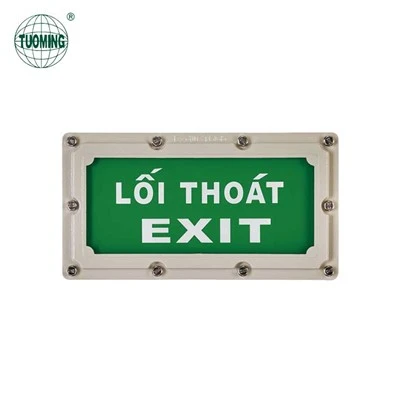
At the end of the day, emergency downlights aren’t just a code box to check — they’re a safety net. We test every single one of our units before they leave our warehouse because we know how much people rely on ‘em. If you’re looking for reliable emergency downlights, or you need help with testing, maintenance, or replacing faulty units, feel free to reach out to our team. We’re here to make sure your lights work when the power’s out, not just when you test ‘em.
Emergency Power Supply References:
- National Fire Protection Association (NFPA) 101, Life Safety Code
- National Electrical Code (NEC) Article 700, Emergency Systems
- International Code Council (ICC) 2021 International Building Code, Chapter 10 Means of Egress
- Lighting Facts, LED Emergency Downlight Performance Testing Standards
Zhongshan Tuoming Lighting Technology Co., Ltd.
As one of the leading emergency downlight manufacturers and suppliers in China, we warmly welcome you to buy advanced emergency downlight in stock here from our factory. All customized products are with high quality and low price.
Address: No.1, 10th Floor, No.17, Tongfu South Road, Guzhen Town, Zhongshan City, Guangdong Province
E-mail: 1989355847@qq.com
WebSite: https://www.tuominglight.com/
