Hey there! I’m a supplier in the forging processing business, and today I wanna chat about something super important in our field: the impact of forging speed on forging processing. Forging Processing

Let’s start by getting a basic understanding of what forging speed is. Simply put, it’s how fast the forging process happens. This speed can vary a whole lot depending on the type of forging, the material we’re working with, and the specific requirements of the end – product.
One of the most obvious impacts of forging speed is on the mechanical properties of the forged parts. When we forge at a relatively high speed, the deformation of the metal occurs rapidly. This can lead to a finer grain structure in the metal. A finer grain structure generally means better mechanical properties, like higher strength and improved toughness. For example, in the automotive industry, where parts need to withstand a lot of stress, high – speed forging can produce components that are more durable and reliable.
On the flip side, if the forging speed is too high, it can also cause some problems. The rapid deformation can generate a lot of heat in a short period. This excessive heat can lead to overheating of the metal, which might result in grain growth and a reduction in the mechanical properties. So, it’s a bit of a balancing act. We need to find that sweet spot where the speed is high enough to get the desired grain refinement but not so high that it causes overheating.
Another area where forging speed makes a big difference is in the forging die life. When we forge at a high speed, the impact forces on the forging die are much greater. This can cause more wear and tear on the die. Over time, this can lead to the need for more frequent die replacements, which can be costly. On the other hand, a slower forging speed reduces the impact forces on the die, extending its life. But a slower speed also means lower productivity, so we have to weigh the cost of die replacement against the loss of productivity.
Let’s talk about productivity. As you might expect, a higher forging speed generally means higher productivity. We can produce more parts in a given amount of time. This is great for meeting large – scale production demands. For instance, if we’re supplying parts for a major construction project, we need to be able to churn out a large number of forged components quickly. However, we can’t just crank up the speed without considering the quality of the parts. If the speed is too high and we start getting defective parts, then the overall productivity actually goes down because we have to spend time and resources on reworking or scrapping the bad parts.
The forging speed also has an impact on the energy consumption. High – speed forging usually requires more energy because of the greater forces involved. This means higher energy costs. In today’s world, where energy efficiency is a big deal, we need to find ways to optimize the forging speed to reduce energy consumption without sacrificing quality. For example, we can use advanced forging techniques and equipment that are designed to be more energy – efficient at different speeds.
Now, let’s consider the different types of forging and how speed affects them. In open – die forging, where the metal is shaped between two flat or simple – shaped dies, the forging speed can influence the uniformity of the deformation. A higher speed might lead to uneven deformation in some cases, especially if the metal is not properly positioned or if the die design is not optimal. In closed – die forging, where the metal is completely enclosed in the die, the forging speed can affect how well the metal fills the die cavity. If the speed is too slow, the metal might not fully fill the cavity, resulting in incomplete parts. If the speed is too high, it can cause flash (excess metal that squeezes out of the die) to form, which then needs to be trimmed off.
The material we’re forging also plays a crucial role in how the forging speed impacts the process. Different metals have different flow characteristics at different temperatures and speeds. For example, aluminum has a relatively low melting point and good ductility. It can be forged at relatively high speeds, but we still need to be careful about overheating. Steel, on the other hand, has a higher melting point and can withstand higher forging forces. However, the forging speed for steel needs to be carefully controlled to avoid cracking and other defects.
As a forging processing supplier, we constantly have to deal with these factors. We work closely with our customers to understand their specific requirements for the forged parts. Whether they need high – strength components for aerospace applications or more cost – effective parts for general machinery, we adjust the forging speed accordingly.
We use state – of – the – art equipment and techniques to monitor and control the forging speed. Our team of experienced engineers and technicians are always on the lookout for ways to optimize the process. We conduct regular tests and inspections to ensure that the parts we produce meet the highest quality standards, regardless of the forging speed.
If you’re in the market for forged parts, you know how important it is to find a reliable supplier. We’ve got the expertise and the resources to handle all your forging needs. We can work with you to determine the best forging speed for your specific project, taking into account all the factors we’ve talked about today. Whether you need a small batch of custom – made parts or a large – scale production run, we’re here to help.
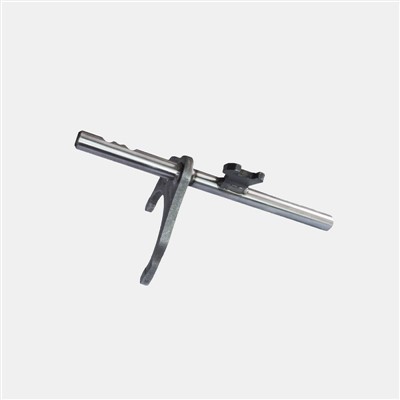
So, if you’re interested in our forging processing services, don’t hesitate to reach out. We’re ready to have a chat with you, answer your questions, and start working on your project. Let’s make sure you get the best – quality forged parts at the most competitive prices.
Shaft Parts References
- "Forging Technology" by George E. Dieter
- "Metal Forming: Mechanics and Metallurgy" by S. Kalpakjian and S. R. Schmid
Taizhou Liuhuan Machinery Co., Ltd.
As one of the most professional forging processing manufacturers and suppliers in China, we’re featured by quality products and good service. Please rest assured to buy customized forging processing made in China here from our factory. For quotation, contact us now.
Address: Xinyuan Industrial Zone, Damaiyu Street, Yuhuan City, Zhejiang Province,China
E-mail: tzlhmachining@gmail.com
WebSite: https://www.tzlhmachining.com/
