Hey folks, if you’ve ever wondered about the stuff that makes cleaning products spread smoothly, paints glide evenly, or even brake fluids work reliably, chances are you’ve interacted with glycol ethers without even knowing it. As a glycol ether supplier, I get asked this question all the time—mostly from contractors mixing paint batches, formulators tweaking household cleaners, or even small business owners trying to pick the right chemical for their line of work. The biggest one I get? “What’s the actual chemical structure of these things, anyway?” Let’s break this down like I would over a coffee at the trade show, no stuffy textbook jargon, I promise. Glycol Ethers
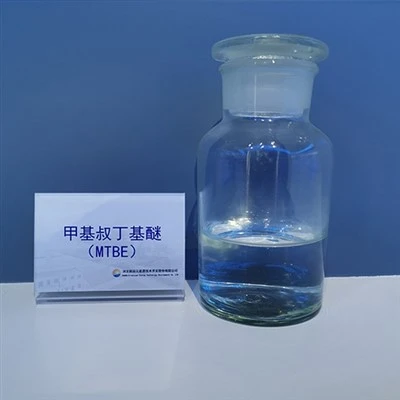
First, let’s start with the basics. Glycol ethers don’t just pop out of a lab fully formed—they’re built from two simple chemical families: glycols (those are the “glycol” part) and ethers (that’s the “ether” part). If you remember high school chem, glycols are organic compounds with two hydroxyl groups (-OH), right? Like ethylene glycol or propylene glycol—you’ve probably seen those in antifreeze, even if you didn’t connect the dots. Ethers are compounds where an oxygen atom links two carbon-based groups (so it’s R-O-R’, where R and R’ are any carbon chains), and that’s the “ether” part. Put ’em together, and you get glycol ethers: a compound that has both the polar hydroxyl group (which makes it mix with water) and the non-polar ether carbon chain (which makes it mix with oils, solvents, and other non-water stuff). That dual personality is why they’re so darn useful—they bridge the gap between water-based and oil-based materials, which is a huge deal for so many industries.
Let’s get specific with the structure. The core building block is the glycol backbone. The two most common glycols we use in our production are ethylene glycol (EG) and propylene glycol (PG), which differ by one tiny methyl group (that’s a -CH3, a single carbon and three hydrogens) on the propylene version. From there, we “cap” one or both of the hydroxyl groups with an alkyl group—usually a short carbon chain like methyl (-CH3), ethyl (-C2H5), butyl (-C4H9), or hexyl (-C6H13) via an ether bond. That’s where the variety comes in, and why there are so many different glycol ethers for different jobs.
For example, ethylene glycol monomethyl ether (EGMME) has a structure where one hydroxyl on ethylene glycol is swapped for a methyl ether. So it’s CH3-O-CH2-CH2-OH. That little methyl group on one end gives it super fast evaporation, which is why it’s used in quick-drying spray paints. Then there’s propylene glycol monobutyl ether (PMA, wait no—wait, PMA is propylene glycol methyl ether acetate, hold on, let’s get this right. Propylene glycol n-butyl ether (PnB) is PG backbone: CH3-CH(OH)-CH2-O-C4H9. That butyl chain on the end makes it slower to evaporate, so it’s perfect for latex paints, where you want the film to flow and level before it dries. See? The length of that alkyl chain changes everything. Short chains = fast evaporation, long chains = slower, more persistence. That’s the kind of nuance we know inside and out as a supplier—we don’t just sell a “generic” glycol ether, we match the structure to the job.
Wait, let’s clear up a common mix-up. A lot of folks confuse glycol ethers with glycol ether acetates, which are a slightly different product. Acetates have an extra acetyl group (-CO-CH3) on the hydroxyl end, making them esters, not straight ethers. They’re similar, but different—we focus on straight glycol ethers for most of our customers because they have better compatibility with water-based systems, which are huge right now because of EPA regulations on low-VOC (volatile organic compound) products. The structure of straight glycol ethers lets them mix with water without extra stabilizers, which is a big win for formulators trying to cut down on harmful solvents.
Now, why does the structure matter beyond just chemistry? Let’s talk about real-world use. Take a janitorial company making a heavy-duty all-purpose cleaner. They need something that cuts grease (non-polar) but rinses off easily with water (polar). Glycol ethers’ dual structure does exactly that—they solubilize oils and break them down, while the hydroxyl group lets water rinse the residue away without leaving streaks. For paint manufacturers, the structure determines how the paint flows out of a can, how it spreads on a wall, and how fast it cures. A too-long alkyl chain would make the paint take forever to dry, which is bad for contractors. A too-short chain would make it dry too fast, leading to cracks or uneven coverage. That’s why we work so closely with our customers: we walk ’em through how the structure of each glycol ether we stock fits their specific formulation, not just sell them the cheapest option.
I also get questions about safety, and yeah, the structure ties into that too. The same ether group that makes glycol ethers useful can be a double-edged sword if misused. Some of the older ethylene glycol-based glycol ethers, like EGMME, have higher skin absorption, so we don’t recommend them for consumer products anymore. That’s why we shifted a lot of our stock to propylene glycol-based options—their structure is a bit different, the extra methyl group makes them less permeable through skin, and they’re better for low-toxicity applications like food packaging coatings or dish soap additives. We make it a point as a supplier to only carry glycol ethers that meet all current OSHA and EPA standards, so you don’t have to worry about running afoul of regulations down the line.
Wait, let’s make sure we’re not skipping the “why this matters for you” part. If you’re a formulator, a procurement manager, or even a small business owner, understanding the chemical structure isn’t just nitpicky chem stuff—it’s about getting the right performance, staying compliant, and keeping your costs down. A lot of new suppliers will sell you a glycol ether that’s similar but not the same structure, and you’ll end up with a product that doesn’t work right, or has to cut corners on safety. We don’t do that. Every batch we ship has a COA (certificate of analysis) that breaks down the exact structure, purity, and physical properties, so you can verify it fits your needs.
Let’s wrap this up. Glycol ethers are simple at their core: a glycol backbone with one or more hydroxyl groups capped with an alkyl chain via an ether bond. That dual polarity is what makes them indispensable across so many industries—paints, coatings, cleaners, adhesives, cosmetics, even pharmaceuticals. As a glycol ether supplier, our job isn’t just to warehouse and ship product—it’s to explain how that structure translates to real performance, so you can pick the right product for your project. If you’re working on a new formulation, updating an existing one, or just want to swap out an old glycol ether for a more compliant or cost-effective option, hit us up to chat through what you need. No sales pitch, no hard sell—just straight talk about chemistry and how it works for you.
If you want more deep dives into specific glycol ether structures, their applications, or regulatory updates, feel free to reach out to discuss your procurement needs.
Flame Retardants References:
- Ellis, R. P. (2001). Glycol Ethers: Properties and Applications. CRC Press.
- U.S. Environmental Protection Agency. (2019). Low-Volatile Organic Compound (VOC) Solvents: Glycol Ethers. Federal Register.
- Smith, M. B. (2007). Organic Chemistry (3rd ed.). McGraw-Hill.
Hebei Xinxinyuan Energy Co., Ltd.
Hebei Xinxinyuan Energy Co., Ltd. is one of the most professional glycol ethers manufacturers and suppliers in China, featured by quality products and good price. Please rest assured to wholesale customized glycol ethers made in China here from our factory.
Address: Zhongjie Industrial Park, Huanghua City, Cangzhou City, Hebei Province, China
E-mail: atl2066@qq.com
WebSite: https://www.xinxinyuanfr.com/
