What are the network connectivity options for a guyed wire tower? If you’re on the hunt for a reliable, cost-effective setup to connect remote sites, you’ve probably stumbled on guyed wire towers more than once. As a guyed wire tower supplier, I’ve helped all kinds of folks—from small cellular providers to rural broadband co-ops—pick the right connectivity setup for their towers. Guys, it’s not just about slapping a antenna on top and calling it done. The connectivity option you choose can make or break how well your tower performs, how much it costs to maintain, and how long it lasts. Let’s break this down, no jargon overload, just real talk from someone who’s been in the game for years. Guyed Wire Tower
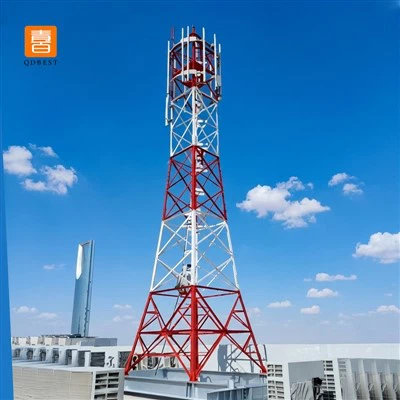
First off, let’s get clear on what a guyed wire tower is, for anyone new here. Unlike self-supporting towers that stand on their own, guyed towers use steel cables (guys) anchored into the ground at an angle to hold the tower steady. They’re lighter, cheaper, and easier to install than self-supporting towers, which makes them perfect for areas where space is tight or building permits are a hassle. But that design does change how you approach network connectivity—you can’t just mount heavy gear anywhere without throwing off the guy tension, right? That’s a key point I always drill into customers when they reach out.
Let’s start with the most common option these days: cellular backhaul connectivity. A lot of guyed towers are built to support 5G small cells or traditional cellular repeaters, so backhaul is non-negotiable here. There are a couple of flavors of cellular backhaul, depending on how far your tower is from the main network hub. If you’re in a more suburban or urban area, fiber-optic cable is still the gold standard for speed and reliability. Wait, but why guyed towers for fiber? Because sometimes you’re laying fiber to a remote node, and a guyed tower gives you a way to add a small cell along that route without running extra cable. But I’ve seen customers try to run fiber down the guy wires—big no-no. That can put too much stress on the guys, which leads to sagging or even damage over time. We usually recommend routing fiber through a buried conduit instead, or if you have to run it along the tower structure, use lightweight, flexible cable clips that don’t put pressure on the guy lines.
If fiber’s out of the question—say you’re in a rural area miles from the nearest fiber node—microwave backhaul is the next big thing. Microwave uses radio signals to send data between towers, so you don’t need any physical cable running to the site. That’s a game-changer for remote guyed towers. The good news? Microwave gear is pretty lightweight, so it doesn’t mess with the guy tension. You just mount the microwave dish on the top of the tower (usually near the center of gravity, so it doesn’t throw off balance) and line it up with a dish at another tower or a main hub. The downside is line of sight—if there’s a hill or a tree in the way, your signal drops. But for most guyed towers in open rural areas, that’s a non-issue. I’ve had customers set up microwave on guyed towers 30 miles apart with zero hiccups. Just make sure you get a survey done first to check for obstacles, and pick a reputable gear brand that’s weather-resistant—guyed towers are exposed to wind, rain, snow, so your connectivity gear needs to hold up.
Then there’s satellite connectivity, which is the go-to for the most remote guyed towers—like, way out in the middle of nowhere, no cell service, no fiber, no microwave line of sight. Satellite works by beaming data to and from a satellite orbiting Earth, so you don’t have to worry about physical cables or line of sight to a ground hub. The gear is a satellite dish, usually mounted on a pedestal at the base of the tower or on a small platform near the top. Wait, can you mount it on the tower? Yeah, but again, weight is key. A small satellite dish for low-bandwidth applications is fine, but big high-throughput dishes might require extra bracing, which adds to the cost. Satellite has gotten a lot better lately, too—latency used to be a huge problem for things like video calls, but newer low-Earth orbit (LEO) satellites cut that way down. For guyed towers that serve things like farm equipment monitoring or small rural broadband hotspots, satellite is more than enough. The only catch is weather—heavy rain or snow can disrupt the signal, so you want a dish with a clear view of the sky, no obstructions. I’ve seen customers mount the satellite dish too close to the tower’s top structure, which causes signal interference, so that’s another thing to watch for.
Wait, let’s not forget about wireless local area network (WLAN) connectivity, if your guyed tower is being used to cover a local area—like a small town’s public Wi-Fi, or a campground. WLAN uses Wi-Fi access points, which are super lightweight, so they’re easy to mount on the tower without messing with guy tension. You can set up multiple access points on the tower to cover a wide area, and connect them back to a main router at the base. If you need to link multiple towers together for a bigger WLAN, you can use point-to-point wireless links, which is basically the same as the microwave backhaul I mentioned earlier, but for shorter distances. That works great for connecting two guyed towers a mile or two apart without running cable.
Now, I should talk about what you have to consider when picking a connectivity option for your guyed tower, because not all options are one-size-fits-all. First, weight and balance—guyed towers are designed with specific load limits for the top structure, called the tower head. If you mount too much heavy gear in one spot, it can throw off the center of gravity, which makes the guy lines work too hard, leading to potential tower failure. That’s a big deal. Every tower we sell comes with a load chart, and I always go through it with customers before they pick connectivity gear. For example, if you want to add a heavy microwave dish, you might need to add a small support structure to distribute the weight, which is doable but adds cost.
Then there’s weather resistance. Guyed towers are outside 24/7, through wind, rain, ice, extreme heat. Your connectivity gear needs to be rated for that. I’ve seen customers skimp on cheap microwave dishes that rust after a year, or satellite dishes that crack in cold weather. It’s not worth it—buying gear that’s built for outdoor use, specifically for guyed tower environments, will save you a ton in maintenance down the line. Also, if you’re in an area with high wind (like plains or coastal regions), make sure your gear is rated for the local wind speed. A lot of standard dishes can’t handle 100+ mph winds, which is common in tornado alley, so you need to get the right rated gear.
Cost is another factor. Let’s be real, guyed towers are already a cheaper option than self-supporting ones, but connectivity costs add up. Fiber is great for speed but can be expensive to run, especially if it’s a long distance. Microwave has lower upfront costs than fiber, but you have to pay for annual spectrum licenses in a lot of areas. Satellite has high monthly data fees, which can add up if you’re using a lot of bandwidth. I usually help customers weigh upfront costs vs. long-term costs—for example, if you’re building a tower that’s going to be there for 10+ years, fiber might be cheaper in the long run even if it’s more expensive to install. But if you’re a small provider testing a market, satellite is a low-risk way to go without a big upfront investment.
Also, scalability. What happens if you need to add more connectivity later? Guyed towers are flexible, but you don’t want to set something up now that you can’t expand. For example, if you start with a small WLAN setup but later want to add 5G small cells, make sure your backhaul (fiber, microwave, etc.) can handle the extra bandwidth. Microwave gear can usually be upgraded with software to add more channels, so that’s scalable. Satellite might have data caps, so you need to pick a plan that lets you add more if you need it. That’s a question a lot of customers don’t ask at first, and they end up having to replace gear a year later.
Wait, let’s share a quick real-world example, because that always makes it concrete. Last year, I worked with a rural broadband co-op in Iowa. They wanted to set up 10 guyed towers to cover a 50-mile stretch of farmland. Fiber was too expensive because the nearest fiber node was 25 miles away. Microwave was an option, but there were a few hills between some of the towers that would block the signal. So we went with a mix: for the towers where line of sight was clear, we mounted microwave dishes on light steel mounts on the tower head. For the two towers behind the hills, we used LEO satellite backhaul. It worked perfectly—they were able to offer broadband to 2,000 farms for a lot less than building self-supporting towers or running fiber. They’ve had zero connectivity issues in the year since installation, which is way more than I can say for some of the big corporate setups I’ve dealt with.
Another example: a small cellular provider in suburban Ohio. They needed to add 5G small cells to their existing guyed tower network. Fiber was already run to the tower’s base, so we just added lightweight small cell antennas on the tower, connected them to the fiber via a small, weatherproof router at the base. They didn’t have to modify the guy lines at all, because the small cell gear was only 50 lbs, which was well under the tower’s load limit. They’ve seen a 30% increase in data usage since installing the small cells, and the connectivity is rock solid.
Now, what are the common mistakes I see customers make with guyed tower connectivity? Let’s list them out, because avoiding these will save you headaches. First, ignoring the tower’s load capacity. A customer once tried to mount a 200-lb microwave dish on the top of a 100-ft guyed tower. The tower’s head load limit was only 150 lbs, so it threw off the balance, and after a big windstorm, one of the guy lines snapped. The tower had to be inspected and repaired, which cost twice as much as the microwave dish. That’s a huge mistake—always check the load chart first. Second, using indoor gear outdoors. I’ve seen people grab a Wi-Fi router from their home office and mount it on a tower. It dies in a month because of rain and temperature changes. Buy outdoor-rated gear, it’s not that much more expensive. Third, not getting a line of site survey for microwave. A customer set up two microwave dishes 15 miles apart, but a tree had grown 20 ft taller since the survey was done, and the signal dropped by 80%. They had to trim the tree or move one of the dishes, which delayed their launch by two months. Fourth, picking the cheapest connectivity option without thinking about long-term costs. Satellite might be cheap upfront, but if you’re using 1TB of data a month, those fees add up way more than fiber would.
Okay, so putting it all together: the best connectivity option for your guyed tower depends on three main things: your location (how far from fiber, line of sight for microwave, remote or not), your budget (upfront vs. monthly costs), and your scalability needs. As a guyed wire tower supplier, I can’t tell you exactly which option is right for you, but I can help you navigate the load limits, gear ratings, and installation tips to make sure you don’t make those mistakes I mentioned.

If you’re in the market for a guyed wire tower and need help picking the right connectivity setup, or just have questions about how different options work for your site, reach out. I’ve worked with everything from small rural setups to large city networks, and I’m happy to share what I’ve learned over the years. No sales pitch, just real advice.
Electrical Transmission Tower References
- National Association of Tower Erectors. “Guyed Tower Load Capacity and Structural Guidelines.” 2022.
- Federal Communications Commission. “Microwave Backhaul for Rural Broadband Deployment.” 2021.
- ITU-R. “Satellite Connectivity for Remote Telecom Sites.” 2023.
- TIA-222-G. “Structural Standard for Antenna Supporting Structures and Antennas.” Telecommunications Industry Association, 2020.
- Rural Broadband Association. “Best Practices for Connecting Remote Sites with Guyed Towers.” 2022.
Qingdao BEST Steel Structure Co., Ltd.
Qingdao BEST Steel Structure Co., Ltd. is one of the most professional guyed wire tower manufacturers and suppliers in China. We warmly welcome you to buy customized guyed wire tower made in China here from our factory. If you have any enquiry about OEM service, please feel free to email us.
Address: Jiaobei Industrial Park, Qingdao, China
E-mail: sales@qdbsstower.com
WebSite: https://www.qdbsstower.com/
