If you’ve ever worked in semiconductor manufacturing, pharmaceutical production, or medical device calibration, you’ve probably heard the terms “high-purity” and “ultra-high-purity” specialty gases tossed around. As a specialty gas supplier who’s spent 18 years troubleshooting and supplying these gases to clients across aerospace, biotech, and advanced manufacturing, I can’t tell you how often I get asked: “What’s the real difference between these two? One sounds fancier, so does it just cost more?” Specialty Gases

Let me start with a quick story that drove this point home. A few years back, a team at a mid-sized semiconductor factory ordered what they thought was identical nitrogen gas from two suppliers for their 12-inch wafer etch process. One delivery was labeled “high-purity nitrogen,” the other “ultra-high-purity nitrogen.” They used the high-purity batch for a run and saw a 1.2% increase in wafer defects—enough to cost them $45,000 in scrapped materials and missed delivery deadlines. Turns out, the 99.99% pure nitrogen had trace hydrocarbons and moisture that caused micro-pitting on the wafer surface, while the ultra-high-purity batch had less than 10 parts per billion (ppb) of those contaminants. That moment made me realize how many folks don’t grasp that purity levels aren’t just marketing numbers—they’re non-negotiable for industrial processes where even a single dust particle can derail a whole operation.
First, let’s break down the core definition of purity for specialty gases, because it’s not just “how much of the gas is the desired product.” It’s also how little of the unwanted stuff—contaminants like moisture, hydrocarbons, metals, or particulates—are mixed in. Both high-purity (HP) and ultra-high-purity (UHP) gases fall into the specialty gas category, meaning they’re not the common industrial gases you use for welding or inflating tires; they’re formulated for specific, sensitive applications where standard-grade gases are too impure. But their purity thresholds, processing steps, and end-use cases are worlds apart.
Let’s start with high-purity (HP) specialty gases. For most of our products, HP means 99.99% pure—or “four nines,” as we say in the industry. That translates to 100 parts per million (ppm) of total allowable contaminants. Wait, let me make that concrete: if you have a cylinder of HP argon, 99.99% of it is argon, and the remaining 0.01% is whatever else is in there, even if you can’t see it. That 0.01% can include things like moisture, nitrogen, oxygen, or tiny amounts of organic compounds. HP gases are processed using standard purification methods: distillation, adsorption through molecular sieves, or basic filtration. They’re the workhorse for applications that don’t need absolute zero contaminants—like basic medical gas calibration, where you’re testing a pulse oximeter’s oxygen sensor, or smaller-scale semiconductor lithography where defect rates can be absorbed into standard yield targets. They’re also more cost-effective, which makes them a go-to for labs that don’t have the budget for UHP for every single gas line.
Now, ultra-high-purity (UHP) specialty gases. This is the fancy, high-stakes stuff we supply for processes where even a single contaminant can be catastrophic. UHP means 99.999% pure or higher—often five, six, even seven nines. That breaks down to 10 ppb or less of total allowable contaminants. For context, that’s like taking a 10,000-gallon swimming pool and removing every single drop of water that isn’t the target gas. The purification steps for UHP are way more rigorous than HP. We don’t just distill and filter once; we do multi-stage purification, passing the gas through heated getters that bind to contaminant molecules, cryogenic trapping that freezes out any trace impurities, and even membrane separation that strips out sub-ppb level contaminants. And it doesn’t stop at processing—the entire cylinder and delivery system are designed to keep impurities from leaching into the gas. UHP cylinders are lined with electropolished, passive materials (usually stainless steel 316L) instead of the standard carbon steel used for HP gases, and they undergo a special “baking and outgassing” process before being filled, so there’s no residual oil or metal particles that would contaminate the gas during storage. Even the regulators and tubing we use for UHP gas lines are made of inert materials, flushed with pure gas repeatedly before use, and checked for leaks with helium mass spectrometers to make sure no outside air seeps in.
Where does this difference matter most? Let’s talk about end uses, because that’s where you’ll see why choosing the right one isn’t just about purity—it’s about process reliability. High-purity gases work great for things like HVAC system calibration, where you’re measuring refrigerant levels in an office building, or basic laser cutting for metal fabrication, where a small amount of moisture in the assist gas won’t ruin a cut. But when you move to the high-stakes industries? Semiconductor manufacturing, for example, uses UHP gases for the etch process that carves tiny circuits into wafers. A single ppb of moisture in the chlorine-based etchant gas can create static charge that damages a transistor, ruining an entire wafer. Pharmaceutical bioprocessing is another big one: when you’re growing monoclonal antibodies for cancer treatments, trace contaminants in the nitrogen used to blanket cell cultures can alter protein structure, making the drug ineffective. Medical device calibration, too—if you’re calibrating an anesthesia machine that delivers precise oxygen levels to a patient, even a tiny amount of hydrocarbon in the calibration gas can give a false reading, leading to a dangerous dosage error.
I get it, though—cost is a big factor. UHP gases aren’t cheap. The purification process, the specialized cylinder and delivery systems, the strict quality control checks add up to a product that can be three to five times more expensive than an equivalent high-purity gas. But here’s the thing I always tell clients: the cost of using the wrong gas is almost always higher than the cost of buying the right one. That semiconductor plant I mentioned earlier? The $45,000 in scrapped wafers was more than the total annual cost difference between their high-purity and UHP gas orders for that process. I also had a biotech client who tried to cut corners by using HP hydrogen for their fuel cell testing. Within a month, their test instruments were showing 10% error rates because trace sulfur in the HP hydrogen was corroding the sensor components. They ended up having to replace $120,000 worth of sensors and throw out 200 hours of test data—all because they tried to save $800 on gas.
Another common misconception is that all specialty gases fall into one of two buckets. There’s actually a middle ground: high-purity plus (HP+), which sits between four nines and five nines, with contaminants under 10 ppm. It’s useful for processes that need a step up from basic HP but don’t require the full rigor of UHP. For example, a university lab doing undergraduate semiconductor experiments might use HP+ silane instead of full UHP, because the scale of their operations means minor defects are easier to manage, and the cost difference makes sense for a small research budget. But for industrial-scale manufacturing, UHP is non-negotiable.
Let’s also talk about quality control, because that’s what separates reputable suppliers from cut-rate ones. When you order a high-purity gas from a trusted supplier, you’ll get a certificate of analysis (CoA) that lists all contaminants down to the ppm level. For UHP, that CoA will go further, listing contaminants down to the ppb level, with independent third-party testing to verify purity. I’ve seen clients order “UHP” gas from a supplier that just relabeled their HP product—no independent testing, no proper cylinder preparation, no way to confirm the purity. That’s a big risk. As a supplier, we don’t cut corners here: every UHP cylinder is tested for leaks multiple times, baked for 24 hours before filling, and tested with a residual gas analyzer (RGA) that can detect contaminants as low as 1 ppb. We also offer custom blending for both HP and UHP gases, so you don’t have to pay for a more expensive gas than you need, but you get exactly the purity your process requires.
Wait, let’s clarify something about the “nines” label, because it’s not universal across all gases. For example, nitrogen is easy to purify to high levels, so seven-nines UHP nitrogen is common. But gases that have more reactive components, like silane or arsine (which are used in semiconductors), are harder to purify. A high-purity silane might be four nines, while UHP silane might only be five nines, because reactive gases leave more residual contaminants during purification. That’s an important distinction—you can’t just apply a one-size-fits-all “nine count” to every specialty gas; the type of gas itself affects what purity is achievable and necessary.
Another point of difference is shelf life. High-purity gases have a longer shelf life because they contain more stable contaminants. A cylinder of HP argon can sit in storage for 12 months with almost no change in purity. UHP gases, though, are more sensitive. Even with all our preparation, trace contaminants can seep into the cylinder over time, especially if the cylinder isn’t properly stored. That’s why we recommend clients use UHP gases within 6 months of delivery, and for highly reactive UHP gases, even sooner. We also track every cylinder’s fill date and purity test results, so clients can call us up and ask, “Is that UHP hydrogen you sent us from last month still good?” and we can give them a definitive answer.
I’ve spent 18 years in this business, and the biggest mistake I see new clients make is viewing purity levels as a “more is better” metric. For a lab that only uses calibration gases once a quarter, a high-purity gas is more than enough, and a UHP gas would be overkill. But for a plant running 24/7 semiconductor manufacturing, a pharmaceutical company producing 10,000 doses of a cancer drug a week, or a medical device maker building life-saving equipment for hospitals, UHP isn’t a luxury—it’s a necessity. It’s the difference between meeting a delivery deadline and losing tens of thousands of dollars in scrap, between a safe, effective drug and one that’s useless, between a working semiconductor and one that ends up in a landfill.
At the end of the day, the goal here isn’t to sell you the most expensive gas possible—it’s to match the right purity level to your specific process. Whether you’re a small college lab testing basic gas laws, a mid-sized manufacturing plant producing consumer electronics, or a large biotech firm developing cutting-edge therapies, we can help you figure out what you need. Don’t guess—reach out to our team of gas purity specialists to discuss your application, get a custom recommendation, and ensure you’re getting the right gas at the right price for your operation. We’re here to answer questions, troubleshoot, and make sure your processes run as efficiently and reliably as possible.
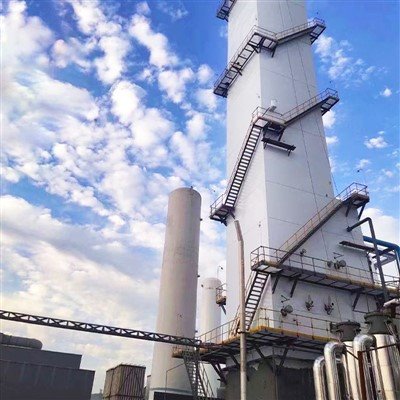
Large Scale Air Separation Unit References
- Compressed Gas Association. (2021). Purity Grades for Specialty Gases in Industrial Applications. CGA Guide G-7.1.
- Semiconductor Industry Association. (2022). UHP Gas Requirements for Advanced Node Manufacturing. SIA Technical Report 12-22.
- International Organization for Standardization. (2019). Specification for Specialty Gas Purity and Delivery Systems. ISO 10156:2019.
- American Pharmacists Association. (2020). Gas Purity Standards for Biopharmaceutical Manufacturing. APEX Guidance Document.
- National Fire Protection Association. (2021). Storage and Handling of Specialty Gases. NFPA 55.
Xinxiang Jiale Intelligent Equipment Co., Ltd.
As one of the most professional specialty gases manufacturers and suppliers in China, we’re featured by quality products and good service. Please rest assured to buy durable specialty gases for sale here from our factory. We also accept customized orders.
Address: No.3913, 9th Floor, Unit 3, East Commercial and Office Complex, Baolong City Plaza, Hongqi District, Xinxiang City, Henan Province, China
E-mail: cc2397410@gmail.com
WebSite: https://www.jiale-asu.com/
