If you’ve ever stood in a grocery store’s cold storage warehouse, watched a tanker truck unload fuel at a gas station, or wondered how your local water treatment plant never runs dry, you’ve encountered level sensors at work. For decades, I’ve supplied these devices to factories, farm operations, and municipal utilities, and one question comes up more than any other: “What, exactly, is the output signal of a level sensor?” It’s a fair question—one that’s easy to skim over when you’re buying equipment, but getting it right is what keeps your operations running smoothly. Let’s break this down, from how these sensors work to the four core output signals you’ll actually see in the field, so you know what to ask for when you’re placing your next order. Level Sensor
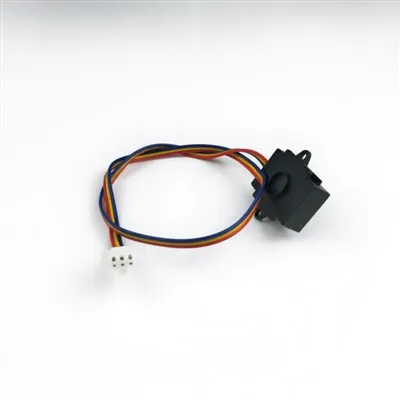
First, let’s start with the basics: a level sensor’s whole job is to measure how much liquid (or sometimes solid) is in a tank, silo, or pipeline. It sits either inside the vessel or mounted to its wall, and when the level of the material changes, that sensor detects the shift. But a sensor can’t just say “the level is 3 feet”—it needs to turn that measurement into a signal that other equipment can understand. That signal is the link between the sensor and the controllers, pumps, or alarms that run your process. If you get the wrong output, your pump might turn on at the wrong time, or your alarm might fail to warn you of a spill, so picking the right one matters.
Over the years, I’ve seen too many projects go sideways because a facility ordered a sensor with a signal that didn’t match their existing setup. A food processing plant once bought a ultrasonic sensor with a digital signal that their old PLC couldn’t read, and they had to shut down for half a day to reconfigure the system—cost them thousands in lost production. Another time, a farmer ordered a float sensor with a voltage output, but their irrigation system needed a current signal, so every time the water pressure spiked, the reading jumped randomly. These mistakes aren’t because the sensor was bad; they’re because no one took the time to clarify what output they needed. That’s why, after 18 years in this business, I always walk customers through the four most common output signals, how they work, and when to use each one.
Let’s start with the simplest: discrete output signals. These are on/off, binary signals—like a light switch. A discrete level sensor doesn’t tell you the exact level; it only detects if the level is at a specific point. For example, a float sensor in a residential sump pump is a discrete sensor: it flips on when the water hits a certain height to turn the pump, and off when it drops too low. That’s the kind most people encounter in everyday life. For industrial uses, discrete outputs are great for simple, low-stakes applications. If you just need to know when a tank is empty enough to refill, or full enough to shut off a fill valve, a discrete sensor is cheap, reliable, and easy to install. I supply a lot of these for small farm water tanks or small chemical drums—they don’t need fancy wiring, and they rarely malfunction. The downside? You can’t get a continuous reading. If you need to know if the level is 2 feet or 3 feet, discrete output won’t tell you that—it only gives two options.
Next up: analog voltage outputs. These are the most common continuous output for small to medium industrial applications. An analog voltage sensor translates level into a range of voltage, usually 0 to 5 volts or 0 to 10 volts. If your tank holds 10 feet of liquid, a sensor with 0 to 10V output will send 0V when the tank is empty, 10V when it’s full, and 5V when the level is halfway. That lets your controller calculate exact levels, not just a yes/no. The reason this is popular is because it’s compatible with most low-cost PLCs and data loggers—most off-the-shelf automation equipment can read voltage signals without extra work. But voltage has a flaw: it’s susceptible to electrical noise. If you’re running the sensor’s wiring next to a motor or a power line, that noise can make the voltage jump a little, throwing off your reading. I once had a customer in a automotive paint shop complain that their voltage-based level sensor was giving inconsistent readings—turned out their wiring was routed next to a conveyor motor. We swapped it for a current-based sensor, and the problem went away immediately. That’s why voltage works best for short wiring runs, where noise isn’t a big issue.
Then there’s analog current output, usually 4 to 20 milliamps (mA). This is the industry standard for heavy industrial and long-distance applications, and it’s one I recommend to almost all customers dealing with large tanks or remote locations. Why 4 to 20mA? The 4mA is a trick—if the sensor sends 0mA, that means a broken wire, not an empty tank. That’s a safety feature you can’t get with voltage: if the line cuts, your controller will see 0mA and trigger an alarm, instead of assuming the level is stable. Also, current signals don’t degrade with distance. If your sensor is mounted 500 feet away from your control room, a 4 to 20mA signal will stay accurate, but a voltage signal will drop enough that your reading is wrong. I installed a level sensor for a water treatment plant last year that feeds into a 1-million-gallon holding tank—they had to run the signal cable 600 feet from the tank to their main controller. We used a 4 to 20mA ultrasonic sensor, and it’s been dead accurate for 18 months. The downside? It’s a little more expensive than voltage, and you need a specific current input module on your controller, which adds a small cost. For most large operations, that extra cost is worth the peace of mind.
The fourth big one is digital output, specifically what’s called a digital communication protocol. This is the most advanced output, used for complex systems where you need a lot of data, not just a level reading. Protocols like Modbus, HART, or ProfiBus let the sensor send a lot of information in a single signal: level, temperature, sensor health, even diagnostic data. For example, a Modbus-based level sensor can send real-time level readings, alert you if the sensor is dirty, or tell you if the tank is overheating (a big deal for flammable liquids or viscous chemicals). This is used in automated factories and large utility systems, where the level sensor is part of a much bigger network. If you’re running a chemical processing plant with 20 tanks all communicating to a central control room, digital output is the only way to go. But it’s also the most complex to set up—you need to configure the communication, make sure all devices on the network use the same protocol, and train your team to read the data. I’ve seen small businesses pass on digital sensors because they don’t have the IT support to set it up, but for larger operations, it pays for itself in efficiency.
Now, I should clarify a common mix-up: sensor technology vs. output signal. A lot of people ask, “Is a float sensor’s output different from an ultrasonic sensor’s?” The answer is no. The sensor’s technology (float, ultrasonic, radar, capacitive) is how it measures level, but the output signal is what it sends. A float sensor can have discrete, voltage, current, or digital output—just like an ultrasonic sensor can. The technology determines accuracy and use case (ultrasonic is good for non-contact measurements, float is good for simple liquids), but the output is what you need to match your system.
Another tip: when you’re choosing, think about noise and distance first. If your sensor is within 100 feet of your controller, and you don’t need diagnostics, voltage is fine. If it’s further, or in a noisy industrial environment, go with 4 to 20mA current. If you need continuous data or network integration, digital is the way. And if you just need a high/low alarm, discrete can’t be beat. Over the years, I’ve built a reputation on being honest about this—sometimes a customer comes to me wanting a $500 digital sensor, but their setup only needs a $50 discrete one. I tell them, don’t waste your money. The best output is the one that fits your needs, not the fanciest one.
I’ve also had customers ask if there’s a universal output. The short answer is no—every system is different. I once worked with a small brewery that needed a sensor for their brew kettle. They had an old PLC that only supported 0 to 10V, so we supplied a voltage-based capacitive sensor. Another customer, a mining company with remote ore silos, needed a sensor that could send data 2 miles to their office, so we used a radar sensor with 4 to 20mA output. Neither would have worked if we’d swapped their outputs.
At the end of the day, the output signal of a level sensor is more than just a number—it’s the bridge between the sensor and your process. Get it right, and your pumps run when they should, your alarms trigger when they need to, and your operation stays efficient. Get it wrong, and you’re looking at downtime, lost product, or even safety risks.
I’ve been supplying level sensors for almost two decades, and I’ve seen every pitfall there is. If you’re planning to add a level sensor to your tank, silo, or pipeline, don’t guess at the output signal. Reach out to us to talk through your setup—tell me how far your controller is, what kind of material you’re measuring, and what you need the sensor to do. I’ll walk you through your options, answer any questions, and make sure you get a sensor that fits, not just one that’s cheap or trendy. We’ve worked with small farms and Fortune 500 companies alike, and we know how to tailor solutions to your needs. When you’re ready to stop guessing and get a level sensor that works for you, contact our team to discuss your requirements.
Flow Meter References
- Becker, R., “Industrial Level Measurement: A Guide to Sensor Output Signals,” Instrumentation & Control Systems, 2021.
- National Electrical Manufacturers Association (NEMA), “Standards for Level Sensor Output Signals for Industrial Applications,” NEMA Publication LC 1-2019.
- Smith, J., “Noise Immunity in Analog vs. Digital Level Sensor Outputs,” Journal of Industrial Automation, vol. 15, no. 3, pp. 45-52, 2020.
- United States Environmental Protection Agency (EPA), “Level Sensor Selection Guidelines for Municipal Water Treatment Facilities,” EPA Manual 832-R-18-005, 2018.
- European Committee for Electrotechnical Standardization (CENELEC), “Output Signals for Process Level Sensors,” EN 61508-4, 2017.
Shenzhen Fineherc Technology Co., Ltd.
As one of the most experienced level sensor suppliers in China, we’re featured by quality products and low price. Please feel free to buy discount level sensor made in China here from our factory. Welcome to view our website for more information.
Address: 5th Floor, Building D, No. 39, Keji East Road, Torch Development Zone, Zhongshan City,China
E-mail: fineherc@hotmail.com
WebSite: https://www.fineherc.com/
