If you’ve ever popped the hood of a car and stared at the mess of wires, hoses, and metal parts under there, odds are you’ve glossed over that tiny, unassuming sensor tucked into the engine block or top of the radiator. For most folks, it’s just… there. But as a car sensor supplier who’s been working in this space for years, I can tell you this little part is one of the unsung heroes keeping cars running smoothly (and not overheating into a $3,000 repair bill). Let’s break down exactly what a coolant temp sensor is, why it matters, and why you should never sleep on keeping yours in good shape. Car Sensor

First off, let’s get the basics straight. A coolant temperature sensor (CTS, for short—every car person uses that, so you should too) is a small electronic part that monitors the temperature of your engine’s antifreeze/coolant mixture. Coolant is the stuff that flows through the engine, absorbing all the excess heat from the combustion process (you know, when fuel and air ignite to make your car move) and carries it to the radiator, where it cools back down before looping through again. The CTS’s whole job is to track how hot that coolant is at any given second.
Now, how does it do that? Most CTSes work on a super simple, reliable tech called a thermistor. A thermistor is a material whose electrical resistance changes when temperature changes—when things get hot, resistance drops, and when they’re cold, resistance goes up. The sensor plugs into the engine’s computer (the ECU, or electronic control unit—everyone calls it that too), and sends real-time voltage readings based on that resistance. The ECU takes that info and uses it to adjust a ton of different things under the hood. No other sensor does that much heavy lifting for everyday driving.
Let’s talk about why it’s so important—this is where it gets real for anyone who’s owned a car long enough to deal with a breakdown. First up, preventing overheating. That’s the most obvious one. If the CTS fails or gives a bad reading, the ECU might not trigger the radiator fan when it needs to, or it might not alert you that your engine’s sitting at 250 degrees when it should be at 195 (the sweet spot for most gas engines). I’ve seen so many cars towed into shops because the CTS died, the engine overheated, and the head gasket blew—replace a $15 sensor and you save yourself a $2,000 head gasket job. Crazy, right?
Next, the CTS affects fuel efficiency and emissions, which is a big deal for both drivers and regulators. When your engine’s cold (like when you first start it on a 20-degree morning), it needs extra fuel to run smoothly— that’s why you hear engines idle rough for 30 seconds to a minute before warming up. The CTS tells the ECU how cold the engine is, so it doles out that extra fuel. If the sensor is giving a faulty “hot” reading when the engine’s actually cold, the ECU will think it doesn’t need extra fuel, the engine will run lean, idle erratically, and you’ll burn way more gas than you should. I’ve had customers tell me their gas mileage dropped 10 mpg overnight and we traced it straight to a bad CTS—no other issues, just that tiny part. Also, modern cars have super strict emissions standards, and a faulty CTS can make the engine run too hot or too lean, spitting out extra pollutants and failing an emissions test. Nobody wants to pay to redo that, or get a ticket for expired tags because their car can’t pass.
Then there’s drivability. A bad CTS can cause all kinds of weird, annoying issues that drivers write off as “just an old car thing.” Stalling when you come to a stop, rough acceleration, the check engine light popping on for no obvious reason, even the heater blowing cold air on a cold day. Wait, the heater? Yeah, that’s another CTS job. If the sensor says the coolant is cold, the ECU might not open the valve that lets hot coolant flow to the heater core inside your dash, so you get no heat. I once had a customer show up at my shop in January with a 2-hour drive home and a heater that wouldn’t work—$120 for a new CTS, and he was toasty within 10 minutes. Game changer.
Now, let’s talk about how these sensors wear out, because they don’t last forever. Most CTSes are designed to last the life of a car, but that’s not always the case. They sit in the coolant, which is corrosive over time, plus they’re exposed to extreme temperature swings—one minute they’re submerged in 180-degree coolant, the next they’re sitting in subzero weather waiting for the engine to start. The wires can corrode, the thermistor can go bad, or the seal around the sensor can leak, letting coolant seep into the sensor and fry the internals. The most common signs are a check engine light (always use an OBD-II scanner to confirm it’s the CTS, not something else—we sell those cheap too, fyi), erratic temperature gauge readings, overheating without a visible leak, or that bad heater I mentioned.
As a car sensor supplier, I’ve seen every mistake people make with CTSes. The big one is ignoring a check engine light. So many drivers wait months to get a code read, and by then the CTS is fully dead, not just faulty, and they’ve caused secondary damage. Another mistake is buying the cheapest Amazon sensor off the shelf. I’ve had customers come back 6 months later with a CTS that died, and it’s because it’s a cheap, low-quality sensor with a flimsy seal that leaks coolant. We test every CTS we sell to make sure it meets OEM specs, because this isn’t a part you want to skimp on—your engine depends on it.
Let’s also clear up a common misconception: people mix up the coolant temp sensor with the intake air temperature (IAT) sensor, which is a different part that monitors air going into the engine. CTS is specifically for the coolant, so it’s measuring how hot the engine’s actual operating temperature is, not the air. That’s a key difference—you can’t use an IAT sensor in place of a CTS, no matter how cheap it is.
Another thing: on newer cars, the CTS is even more important because of start-stop technology and hybrid systems. Start-stop shuts off the engine when you’re idling to save gas, and it needs to know the engine’s temperature to start it back up smoothly. If the CTS is bad, the start-stop system might not work at all, or the engine might jerk when it restarts. Hybrids use the engine way less, so the coolant temp is even more critical—if the engine’s too cold, it won’t kick on at all, leaving you stuck with a dead battery. I’ve worked with a few hybrid shops recently that send us all their CTS orders because they know our parts are reliable for those more complex systems.
Wait, let’s get real about the cost side of things too. A good OEM-grade CTS costs $20-$50, and installation is usually an hour of labor, so total parts and labor is like $100-$150. Compare that to a blown head gasket ($1,500-$2,500), a new radiator ($800-$1,200), or a ruined catalytic converter ($1,000-$2,000) because the engine ran too hot. That tiny $30 sensor is the cheapest insurance policy you can buy for your engine. It’s not the flashiest part under the hood, but it’s the one that catches small issues before they turn into huge, expensive disasters.
I’ve been in the car sensor game for over 10 years now, and I can tell you that the CTS is one of the parts I recommend the most to customers who are doing their own maintenance. If you’re changing your coolant every 5 years (which you should—another big mistake people make is skipping coolant flushes), that’s a perfect time to check your CTS. Drain the old coolant, look at the sensor—if it’s corroded around the base, that’s a sign it’s on its way out. Swap it while you’re at it, and you don’t have to worry about it failing down the line.
One last story to drive this home: a guy brought in a 2018 pickup he used for work, said it was getting terrible gas mileage and the heater was blowing cold. He refused to pay for a diagnostic at the dealership, so he came to me. I hooked up the scanner, and sure enough, the CTS was giving a reading 50 degrees higher than actual. I sold him a new CTS, he installed it that night, and the next day he texted me saying his gas mileage went from 12 mpg to 18 mpg and the heater was working perfect. He said he would have sold the truck otherwise because he thought it was falling apart. That’s the power of a tiny, overlooked sensor.
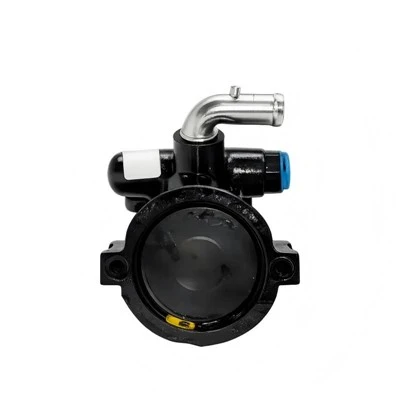
At the end of the day, cars are just a bunch of interconnected parts, and the sensors are the eyes and ears of the whole operation. The CTS is the one keeping an eye on the engine’s core temperature, making sure everything runs right, keeps you safe, and doesn’t cost you a fortune in repairs. If you’re a mechanic, a fleet manager, or a DIYer working on your own car, having a reliable coolant temperature sensor isn’t just a nice-to-have—it’s non-negotiable.
Car Pump If you’re in need of quality, tested coolant temperature sensors or any other car sensors for your shop, fleet, or personal projects, we’re here to help with competitive pricing, fast shipping, and parts that meet OEM standards. Reach out to our team to talk through your needs, whether you’re a small repair shop stocking parts or a large fleet needing bulk orders. We can hook you up with the right sensor for any make and model, no hidden fees or garbage parts.
References
- automotive News, 2023. "Common Coolant Temperature Sensor Failures and Their Impact on Vehicle Performance".
- Society of Automotive Engineers (SAE) International, 2022. "Temperature Sensors for Automotive Thermal Management Systems".
- U.S. Department of Energy, 2021. "Fuel Efficiency Benefits of Proper Engine Maintenance".
- Car Care Council, 2023. "Essential Vehicle Maintenance: Coolant and Sensor Checks".
Shanghai Changshun Imp.&Exp. Co., Ltd.
As one of the most professional car sensor manufacturers and suppliers in China, we are committed to providing high quality OEM service to global clients. We warmly welcome you to buy premium car sensor made in China here from our factory.
Address: No.1558, Bai’an Road, Anting Town, Jiading District, Shanghai
E-mail: info@changhui-group.com
WebSite: https://www.changhuish.com/
