If you’ve ever browsed for air preparation parts for a workshop, lab, or automated assembly line, you’ve probably seen two types of devices thrown around: particulate filters and filter regulators. At first glance, they might look similar—small metal or plastic units screwed into a line, with a bowl to catch gunk and a knob for adjusting something—but they do totally different jobs, and mixing them up can end up costing you time, money, or even damaged tools. I run a filter regulator supply business, so I see this mix-up all the time, and that’s exactly why I want to break it down simply, no jargon that’ll make your head spin. Filter Regulator

Let’s start with the basics: both live in a pneumatic system. That means compressed air is moving through tubes or hoses, right? Compressed air pulled from a compressor isn’t just clean, dry air—it’s got contaminants. Think tiny metal shavings from compressor wear, water droplets from condensation, oil mist from the compressor’s lubricant, even dust that got sucked into the intake. If that stuff gets into your tools—like a nail gun, air drill, or automated valve—it can gum up moving parts, cause leaks, or make tools work unevenly. Both filters and regulators fix parts of that, but their roles are totally separate.
First, the particulate filter. This one’s job is like a sieve for your compressed air. It’s designed to catch solid and liquid contaminants before they reach your downstream equipment. There are different grades, too—some catch big stuff like water droplets and large dust particles, others (called “microfilters”) catch way smaller ones, like 0.01-micron oil mist or even bacteria for medical or food-grade setups. Most particulate filters have a clear or semi-transparent bowl at the bottom, so you can see when it’s full of gunk. Some have an auto-drain that flushes the muck out on its own, but cheap ones make you manually twist a drain valve, and if you forget, the bowl can overflow and spray water right into your tools.
Wait, but here’s a key point: a particulate filter does NOT control air pressure. That’s its superpower? No, its power is only removing crud. You could hook a 150 PSI compressed air line straight into a particulate filter, and it’ll happily catch the water and dust, but the air coming out the other side is still 150 PSI—way too high for most small tools, which usually run at 90 to 120 PSI. If you leave a tool connected to unregulated high pressure, it’s way more likely to break, or even cause a safety hazard. That’s where the regulator comes in.
A filter regulator (which is what I supply, obviously) is a combo unit. It does two jobs: first, it filters out the same contaminants as a standard particulate filter, and second, it drops the incoming high air pressure down to a steady, usable pressure for your tools. Let’s talk about how the regulator part works, because that’s the part people get wrong. The regulator has that round knob on top, right? Twist it clockwise, and the internal spring pushes a diaphragm down, closing a small valve that restricts high-pressure air coming in. The air on the downstream side (the side going to your tools) pushes the diaphragm back up against the spring, balancing the pressure. So if the incoming air pressure spikes—say, your compressor kicks on and jumps from 120 to 140 PSI—the regulator will automatically adjust to keep the downstream pressure exactly where you set it. No more jittery tools, no more overpressured hoses popping.
Now, let’s map out a real-world use case to make this concrete. Let’s say you own a cabinet shop, and you run a air-powered nail gun, a 1-inch air sander, and a dust collection system. Your compressor puts out air at 135 PSI, which is great for filling tanks, but way too high for any of your tools. If you just put a particulate filter on the line, you’ll get clean air, but the nail gun might fire too fast and blow nails through thin wood, the sander will spin so fast it’ll burn the finish, and the dust collector might work so hard it uses twice as much electricity as it needs to. If you just put a standard regulator on, you’ll get the right pressure, but all the gunk from your compressor might still gum up the regulator’s internal valve, leading to pressure drops or leaks over time. That’s why you need both a particulate filter and a filter regulator—or a single filter regulator that does both.
Wait, but why would someone pick a standalone particulate filter vs. a filter regulator? Let’s list the scenarios where each makes sense. Standalone particulate filters are for when you don’t need pressure control, only contamination removal. For example, if you’re running a heavy industrial conveyor belt that runs on 100 PSI, and your compressor consistently puts out exactly 100 PSI, all you need is a filter to catch the metal shavings and water so the conveyor’s valves don’t get jammed. No point in paying extra for a regulator you don’t need. But if you’re running multiple tools with different pressure needs—say, a nail gun needs 90 PSI, a staple gun needs 80 PSI, and a blowgun needs 100 PSI—you’d use a main filter regulator to set a base pressure, then add standalone regulators at each tool if you need to adjust further.
Another common mistake I see: people think a filter regulator can replace a particulate filter, or vice versa. No way. A filter regulator has a built-in filter, but if that filter gets clogged, the regulator will start to work poorly. Standalone particulate filters usually have a larger filter element, so they can handle more contaminants before needing to be replaced, which is good for heavy-duty compressor setups. Conversely, a standalone regulator doesn’t have any filtration at all, so if your air is full of water and dust, the regulator’s tiny internal valve will get gunked up in a month, and you’ll start getting fluctuating pressure.
Let’s also talk about maintenance, because that’s a big part of why these devices matter. A particulate filter’s maintenance is mostly checking the bowl and replacing the filter element every 6 to 12 months, depending on how dirty your air is. A filter regulator adds a bit more work: you still have to check the filter element, but you also need to calibrate the pressure occasionally, clean the diaphragm, and make sure the drain (if it’s manual or auto) isn’t clogged. If you skip maintenance on either, you’ll end up with problems. For example, I had a customer last year who had a standalone particulate filter, but he never drained the bowl. One day, the bowl overflowed, sprayed water into his paint sprayer, and he ruined a $200 batch of finish on a custom table. Ouch. Another customer used a filter regulator that he never calibrated, so his pressure drifted up to 150 PSI, and he blew the seal on an air cylinder that cost him $500.
Now, let’s clear up a few more myths. First: “Particulate filters only catch big dirt.” No, there are ultra-fine particulate filters that catch particles as small as 0.01 microns, which is like catching a grain of sand with a net that has holes the size of a pinhead. These are used in food and beverage processing, where even tiny oil mist can contaminate products, or in medical equipment like ventilators, where clean air is non-negotiable. Second: “Filter regulators are more expensive, so I should use them everywhere.” Not necessarily. If you’re running a small 1-tool setup with a 90 PSI compressor, a $20 filter regulator is fine. If you’re running a 10-tool setup with a 100 PSI compressor, a standalone filter ($15) and a standalone regulator ($25) might be cheaper in the long run, and you can replace parts easier if one breaks. Third: “If I have a water separator, that replaces a particulate filter.” No, a water separator only catches liquid water, not solid dust, metal shavings, or oil mist. You still need a particulate filter for that.
As someone who’s been supplying filter regulators and pneumatic parts for years, I can tell you that the best setup is almost always a layered approach: first, a main particulate filter right after the compressor to catch bulk contaminants, then a main filter regulator to set the base pressure for your whole line, and then standalone regulators or smaller filters at individual tools if you need precise pressure adjustments. That way, you’re not overspending, you’re not risking equipment damage, and your tools will last way longer.
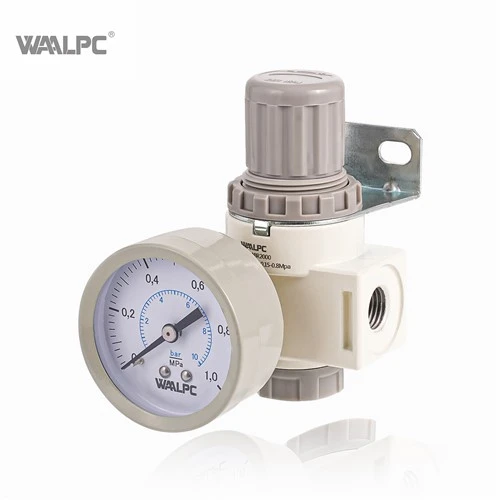
If you’re not sure which one you need—whether you’re trying to figure out if you need a standalone particulate filter, a filter regulator, or both—don’t guess. Picking the wrong one can cost you way more than asking a few questions. I’ve worked with shops, labs, and small factories to size the right parts, and I can help you find the exact unit that fits your setup, no fluff, no upselling on parts you don’t need. Just reach out to talk through your air system needs, and we can get you set up without the guesswork.
Air Lubricators REFERENCES:
Pneumatic Technology Association. (2021). Air Preparation for Pneumatic Systems.
OSHA. (2019). Compressed Air Safety Guidelines for Manufacturing and Workshop Settings.
Industrial Filter & Purification Association. (2022. Particulate Filtration Standards for Compressed Air Systems.
Hangzhou Evershine Pneumatic Import & Export Co., Ltd.
Hangzhou Evershine Pneumatic Import & Export Co., Ltd. is one of the most professional filter regulator manufacturers and suppliers in China, featured by high quality pneumatic components. Please rest assured to wholesale bulk durable filter regulator from our factory. Welcome to contact us for custom service and OEM service.
Address: Hengkun Smart Industrial Park, No.176, Golf Road, Yinhu Street, Fuyang District, Hangzhou City, Zhejiang Province, China 311400
E-mail: Felix@waalpc.com
WebSite: https://www.evspneu.com/
