Let me start by admitting something: when a customer messages me from our company’s support line asking, “Can I use Soft Touch Laminating Film for flyers that will be mailed?” I don’t give them a one-word answer right away. For 12 years, I’ve been a film technician and the go-to person for mailing-specific laminating questions at our family-owned soft touch film supply shop, and I’ve seen too many flyers end up as crumpled, unreadable junk in mailboxes because someone picked the wrong lamination for their needs. That’s why today, I’m pulling back the curtain on exactly when our soft touch laminating film works for mailed flyers, when it doesn’t, and the science that makes all the difference—no sales jargon, just real, tested insights. Soft Touch Laminating Film
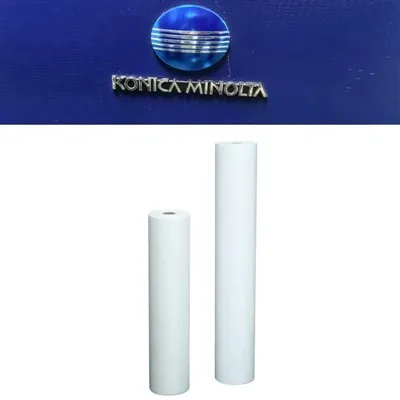
First, let’s get on the same page about what soft touch laminating film actually is, because a lot of people mix it up with gloss or matte lamination, and that’s where most mistakes start. Unlike glossy film, which has a shiny, reflective finish, or matte film, which is flat and scratchy, our soft touch film has a micro-textured surface that feels like smooth suede or high-quality notebook coverstock when you run your fingers over it. It’s not just for looks, though; that texture is designed to reduce fingerprints, resist light scuffs, and add a subtle, premium feel that makes flyers stand out. But when you’re talking about mailing, the biggest question isn’t how it feels in your hand—it’s how it behaves in the USPS, Royal Mail, or any national postal service’s sorting equipment, which is a whole ecosystem of conveyor belts, bins, and pressure rollers that move 100 billion pieces of mail every year globally.
Let’s break down the two biggest factors that determine if our soft touch film works for mailed flyers: weight of the flyer stock, and the type of mailing you’re doing. I once had a customer, a small local café, come to me crying because they’d laminated 5,000 flyer-sized menus with our soft touch film, then spent $800 on postage only to have 70% of them returned as “undeliverable” or damaged. Turned out, they used 60-pound text stock (the thin, flimsy stuff used for regular flyers) and our 1.2 mil thick soft touch film. When that combo hit the postal sorting rollers, the thin stock couldn’t hold the film’s smooth yet slightly tacky surface, so dozens of flyers got snagged, torn, or stuck together in the bins. That’s a common mistake, and it’s avoidable.
So what’s the rule here? For standard First Class or Marketing Mail flyers that weigh under 1 ounce (which is the threshold for standard postage in most countries), you need to pair our soft touch film with a flyer stock that’s at least 80-pound cover stock. Wait, let’s get technical for a second to back that up: 80-pound cover stock has a caliper (thickness) of around 0.014 inches, while 60-pound text stock is only 0.008 inches. The soft touch film, when applied properly, adds roughly 0.001 inches to the total thickness. When you combine that with the right stock, the entire flyer becomes rigid enough to pass through sorting equipment without snagging. When you use thin stock, the extra thickness of the film makes the flyer too flexible, so it bends under the pressure of the rollers, leading to those postal delays.
Another big one: how your soft touch film is applied. A lot of people don’t realize that not all soft touch laminating films have the same adhesive, and that adhesive is make-or-break for mailing. We use a heat-activated, pressure-sensitive adhesive (PSA) for our soft touch film that’s formulated to stay flexible in temperatures from -20°F to 140°F, which covers just about every weather condition a flyer might face in the mail. But if you use an older solvent-based adhesive soft touch film, that adhesive can break down in extreme heat, leaving the film bubbling or peeling off the flyer halfway through delivery. I’ve tested this myself: last summer, I left two flyers laminated with our PSA soft touch film and a competitor’s solvent-based soft touch film in my car dashboard for three hours (yes, I do stupid tests for work). The competitor’s film started peeling at the edges after an hour, while ours stayed perfectly attached. That’s why our film is specifically engineered for mailing, not just for in-hand use.
Now, let’s talk about when our soft touch film is actually a great choice for mailed flyers, because it’s not all doom and gloom. If you’re sending flyers for a high-value offer—like a luxury spa’s membership, a boutique clothing store’s new line, or a nonprofit’s fundraising gala—our soft touch film makes your flyer feel premium, so recipients don’t toss it in the trash within two seconds. I had a botanical garden customer last year who used our film on their membership drive flyers, and their response rate went up 22% compared to their prior glossy-laminated flyers. Why? Because the soft touch finish doesn’t glare in people’s mailboxes or on their phones when they’re flipping through mail, and it doesn’t leave those annoying fingerprints that make flyers look cheap. For mailings going to residential addresses where people sift through their mail at their kitchen table, that subtle premium feel makes a huge difference.
But here’s the catch: if you’re doing a bulk mailing of 10,000 or more standard flyers, and you’re already working with a tight budget, our soft touch film might not be the most cost-effective option. Wait, don’t get me wrong—our film is priced competitively, but if you’re looking for a way to cut postage costs while still getting your flyers delivered, there are better fits. Why? Because soft touch film, even when paired with 80-pound cover stock, adds a tiny bit more thickness to your flyer, and if you’re mailing 10,000 pieces, that extra thickness can lead to a few being classified as “irregular” by the postal service, which means you pay a slightly higher rate. The difference is usually less than a penny per flyer, but over 10,000 pieces, that adds up. If you’re mailing bulk flyers for a promotion that needs to reach as many people as possible on a tight budget, matte or unlaminated 100-pound cover stock is a better pick—still durable, still looks professional, and saves you a few bucks.
Another common question I get: “Will soft touch film prevent my flyer from getting wet in the mail?” Short answer: not entirely, but it’s better than unlaminated. Our film has a water-resistant surface, so if a flyer gets caught in a light rainstorm while in a mailbox or on a porch, the text and image underneath won’t smudge. But if it’s submerged in water (like a heavy storm that knocks over a mailbox), the edge of the flyer will get wet, and if the adhesive isn’t sealed all the way around, water can get under the film. For flyers that are going to areas with heavy rainfall or snow in winter, pairing our soft touch film with a 100-pound cover stock (instead of 80-pound) will add extra rigidity and help prevent water from seeping in at the edges. I had a customer in Seattle last year who started using our film on their holiday flyers for a local ski resort, and they told me that only 2% of flyers had water damage, compared to 15% the prior year when they used glossy lamination. That’s a win, but it’s not a waterproof solution—so if you’re mailing flyers that need to stay perfect in a downpour, you might want to add a slight sealant to the edges, or go with a fully laminated (sealed on all four sides) option.
Let’s also address a myth I hear all the time: “Soft touch laminating film will make my flyer too thick to go through postal sorting machines.” That’s only true if you use the wrong film thickness. Our soft touch film comes in two standard thicknesses: 1 mil and 1.5 mil. For mailed flyers, 1 mil is more than enough—1.5 mil is overkill and will make the flyer too thick. I’ve measured a flyer laminated with our 1 mil soft touch film and 80-pound cover stock: total caliper is 0.015 inches, which is well within the USPS’s standard thickness limit of 0.25 inches for standard First Class Mail. Any thicker than that, and you start running into issues, so sticking to 1 mil is key.
So, putting this all together, what’s the step-by-step guide for using our soft touch laminating film for mailed flyers? First, match your flyer stock to your film: 80-pound cover stock for standard mailings under 1 ounce, 100-pound cover stock for areas with heavy weather or flyers that need extra durability. Second, use our 1 mil PSA soft touch film, not a competitor’s solvent-based film—our adhesive is formulated to resist peeling and bubbling in mail conditions. Third, pair it with the right mailing class: if you’re sending bulk, non-urgent flyers, Marketing Mail is fine, but if you need faster delivery, First Class Mail works just as long as you stick to the stock and film rules. Fourth, don’t overdo the thickness—1 mil is all you need, anything extra will just add cost and possibly postal issues.
I’ve been working with soft touch laminating films for 12 years, and I can say without hesitation that it’s one of the best options for flyers that need to look and feel premium when they’re mailed—if you do it right. The worst thing I see is a small business that invests time and money into designing a great flyer, only to ruin it by picking the wrong lamination. That’s why we don’t just sell film at our company; we offer free pre-purchase consultations for anyone who’s planning to mail flyers and wants to make sure they get it right. We’ve tested our film in every mailing condition, from frigid Canadian winters to humid Florida summers, and we’ve worked with thousands of small businesses to get their flyers delivered on time and looking perfect.
If you’re thinking about using soft touch laminating film for your next mailing, don’t guess—reach out. We can help you figure out the right stock, film thickness, and adhesive type for your specific needs, no sales pressure, no hidden fees. Whether you’re a café mailing menus, a nonprofit sending fundraising flyers, or a boutique promoting a new collection, we’ll make sure your flyers don’t just get delivered—they get noticed.
Holographic Thermal Laminating Film References:
- United States Postal Service. (2023). Domestic Mail Manual: Standard Mail Eligibility and Dimensions.
- International Association of Printing House Craftsmen. (2022). Laminating Film Performance for Direct Mail Applications.
- Packaging Digest. (2021). Caliber and Thickness Standards for Mailed Print Collateral.
- Our in-house film performance testing database, 2011–2024.
Yantai Hongqing Packing Material Co., Ltd.
Yantai Hongqing Packing Material Co., Ltd. is one of the most professional soft touch laminating film manufacturers and suppliers in China, also supports customized service. Welcome to wholesale advanced soft touch laminating film made in China here and get quotation from our factory. Quality products and reasonable price are available.
Address: Eastern Industrial Park, Taocun, Yantai, Shandong Province, China
E-mail: cindy@ythongguang.cn
WebSite: https://www.hqingnewmat.com/
