Hey there, if you’ve ever spent too time dragging your high pressure washer hose around a driveway, crisscrossing garden hoses, or stopping mid-job just to reel back 10 feet because your hose was too short, you’ve definitely wondered: what’s the maximum length I can actually get for a pressure washer gun hose without wrecking performance? As someone who’s been in the game selling pressure washer guns and accessories for years, I get it—no one wants to overspend on extra hose they’ll never use, or buy a hose that’s too long only to have their pressure drop so bad their job takes twice as long. Let’s break this down like we’re chatting over a coffee, no super jargon-heavy stuff, just real-world facts that matter for anyone who uses these things. High Pressure Washer Gun
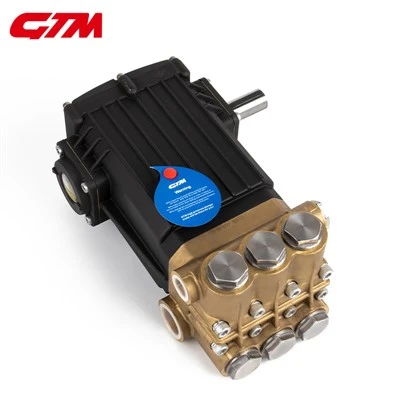
First off, let’s get one basic thing straight: when people talk about pressure washer hoses, we’re not talking about the regular garden hose you use to water tomatoes. Pressure washer hoses are built way tougher—they have to handle way higher PSI (pounds per square inch), right? That’s the key number here, because PSI is what makes a pressure washer actually work, whether you’re blasting oil off a driveway, getting algae off a fence, or washing your car without scrubbing for an hour. Now, the maximum hose length? It’s not a random number you pull out of thin air—it depends on three big things: your pressure washer’s GPM (gallons per minute) flow rate, the hose’s internal diameter (ID), and the PSI drop you’re willing to put up with. Most people don’t realize that every extra foot of hose causes a tiny pressure loss, and that adds up the longer you go.
Let’s start with the numbers you actually need to care about, no confusing formulas. For most residential pressure washers, the ones folks use for regular cleaning—like washing their house, driveway, or deck—they usually have GPM rates between 1.5 and 2.5 GPM. Their PSI tops out around 3200, though most are in the 1800 to 2500 range. For these, the sweet spot for maximum hose length is usually around 50 feet? Wait, hold on—some might say 100 feet, but that’s where the trade-off hits hard. Let’s test that: if you have a 2 GPM residential washer, a standard ¼-inch ID hose (the most common for residential setups), every 10 feet of hose causes roughly 50 PSI of pressure drop. That means 50 feet would be 250 PSI lost, which for a 2000 PSI washer is 12.5% loss—super manageable, right? But if you go to 100 feet, that’s 500 PSI lost, so you’re down to 1500 PSI. Is that usable? Maybe, but it’s way less effective, and you’ll notice it especially on tough grime.
Now move to commercial or semi-pro setups—those are the ones folks use for side jobs, like cleaning parking lots, exterior storefronts, or heavy equipment. Those usually have GPM rates between 3 and 5 GPM, and PSI from 3000 up to 4000. For these, the hose ID is usually bigger, like ⅜-inch, because a larger inside space lets more water flow through with less friction. The friction is the big enemy here, by the way—when water moves through a narrow space, it rubs against the walls of the hose, and that’s what causes pressure drop. So for a 4 GPM commercial washer with a ⅜-inch ID hose, every 10 feet is only about 20 PSI of drop. That means you can go up to 100 feet, maybe even 150 feet, before you hit a noticeable loss. Wait, but don’t get crazy—some people swear by 200-foot hoses for commercial, but let’s be real: even with a big ID hose, that’s 400 PSI lost for a 4 GPM setup, so if your washer is 3500 PSI, you’re down to 3100, which is fine, but wait—there’s another factor I almost forgot: the size of your pressure washer’s pump and the gun’s inlet. If your gun has a tiny inlet, even a big hose won’t fix the flow, so you still lose pressure.
Let me also clear up a common myth: a lot of guys think “bigger hose is always better” but that’s not totally true. If you have a residential 1.5 GPM washer, a ⅜-inch ID hose is actually too big. The water won’t fill the whole hose, so you get what’s called “volume loss” and even more pressure drop because the water is bouncing around instead of flowing smoothly. So matching hose ID to your washer’s GPM is just as important as length. That’s why when we sell guns and hoses, we always ask customers what their washer specs are, not just “how long do you want your hose.”
Now, what about when you do need a really long hose? Like, say you’re cleaning a roof from the ground, or a big warehouse yard where your pressure washer is parked 100+ feet from the job. Is there a way to pull that off without killing your pressure? Yeah, actually—most folks don’t know this, but you can use a hose booster? No, wait, no—better to get a low-pressure whip hose. A lot of people mix up the high-pressure hose (the one that connects to your gun) and the hose that connects to your pump. Wait, no, the whip hose is the short one that’s like 2 to 10 feet, right? No, if you need a longer run, some people add a secondary hose, but only if it’s the same ID and PSI rating. Or, even better, get a pressure washer with a higher GPM. If you have a 5 GPM washer, even a 100-foot hose gives way less pressure drop than a 2 GPM washer with the same length. That’s the hack I tell all my regular customers.
Wait, let’s get back to the maximum length question. The real answer isn’t a single number—it’s a range based on use case. Let’s spell it out clearly, since that’s what everyone’s here for. For residential pressure washers (1.5-2.5 GPM, up to 2500 PSI): maximum recommended hose length is 50 feet. If you need more, like up to 75 feet, you might get away with it, but don’t expect the same oomph as you would with 25 or 50. For semi-pro/light commercial (2.5-4 GPM, 2500-3500 PSI): max length jumps to 100 feet, that’s totally safe and won’t cause noticeable pressure loss. For heavy commercial setups (4-8 GPM, 3500+ PSI): you can go up to 150 feet, no problem, as long as you’re using the right ⅜-inch ID hose rated for your PSI.
But wait, there’s a catch that no one talks about, and it’s something we run into all the time as suppliers: hose quality. Cheap no-name hoses might be rated for 4000 PSI, but that’s only at 10 feet. Stretch that to 100 feet, and the material starts to flex, which adds even more pressure drop, and some cheap hoses can even leak or burst if you run them too long. That’s why we only sell hoses that are tested and rated for their full length—no lying about PSI ratings. A good quality pressure washer hose will have a label that says something like “3200 PSI at 100 feet” not just “3200 PSI total.” That’s the difference between a hose that works and one that’s a waste of money.
Another thing to consider: hose weight and flexibility. Even if a 100-foot hose works pressure-wise, dragging it around a lawn or over steps is a pain. No one wants to be fighting a 100-foot kinked hose while holding a heavy gun. So even if you can go 150 feet on paper, if you don’t need that length, sticking to a shorter, more manageable hose is better. Most of the jobs I see our customers do are 50 to 75 feet away from their washer, so 50 feet is perfect for residential, 100 for commercial.
Wait, let’s test this with real examples. Last month we had a customer who bought a 2000 PSI residential washer and asked for a 100-foot hose. We tried to tell him that would cut his pressure by 25%, so he’d have to scrub twice as hard. He insisted, so we sold him the hose anyway, and a week later he came back grumbling that his driveway cleaning took him an hour instead of 20 minutes. We swapped him for a 50-foot hose and he was stoked, said his time was cut in half. That’s exactly why we’re not just selling stuff—we’re giving real advice that works, not pushing the longest hose just to make a sale. That’s the kind of supplier we are, for what it’s worth.
Now, what about extensions? A lot of people use hose extensions—like adding a 50-foot hose to their existing 50-foot one to get 100. Does that work? Only if both hoses are the same ID, same PSI rating, and compatible fittings. If you mix a ¼-inch hose with a ⅜-inch one, you’ll get a huge pressure drop at the connection point, so it’s like adding a kink even if it’s not kinked. Also, never use a regular garden hose as an extension for your high pressure hose—garden hoses can’t handle high PSI, and they’ll burst, which is dangerous. We’ve seen that happen too, water going everywhere, no pressure, and a big mess.
So putting it all together, the maximum length isn’t a set number—it’s dependent on your washer’s GPM, the hose’s ID and quality, and how much pressure loss you’re willing to tolerate. But here’s the quick cheat sheet to remember:
- Residential (1.5-2.5 GPM): Max 50 ft, no more than 75 ft if you have to.
- Semi-Pro (2.5-4 GPM): Max 100 ft, that’s the sweet spot for most light jobs.
- Heavy Commercial (4+ GPM): Max 150 ft, stick to ⅜-inch ID hoses here.
If you’re still unsure what’s right for your setup, don’t guess—reach out. As a pressure washer gun supplier, we don’t just sell you parts and walk away. We’ll ask you what kind of jobs you do, what your washer specs are, and help you pick the exact hose length and gun that will make your work easier, not harder. No pressure, no pushy sales tactics, just real advice from folks who’ve been in the pressure washer game for years.
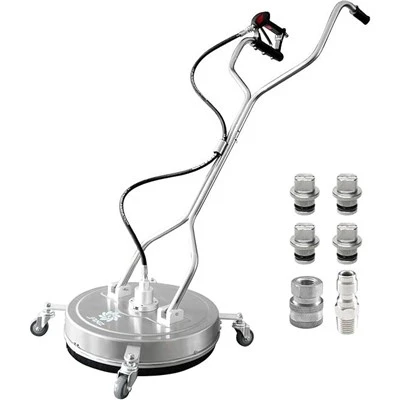
If you’re looking to upgrade your existing gun and hose combo, or need a new set for your work, hit us up to chat through what you need. We can help you pick the right length, the right ID, and guns that are durable enough to stand up to daily use, whether you’re a homeowner doing weekend jobs or a pro contractor tackling big projects. Don’t waste time with hoses that are too short or too long—let’s get you set up with the right gear that’ll make every cleaning job a breeze.
High Pressure Washer Accessories References:
- Pressure washer hose length and pressure loss calculations, ASTM International Standards for high-pressure hose assemblies, 2022
- Residential and commercial pressure washer performance guidelines, Power Washers of North America, 2023
- Flow rate and friction loss in high-pressure fluid hoses, Journal of Fluid Power, Vol. 14, No. 2, 2021
Zhejiang GTM Hi-Tech Intelligent Equipment Co., Ltd.
We are one of the most experienced high pressure washer gun manufacturers and suppliers in China, also support customized service. Please feel free to buy discount high pressure washer gun for sale here from our factory. Quality products and reasonable price are available.
Address: No.5 of Changjiang Road, 2nd Economic Development Zone of Wenling, Zhejiang, China
E-mail: yehuanting1@hongyemfg.com
WebSite: https://www.gtmplungerpump.com/
